
Chinese gods grace Bangkok shoppers


The Mall has set up shrines for the Lunar New Year with likenesses of Heng Chia and Guanyin
THE YEAR OF THE Monkey begins on Monday, so you’re well advised to start sidling up to some simians if you want fortune smiling on you for the next 12 months. Fortunately The Mall has coaxed the biggest monkey of them all to Bangkok, the Monkey King God Tai Sia Huk Chao – known in Thailand both as Sun Wu Kong and Thepprachao Heng Chia.
The retail chain’s “Glorious Chinese New Year 2016” runs tomorrow through February 14, at all branches. The gods it has brought from China for worship, however, are only at five outlets until next Wednesday, February 10 – Tha Phra, Ngam Wongwan, |Bang Khae, Bang Kapi in Bangkok and at The Mall in Nakhon Ratchasima.
Heng Chia has arrived in statuesque form, awaiting the adoration of anyone of Chinese descent – and anyone else for that matter who fancies his or her chances with the deity.
Getting him here was an elaborate affair. Executives of the mall and Ajarn Katha Chinnabanchorn, the celebrated tarot-card reader, made a special trip to his shrine in Shantou, Guangdong, the original hometown of most Thai-Chinese ancestors according to a Mall survey.
A posse of media tagged along and joined their hosts in paying respects to the monkey god, offering tea and nine kinds of sweet fruit (but not meat – you never offer meat). Then sufficient monkey statuettes for the five Mall branches, each about a metre tall, were carefully loaded onto the flight back to Bangkok.
Ajarn Katha, whose real name is Kemmachart Parinyanusorn and who’s also an expert on feng shui, pointed out that this is a “yang fire monkey year”, a most auspicious period to honour the Monkey King God, particularly in Buddhist countries. Heng Chia, revered for his immense strength, is closely associated with Buddhism, as depicted in multiple Chinese movies and TV series.
Joining Heng Chia for the holiday in Thailand is Guanyin, the goddess of mercy so widely revered here. They’d met before. Guanyin succeeded where no one else could in curbing the Monkey God’s aggressive behaviour. Apart from that noble achievement, she is worshipped for helping the distressed and the hungry, giving comfort and aid wherever needed.
Guanyin is the best known of China’s many bodhisattavas, or Buddhas-to-be.
Thoroughly assimilated in religion, values and lifestyles, Thai-Chinese – comprising at least 14 per cent of total population and perhaps much more – nevertheless adhere to the traditions of the original homeland. In good times, worshipping the gods becomes a celebration, and in more dire circumstances the traditions are there for support.
With this respect for heritage in mind, The Mall undertook research focusing on Shantou, home to most Thai-Chinese forebears. It located a hallowed, lesser-known shrine to the god there, at the Kaiyuan temple, built during the Tang Dynasty 1,200 years ago. The temple proved to be the architectural prototype for Wat Mangkon Kamalawat in Bangkok’s Chinatown.
During their visit the executives arranged for a ritual blessing of all the statues being brought to Thailand. Eighteen Buddhist monks conducted the Burk Nate (“eye-opening”) ceremony, which lasted more than an hour.
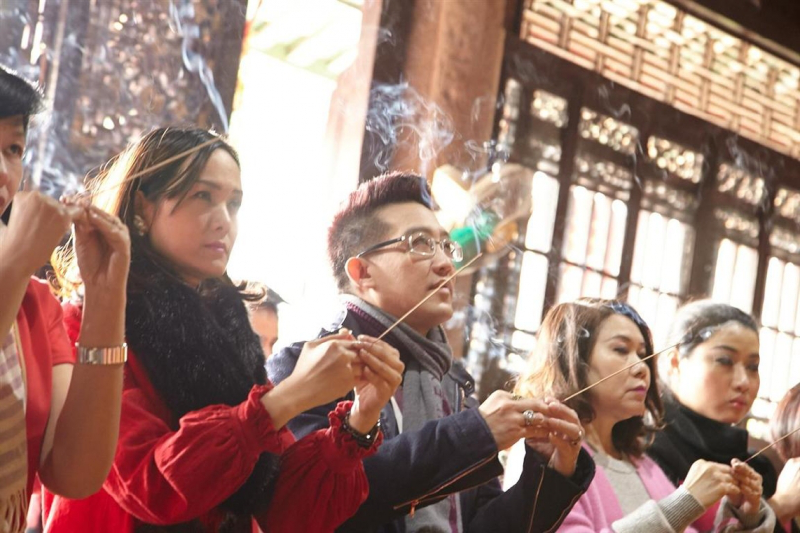
Aware that not all Thai-Chinese know the correct procedure for paying respects to the gods, The Mall has everything ready, says Duangta Phongwilai, one of the general managers. The Events Hall at every branch has the necessary offerings, prepared in accordance with tradition. Every outlet will be a “little Shantou”, with a Chinese market selling ingredients for popular Guangdong dishes. As well as honouring the gods, it’s customary to eat auspicious foods during the New Year festivities, since “good food assures good luck”, as Arjan Katha explains.
“Normai mahasamut pad sam sean, for instance, will bring wealth and happiness,” he says, referring to a stir-fry of three kinds of bamboo shoots.
