
The right MIX
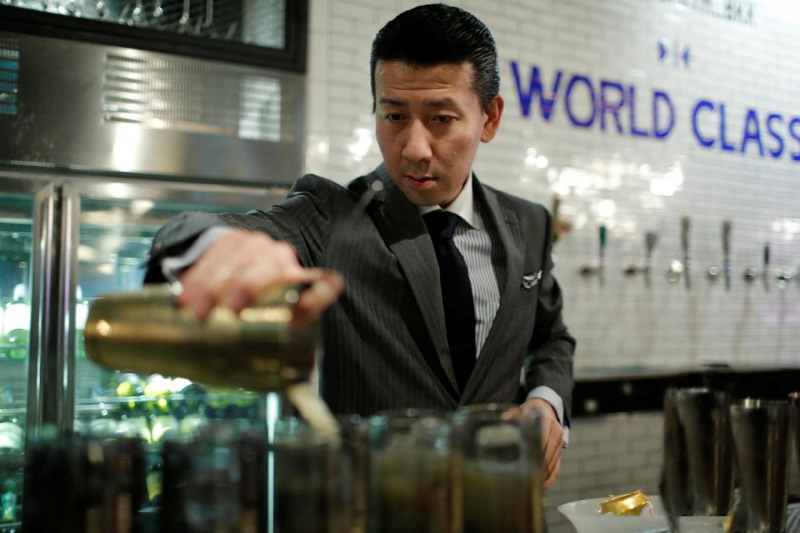


Champion bartender Manabu Ohtake shares his secrets for success
COCKTAIL LOVERS in Bangkok have been in for a real treat in recent days as two Diageo Reserve World Class Bartender champs, Manabu Ohtake and Michito Kaneko, arrived in town for a mini-tour that included a sensational Japanese-style cocktail menu.
Since being named Diageo Reserve World Class Bartender of the Year 2011, Ohtake has travelled the world meeting and inspiring new talent, providing fine- drinking training seminars and guest bartending at some of the world’s pre-eminent bars. This time around and with 2015 World Class winner Michito Kaneko by his side he mesmerised enthusiasts with his meticulous, flawless Japanese-style cocktail creations at Smith and Vogue Lounge. We had a chat with the champion about his craft.
HOW HAS LIFE CHANGED SINCE YOU WON |THE TITLE IN 2011?
My outlook on the world completely changed and my career also took a dramatic turn after I competed in World Class. I felt that the world was much smaller and more accessible than it previously was, and it made me want to go out into the world and test my skills. I had the opportunity to travel to various countries to represent Diageo Reserve and learn about other bar cultures and skills while, at the same time, introducing the excellence of the Japanese bartending style. Apart from having been recognised as champion, I feel very fortunate to have the chance to make so many friends around the world.
HOW HAS THE WORLD OF COCKTAILS CHANGED SINCE 2011?
Drinkers have become more knowledgeable about these drinks. I would say they know a lot about what they're going to order. Interestingly, they've consumed less alcohol per capita over the past year and instead have focused on quality and on having an enjoyable drinking experience.
WHAT IS THE SCENE IN JAPAN LIKE |THESE DAYS?
The bar culture in Japan is unique compared to those in other countries. I think that Japan has more of a focus on the quality of the drink, while other places focus on the entire experience including ambience. In contrast, Japanese bartenders tend to be silent and not as talkative while making cocktails, perhaps because we tend to focus more on perfecting the taste, aroma and decoration. Beer is the most popular drink in the country, but Japanese whisky wins great reviews internationally and cocktails are hugely popular. A popular way of drinking whisky today is the Highball, with fruit peels and mint to make it more refreshing. A Japanese person’s greatest luxury is to enjoy the season’s best food with locally brewed sake or sochu, which is a Japanese distilled drink typically made from barley, sweet potatoes, or rice.
WHERE DO YOU SEE JAPAN |IN THE WORLD OF BARTENDING?
I believe Japanese bartending is one of the best techniques in the world. Bartenders around the world are adopting our techniques and mixing them with their own culture, especially in neighbouring countries like South Korea and Taiwan. I want to spread the wonderful aspects of Japanese bartending across the world, and learn great things from the world to take back to my friends in Japan. If Japan is to further develop its style we need a greater exchange of information with other countries and a deeper study of their bartending ways and traditional cultures, and proactively adopt whatever is good. Then Japanese bartending can evolve and we can find ourselves a solid-looking future.
WHAT DO YOU THINK WILL BE THE NEXT BIG THING IN COCKTAIL CULTURE?
There's no denying that gin and single-malt whisky have attracted a huge following among drinkers this year. In fact these drinks have been popular since late last year. More consumers now enjoy uncomplicated drinks, like the highball cocktail, which is just whisky and carbonated water. Global drink trends tend to arrive in Thailand very late, though.
WHAT IS THE COCKTAIL’S RELATIONSHIP |WITH FOOD AND EVERYDAY LIFE?
When it comes to creative cocktails, I take inspiration from daily life in general. Posters on billboards, magazines, and even things I watch on television inspire me. The multimedia that surrounds and stimulates us everywhere we turn can offer some very interesting insights into consumer trends and habits, and in turn inspire ideas for cocktails. I have started to think about how anything food-related could be transformed inside a cocktail glass.
DO YOU HAVE SOME ADVICE FOR THOSE WHO ARE LOOKING TO GO FAR AS YOU?
I think I change when I step behind the bar. The first time I went behind the bar I was extremely nervous and even today I still have some of that, but in a good way. I like the pressure because it keeps me focused on creating good cocktails. The bar is a stage. The guest is your audience, seated right in front of you to watch you perform. Carefully crafting cocktails shows off something glorious, like the Japanese ceremony of sushi-making or teppanyaki. Bartending is a job where there is no such thing as “perfect”. You constantly drive yourself to go higher – it is not an easy job where you can master everything right away. The key to being a good bartender is having a good balance of skills, personal integrity and aspiration to improve all the time.
A bartender should develop his or her own technique to deliver and cocktail. I can do the hard shake but if I’m using ice that’s not quite cold or hard enough, I use my wrist very flexibly and in a wave-like motion, twisting my body and moving the shaker left to right. I call it the Manabu “Wave Shake.” The best piece of advice I received lately was to rethink, right down from scratch, how to work cleanly and with finesse, elegance and hospitality, as well as making the best-tasting cocktails.
Manabu Ohtake and Michito Kaneko are manning the bar for the last night in Bangkok tonight at The St. Regis Bar from 8pm.
The bar is on the 12th floor of the St Regis Bangkok. Call (02) 207 7826.
