
The sweetest of Japan's traditions


Play
The skilfully shaped candy known as 'Amezaiku' delights of all ages
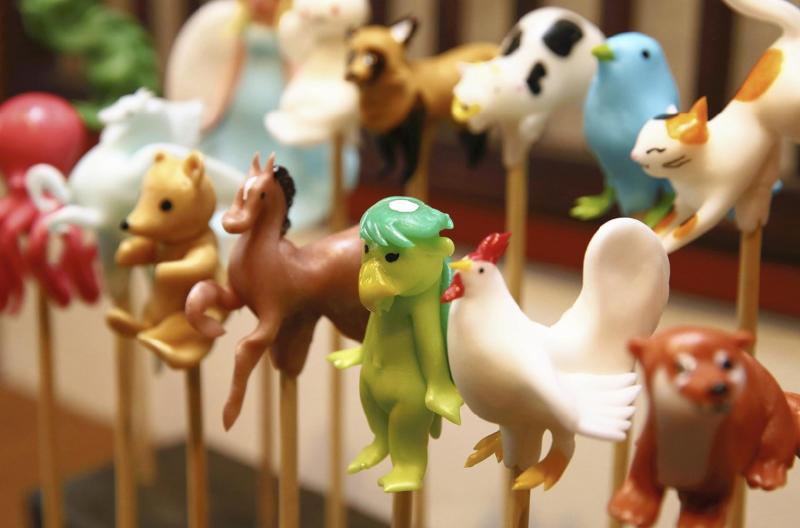
The sweet aroma filling the Tokyo candy shop Amezaiku Yoshihara provides an instant rush. The store sells about 100 kinds of amezaiku, each elaborately shaped into an animal or flower shape.
Amezaiku – the crafting of artistic confectionery – has enchanted people for centuries. Although the pieces have an attractive simplicity, they’re clearly made with exquisite skill. It’s a great experience watching the dextrous manufacturing process.
Takahiro Yoshihara, who runs the shop, shapes the candy into various forms using only his hands and traditional spring-loaded scissors.
He heats the material until it’s soft, places it on the tip of a stick and then shapes it by stretching it with his fingers and cutting the form with the scissors. It quickly cools and hardens so he has to work fast.
Yoshihara shows me how to make the mythical flying horse Pegasus. The candy material has to be heated and mixed with food dye, then rolled into a ball and placed on the end of the stick.
Once my fingers form the head, the ears and mane are shaped with the scissors, which are also used to shape the wings. Then the fingers come into play again, stretching the wings so it looks like they’re flapping. In the same way I form the legs into bends, giving the animal the appearance that it’s flying. The whole process takes me only three minutes.
A parakeet candy made by Yoshihara looks like the real bird. “Birds are regular motifs,” he says. “I’ve heard that amezaiku used to be called ‘bird candy’.”
Candy in the shape of such familiar animals as dogs and cats are also popular. He makes candies in the shape of specific pets on request, working from photos.
The store attracts many women in their 20s to 40s looking for birthday presents or gifts for other occasions. Recently, though, the number of male customers has been increasing, Yoshihara says.
A rabbit holding a heart-shaped plate might make a nice “return gift” for White Day on March 14, when Japanese men give something to the women who presented them with a Valentine’s Day treat. The rabbit’s plate is perfect for writing a message.
Palm-size candies can cost 1,000 to 2,000 yen (Bt312 to Bt625) and many of the items on offer seem too beautiful to eat. Indeed, if you decide to keep them as ornaments, they should be left in their packages, because once exposed to the air they absorb moisture and melt.
Yoshihara says his products’ “best before” date is one month in summer and three to four months in winter. He offers one other warning: Be careful when eating candies with pointed ends!
Amezaiku became popular during the Edo Period (1603-1867). “It entertains children and adults admire the delicacy of the work,” Yoshihara says. Not surprisingly, his store attracts many foreign tourists as well, and they too appreciate his skill. Amezaiku Yoshihara holds workshops on Sundays for up to six people at a time. Reservations are required.
Participants work on a different given motif each week – a rabbit, dolphin or elephant, for example. Over the course of an hour they make several “practice pieces” and then a final piece to take home.
The price is 2,500 yen, and the programme’s proved popular with women in their 20s and 30s and with families with children. “If you make your own piece you can better appreciate the charms of amezaiku,” says Yoshihara.
