
At home with the kids
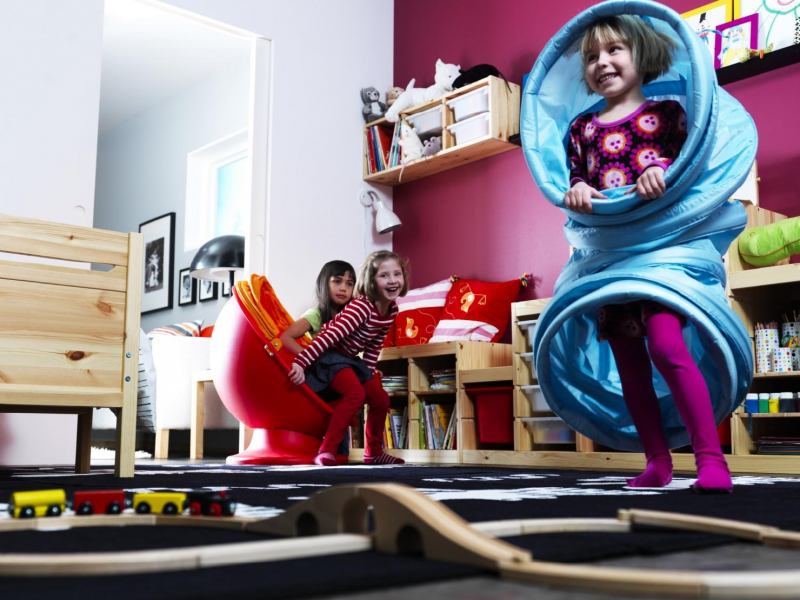


Play
Ikea explains how to decorate your home to promote child development
Learning begins at home, the age-old adage says, and the best way of encouraging this concept is to create a home that supports children’s development and encourages fun yet learning-based activities with family members.
Swedish home furnishing maker Ikea is offering a helping hand to parents through a range of products and home makeover ideas that create a learning environment for children.
“To help enhance children’s developmental skills at an appropriate level for their ages, parents should learn about child development at different ages and stages,” says Patrice Dreano, store manager of Ikea at Bangna.
“Children between the ages of five and seven years should be encouraged to learn fundamental skills. They have well-developed hands, so they can hold a pencil just like an adult. That means they can draw figures with many details. They should be starting to read and understand stories without the help of pictures. They also understand how to play with rules, learn to play in teams, and wait for their turn. Six-year-olds in particular enjoy playing with rules. They are able to imitate more complex movements and gestures,” he explains.
Kids between the ages of seven and 10 years love acquiring new skills and start to express who they are and what they like. They are becoming more independent, but still need plenty of support. Groups are very important and they can keep secrets with their best friends. They like to have their own secret language that you as an adult will not understand. They also start to understand, slowly, the relation between cause and effect.
Preteens between the ages of 10 and 12 years are approaching adolescence and puberty (the average for girls is 12, for boys 14). They start to explore their own identity. Friends are more important than adults. They start putting their communication skills to use more and more, and may try blogging or writing in a diary. They also start to engage in rather serious discussions about different topics, though you as an adult still have to help and guide them along.
Dreano also offers tips that help parents to create safe and comfortable settings that support child development and encourages a strong relationship between family members.
>> Living room
Put some stationery and art supplies in the living room as children like to draw and paint. They can also be rather messy. Considering all of the things they play with and collect, it's a good idea to get some practical storage for all their stuff, so that children can learn to put their things back on their own.
A blackboard also helps build imagination, as children can enjoy drawing and writing on it again and again.
Cordless blinds and curtains increase safety for your child. Blinds with cords and loops may cause serious accidents. Cordless blinds and curtains mean that your child can play in the living room without the threat of harm.
After school, kids sometimes run around the house with their socks on. Anti-slip strips, attached to the floor and stairs, can help prevent falls due to slips and trips.
>> Kitchen
The kitchen is the heart of the home and mum’s headquarters. It’s a room where mum (or dad) cooks while her kids are doing homework or playing by her side. It’s also a room where children learn to assist with activities such as cooking and dishwashing even though they don’t take it seriously, as they think they’re playing. Consequently, parents should be mindful of choosing family-friendly appliances and furniture for increased child safety.
>> Bedroom
The bedroom is a private room where children sleep, do homework, relax, and play. Tables and chairs for kids should be expertly crafted and ready for both learning and playtime. Children’s lighting should illuminate their world in a wonderful way. It should help reduce the strain on their eyes, usually caused by staring at monitors as playtime these days often involves technology and screens, smartphones, and the Internet.
Children are able to distinguish colours and contrasts from an early age. This is why it’s so important to select colours wisely when decorating your home. Choose colours for the bedroom that reflect their preferences and personalities. For instance, vibrant colours may be over-stimulating for a very active child. Soft colours will help to calm their mind. A room designed with plenty of colourful furniture items could distract kids. To help stimulate their intellectual development, effectively use harmonious and balanced colours.
