
Tokyo through the tummy


Play
A group of Thai gourmets enjoys the cuisine at some of the Japanese capital’s best restaurants
JAPAN IS not only a favourite shopping and sightseeing destination among Thais, but is also well worth a visit to sample what has long been recognised as one of the most diversified dining scenes in this part of the world.
The food, of course, is one of the biggest attractions for diners, who love the notion of fresh, clean and lean and revel in the straightforward and honest flavours of Japanese cuisine – raw or cooked. But almost as important are the aesthetic aspects – the eye-catching presentation of the dishes and the attention to detail whether it’s a humble eatery or a large fine-dining establishment.
I recently had a chance to join a culinary journey to Tokyo organised by Siam Paragon for its 15 biggest Platinum M Card spenders, each of whom spent at least Bt10 million during the mall’s three-month campaign. As might be expected, only the finest restaurants were selected for the VIP trip with most of them often specialising in one specific type of cuisine from sushi, teppanyaki to kaiseki and modern twist.
Mon Cher Ton Ton
Despite its French name – meaning “my dear uncle” – Mon Cher Ton Ton is decidedly Japanese and recognised not just as Tokyo’s number one teppanyaki restaurant but also for its premium Kobe beef. Remaining loyal to the finest strain of Kobe beef since its establishment in 1961, this steakhouse is today owned by the restaurant chain Seryna and has outlets in Shinjuku and Roppongi.
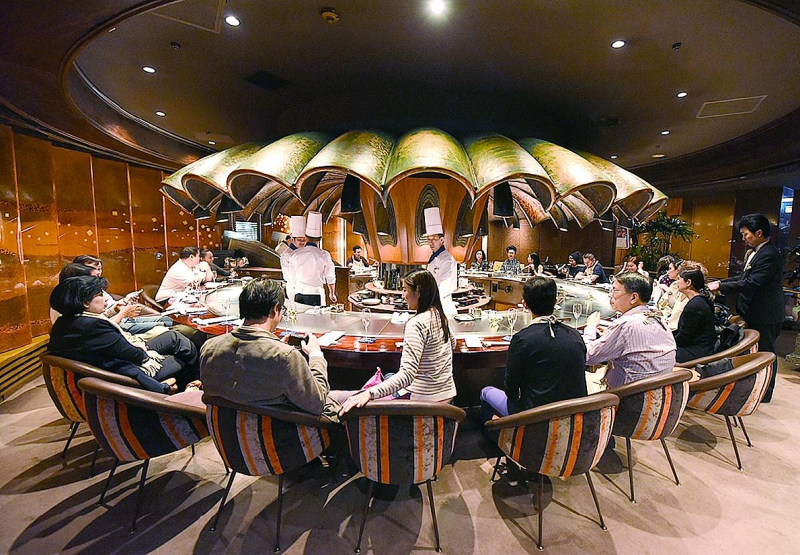
The Roppongi outlet is spacious enough to house five private rooms and three tables, but the most attractive spot is a circular counter with 27 seats boasting a copper-plated overhang that adds panache to the restaurant’s interior.
The teppanyaki-style open show kitchen allows diners to enjoy both watching the skilled manoeuvres of the chefs as they prepare the food on flat hot grills and the finished cuisine itself. Only medium and medium rare are available in terms of cooking choices for the steak, which comes in cuts of Kobe beef prime sirloin, top sirloin, tenderloin and chateaubriand. If beef is not your thing, there’s plenty of seafood on offer including lobster, sole, scallop, abalone and prawn. The dinner courses range from 12,900 yen (Bt4,200) to 32,400 yen.
After tucking into starters of crabmeat and avocado salad and lobster soup, a chef sautes lobsters and scallops on the searing hot tabletop with a little soybean oil. He expertly slices the lobsters, removing the meat from the shell and placing it on diners’ plates. He then sears the scallops until they are crusty on the outside and juicy inside.
The foie gras is also perfectly grilled before the star of the show – top sirloin beef – arrives on the grill. The chef deftly sears, slices and serves it, deftly using the fat to ensure that the meat loses none of its flavour.
Garlic fried rice becomes even tempting when it is seasoned with a little lobster soup, crispy whitebait and pickled vegetable. A dessert of passion fruit sorbet topped with pomelo and coffee or tea brings the meal to a perfect close.
Find out more at www.Seryna.co.jp/en/|monchertonton.
Kitaohji
Thai food connoisseurs are probably familiar with the Japanese restaurant Kitaohji, whose first overseas branch is located in an attractive two-storey house surrounded by a rock garden and bamboo trees in Bangkok’s Soi Thonglor 8.
Kitaohji’s main draw is the multi-course kaiseki experience, an haute-cuisine tradition in which a sequence of dishes is exquisitely – even dramatically – prepared and served. The Japanese branch in Akasaka is decked out to resemble traditional Japanese wooden houses complete with bamboo panels and wood ceilings.
The Kitaohji outlets in Japan serve only kaiseki, unlike in Bangkok where the menu has been expanded to meet Thai expectations with dishes large enough for sharing. The menu changes according to the ingredients in season.
The traditional dishes are created with such attention to detail that every morsel has exactly the right balance of ingredients, flavours, textures and colours. The dinner course is about 20,000 yen with a choice of wagyu beef or lobster and grilled fish filet.
Assorted appetisers elegantly arranged in a lacquered box are the first to arrive. The morsels include squid, sweet Japanese omelette, fried whitebait, vegetable soup, and mochi cheese gratin. Next comes an array of sashimi with ultra-fresh cuts, followed by savoury steamed egg custard with minced globefish. Kitaohji uses only satsuma beef from Kagoshima, which is known for its outstanding quality and unique taste due to the moderate fat density and tenderness.
Garlic fried rice is served with pickled vegetables, followed by refreshing assorted desserts of green tea mochi topped with vanilla ice cream, orange jelly and fresh strawberries.
Find out more at www.Kitaohji.co.jp/akasakasaryo.
Kyubey
Founded in 1935, Kyubey is a high-end sushi restaurant tucked away in a nondescript back road in Japan’s ritzy Ginza district. Yosuke Imada is the second generation chef-owner and has won numerous awards for his restaurant, including a Michelin star back in 2008.
The Ginza mothership is always packed and with long lines waiting outside the door, so we opt for another outlet at Hotel New Otani in Chiyoda-ku. There’s a private room with tatami, but it’s better to grab a spot at one of two counters and watch the sushi and sashimi getting dressed. The restaurant only uses seasonal Japanese fish for their neta (toppings) ensuring that these are at their freshest.
The lunch course ranges from around 8,000 to 20,000 yen. I choose the set with squid as an appetiser followed by assorted sashimi that requires little embellishment thanks to the freshness. The highlight is omakase (chef’s choice) featuring 15 kinds of sushi for which the chef will select the best ingredients available on that day. Served next is a clear vegetable soup and fresh papaya.
Visit www.kyubey.jp/en for details.
Sky Restaurant 634 Musashi
Perched 345 metres in the air on the first observation deck of Tokyo Skytree, Sky Restaurant 634 Musashi is Tokyo’s highest fine-dining restaurant and offers a terrific view of the city’s skyline through its glass walls.
Master chef Naoya Makimura, who formerly worked at the prestigious Maison Paul Bocuse in Tokyo’s Daikanyama ward, refers to his creations as Tokyo cuisine, as they blend French techniques with Japanese tastes. The menu costs 4,500-6,000 yen for lunch and 12,000-15,000 yen for dinner.
Our lunch starts with appetisers of smoked tuna salad, foie gras terrine and fish mousse followed by sauteed itoyori fish and persillade scallop with onion confiture and red wine sauce. Although the recommended main course is sauteed Australian beef filet with grilled risotto and oriental sauce, those who prefer not to eat beef can opt for fish filet or sauteed pork shoulder with grain mustard sauce.
The meal wraps with a terrific dessert of 634 Special Blanc-Manger with a passion fruit sauce covered with foam and topped with gold flakes. Underneath the foam and blancmange are palate-refreshing mango and berries for a truly great taste.
Visit www.Restaurant.|tokyo-skytree.jp/en for details.
