
Fresh start for history


Play
Bangkok's first thoroughfare, Charoen Krung Road, has been neglected too long
BANGKOK’S CHAROEN KRUNG Road is eight kilometres of history but doesn’t have a lot to show for it anymore. A little urban renewal is in order. So in December the Thailand Creative and Design Centre and Thai Health Promotion Foundation set out to do just that.
A far cry from the usual city redevelopment projects that see old buildings torn down and replaced with shopping malls, Co-Create Charoen Krung aims to revive the thoroughfare by refurbishing the edifices, introducing new amenities for the residents and recharging the batteries of tired businesses.
It’s an elaborate and ambitious plan, even daring – and you’re invited to help.
Tomorrow through Sunday are “test days”, during which the planners will have five prototype concepts on display. Anyone can tour the spots for free and then share their opinions on the dedicated Facebook page.
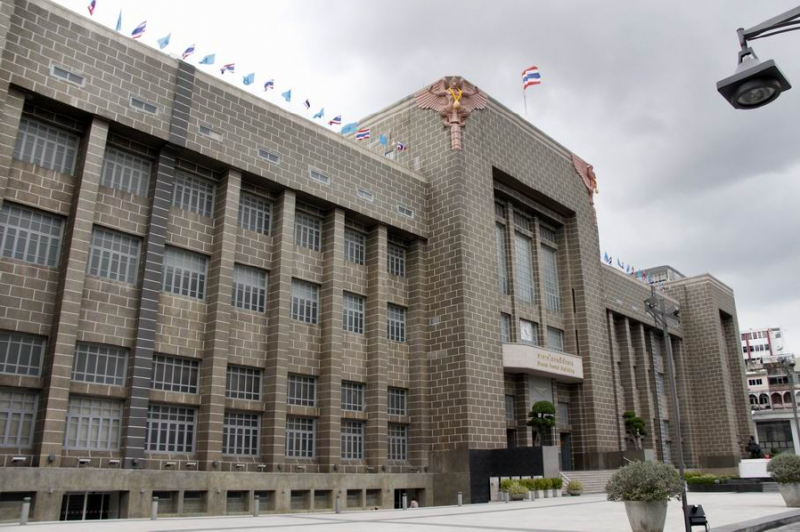
You can view a public-space development at Asiatique on Soi 40, ideas for unused buildings on Soi 38 and connected alleys between sois 28 and 50, a proposed mini-park at the Central Post Office in Bang Rak and new designs for signs between sois 28 and 50.
What will not be part of the project are malls or trendy cafes that have no place among the road’s colonial and neo-classical architecture. The venerable historic buildings are to be restored properly, alleys will be connected so you can walk anywhere, empty spaces will be put to use and more recreational areas will be created.
The plans don’t entail a complete facelift, but rather a “makeover” that makes thoughtful use of what already exists.
“In many ways Charoen Krung is part of our national cultural heritage,” said Peeradorn Kaewlai, an assistant professor of architecture and planning at Thammasat University, as proposals were publicly unveiled earlier this month.
“After its completion in 1864 by King Rama IV, the road became the capital’s most vibrant business district, with local and international trade, as well as the hub of international relationships, with many foreign countries’ embassies. The communities dotted along the road illustrated how multicultural Bangkok had become, and you can still see that today.”
Charoen Krung Road stretches along the Chao Phraya River from the Grand Palace at its northern end. It wends through Bang Rak and links to Yaowarat Road (Chinatown) and Phahurat (Little India). Along the thoroughfare are Nakhon Kasem, Khlong Thom Market, the Sala Chalermkrung Royal Theatre, the Central Post Office (now home to the Creative and Design Centre) and the State Tower. It intersects with Silom and Sathorn roads, which succeeded it as the capital’s business core.
Peeradorn pointed out that Charoen Krung has “both tangible and intangible assets” and a uniqueness that gives it the potential to thrive once again.
“It’s sad to see present-day Charoen Krung not so lively,” he said. “Once more roads were constructed, the big businesses and embassies moved out, to other commercial districts like Wittayu, Sathorn and Silom.
“The commercial buildings on Charoen Krung are now deteriorating and a lot of historic building have been demolished or improperly renovated,” the assistant professor reported. “And as many as 127 commercial building units are sitting unused. That’s a lot of lost opportunities.”
The most pressing need is to restore the historic buildings “to maintain the old landscape”, Peeradorn said.
“This is very important – if business owners can still make a profit and survive, they don’t feel the need to tear their buildings down and build new, modern ones. We need to convince them that the area isn’t dead and still has lots of potential. At the same time we need to attract new businesses that are suitable for the social and economical climate of Charoen Krung, to cater to culture tourists as well as all the lifestyle needs of the people in the communities, especially young people.
“There are a lot of children, teens and young people living in the area and there aren’t enough activities or amenities for them. We hope Charoen Krung will become a lively, creative place to live and work that people of all ages can enjoy.”
If it all sounds like a pipe dream, advocates point out the dramatic transformations that took place in Berlin’s war-torn Kreuzberg district, London’s rundown South Bank factory zone and the industrial swath of Beijing that’s become the upscale 789 Art District.
Newcastle in New South Wales, Australia, was a dead steel town in 2009 but now draws half a million tourists a year with 200 creativity-oriented attractions. A place where once no one dared visit was listed ninth on the Lonely Planet Guide’s top 10 cities by 2011.
“Great places are not planned – they grow,” says a man who should know, Marcus Wesbury, the mastermind behind the Renew Newcastle effort.
“Great places come from organic experiments,” he said at the Bangkok scheme’s unveiling. “No matter how great the plan is, it never quite works the first time. You decide what works what doesn’t and build on that. You discover how it works – you don’t plan it.”
IDEAS WELCOME
- The Co-Create Test Days are tomorrow through Sunday from 10 to 10 at the locations along Charoen Krung Road listed in the story.
- There is no cost to participate. Feedback is welcome at www.Facebook.com/CoCreateCharoenkrung.
