
Keeping cinema alive


Play
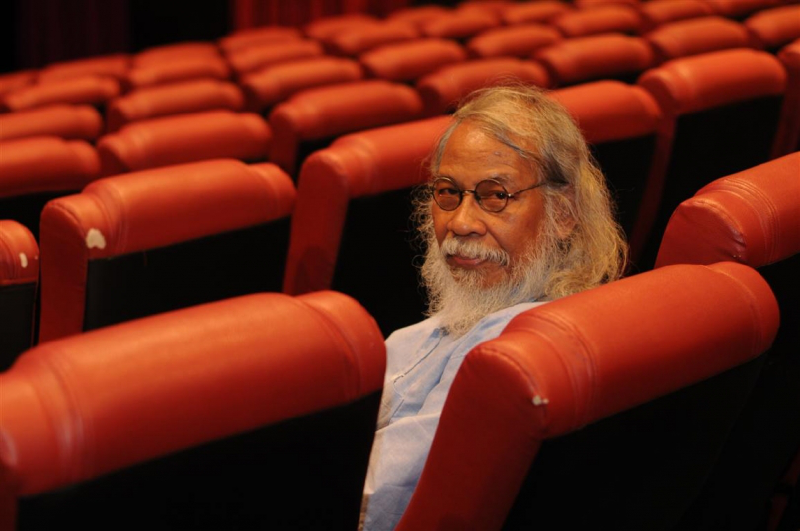
Thai film archivist Dome Sukvongs says movie-goers need more than just cinematic 'junk food' to survive
THAILAND’S LOVE AFFAIR with the cinema dates back to 1897, when a Swiss filmmaker by the name of Francois-Henri Lavancy-Clarke made a short film record of King Chulalongkorn’s arrival in Bern. The King brought the film back to Thailand where it was exhibited and soon local businessmen, sensing a profitable future, were bringing in foreign films and newsreels.
By the 1920s, the Kingdom had a movie industry of its very own and people flocked to the cinema not just to be entertained but to explore the world through newsreels. Music performances and game shows were also part of a night out at the cinema.
“In a way, the birth of the movie was the introduction to globalisation. It made the world smaller and Thai people could learn about foreign cultures from watching films. They could update themselves through news from China, Japan or Europe. Cinema was the equivalent of the Internet,” says Thai film archivist Dome Sukvongs.
Much has changed over the decades and the arrival of modern technology over the last 20 or so years has greatly affected the magic of moving pictures. Prints are no longer used in shooting films and those that exist are being transformed into digital formats, the reels replaced by a compact DCP hard-disk box that delivers crystal-clear pictures and full surround sound on the big screen.
The culture of watching film in cinemas has changed too. While the advent of television 60 years ago did lead to a fall in moviegoers, the apparent preference to watch film on computer screens, tablets and smartphones is having a much greater effect.
Dome says he’s confident movies will survive though he admits to be being less certain about the fate of the cinema.
“I believe that human beings are social animals who can’t live individually. For that reason, I have long believed that the cinema is like a church where people gather for communal events. Going to the cinema is a social event – it’s still what a lot of young people do when they start dating – but I can’t guarantee it will last forever. If the movie culture is dead, then so is the church,” says the 65-year-old archivist.
Dome fell in love with film as a kindergarten student and recalls stealing his mother’s handkerchiefs to use as screens on which to project the small pieces of film he collected from the floor of his local cinema’s projection room. He attended Chulalongkorn University’s Faculty of Communication Arts in the days before it introduced its film studies programme and started recording Thai film history in the 1980s, the first time such a task had been undertaken. Dome followed every source he could think of – old newspapers at the National Library, chasing up old film prints and interviewing veteran filmmakers and academics. His labour of love led to the founding of the National Film Archive in 1984.
“To me, the movie is a religion in terms of giving life lessons from its story. If a film both entertains and inspires, then it is successful even if its quality leaves a lot to be desired,” he says.
“That’s why I think of today’s movies, which are often no more than a commercial product, as junk food. People love eating it despite knowing it’s bad for their health. If they are given healthier alternatives from which to choose, they could well opt for what is best for themselves.”
That’s where Dome’s Film Archive (Public Organisation) Thailand comes in. Despite being located in Nakhon Pathom, the archive has been successful in luring students from more than 70 schools to its Sri Salaya Theatre to watch good movies. Most of these young people have no previous experience of the cinema and the archive’s staff and teachers take the opportunity to guide them on the etiquette of watching a film with fellow members of the audience. They are also invited to share the ideas that come to their minds after watching a film,
“When the 400-seat cinema is finished, it will be the place for young visitors to watch films not only with their friends at the same school but with students from other schools. It’s a good way of teaching them how to behave properly in a real public space,” he says.
The archive’s mobile cinema truck makes regular sorties across the Kingdom, bringing selected quality films to students in locations too remote to have a cinema.
“If the movie culture is to survive, we all need to adapt,” he says. “Diversity in film is also crucial and one of the problems we face now is the regulation and the censorship in the film act.”
He cites as an example the rules that say a movie cinema has to be registered as a commercial business. “Somehow that makes owners feel they must focus on profit rather than offering more alternatives to the public,” he says.
“I think the law should provide different regulations for people who want to run spaces where alternative films or art films can be screened with little or no concern for profit. If it works, then the audience will have other options than a cinematic junk food diet.”
The Film Archive is also working on preserving old films – both in print and through the digital format. An example is the movie “Santi-Vina”, which was recently rediscovered after years of believing that the old prints had been lost.
“We preserve every kind of movie, from home video to the remaining footages of some films. We don’t pass judgement on the films or pick only the good ones. They are all part of our history and perhaps the record will be useful for the generations to come,” he says.
“Though perhaps in 100 years from now, the movie will be as obsolete as its original medium. If that’s the case, I think we can safely bet there will be a call to bring it back. Just look at vinyl records.”
