
Bringing punch to your PASSION
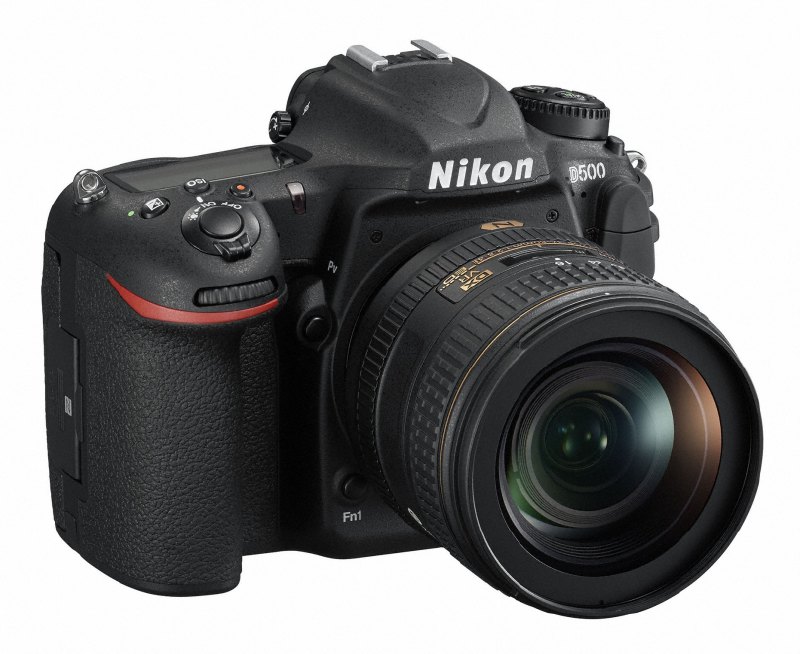


Rugged and versatile, the new Nikon D500 is a powerhouse of technology advances
THE NEW FLAGSHIP DX-format digital SLR camera from Nikon, the D500 comes with many of the advanced functions found in its FX-format elder brother, the D5, and features good performance and excellent image quality.
Equivalent to the APS-C sensor used by other brands, Nikon’s DX-format image sensor is one step lower than the FX-format, as the full-frame 35-mm sensor is known.
The D500 uses a 20.9-megapixel DX-format CMOS sensor and is powered by Nikon’s EXPEED 5 image processor, which is powerful enough to allow up to 10 frames per second. It has high ISO sensitivity of up to ISO 51,200, meaning it’s good in low-light environments, and even better, the ISO is expandable to Lo 1 and Hi 5 (50–1,640,000 equivalent).
The Multi-CAM 20K autofocus system provides 153 AF points including 99 cross type, making it fast for capturing fast action and wildlife scenes.
The D500 is really great for travellers because it has similar weatherproof seals to those used in the Nikon D810. Able to stand up to tough weather conditions, its rugged body is made from magnesium alloy and carbon fibre.
It’s great for shooting video too, supporting 4K ultra HD at a resolution of 3840x2160 pixels at 30/25/24 frames per second.
The D500 comes with two memory slots. One is for the new XQD memory card, which provides faster read and write and transfer speeds and thus is suitable for shooting UHD video clips. The other is for SD cards. And the camera is capable of outputting uncompressed 4K video to your 4K TV with an HDMI 2.0 cable.
The D500 comes with a 3.2-inch TFT touch LCD, and has a tilting monitor allowing you to use the camera to frame photos in positions that are normally difficult to compose with a fixed screen.
Professionals will enjoy the eye-level pentaprism single-lens reflex viewfinder with 100-per-cent vertical coverage.
And in a must for any camera today, the D500 allows you to share your masterpiece shots with your social media friends easily. The camera has built-in Bluetooth and Wi-Fi adapters with NFC (near field communication) to help you link the camera to your smartphone or tablet computer using an app. The SnapBridge app controls the camera with your phone or tablet and once you shoot, your photos are automatically transferred to your mobile devices for sharing on your social networks.
While purists don’t want to call the D500 a camera for professionals because it does not use full-frame image sensor, it is being marketed as being for professional or semi-professional use.
The only automatic exposure mode is the P (Programmed Auto) mode, which allows you to adjust the value of aperture and shutter speed and the camera will handle the rest of settings by itself.
As a result, to make most of D500, you should have some basic knowledge of how to adjust basic setting values like aperture, shutter speed and + (S) mode, Aperture-priority (A) mode and full manual (M) exposure mode.
At first glance, the D500 may appear intimidating to new users with several hardware control buttons. But once you are familiar with the buttons, you will find them a blessing because they allow you to change the camera’s settings without digging down into the menu and sub-menus.
For example, the D500 has a release mode dial for selecting among the single frame, continuous low speed, quiet-shutter release, quiet continuous shutter-release, or mirror-up release modes.
Located on top of the release mode dial are four buttons – Mode, White Balance, Image Quality and Metering. You press and hold each of them and then use the main command dial at the back of the camera to select available settings.
For example, when you press and hold the Metering button, you use the main command dial to select Matrix, Centre-weighted, Spot or Highlight-weighted light metering.
Other useful buttons include the ISO button, exposure compensation, and the two customisable function buttons.
The D500 also provides another quick way to access its settings – by using the “i” button. For example, when shooting a video, you can press the “i” button to bring up options for choosing image area, frame size and rate and movie quality. Or when you shoot still photos, you can use the “i” button to bring up the photo shooting menu bank, custom settings bank, Active D-Lighting and Long exposure noise reduction as well as High ISO noise reduction.
The D500 provides seven picture style options – standard, neutral, vivid, monochrome, portrait, landscape and flat.
The standard is use for most situations to provide balanced results. The vivid is used for enhancing pictures for a photoprint effect. Flat is used for preserving details over a wide tone range from highlights to shadows.
I tested the camera with the AF-S NIKKOR 24–85mm f/3.5-4.5G ED VR lens and found it captured beautiful portraits and landscape shots.
The D500 has good performance. It was ready for the first shot once I switched the button on and I did not feel any shutter lag at all. And its burst mode speeds of up to 10 frames per second in the JPEG image format is very useful for capturing sport photos or fast actions.
A drawback is that the D500 does not have a built-in flash. You will need to buy an optional flash to use in low-light environment
I tested the D500 at Buddha Mountain in Pattaya. It nicely captured the blue sky, the golden sketch of Buddha engraved on the mountain rock and the green grass.
I also tried it at the Nong Nooch Tropical Botanical Garden. The camera captured beautiful flowers and colourful sculptures of snails in the garden, for example.
Nikon D500 has a suggested retail price of Bt69,900 for the body only. With a 16-80mm f/2.8 kit lens, the D500 retails for Bt91,900.
