
Wines of the Rio Duero
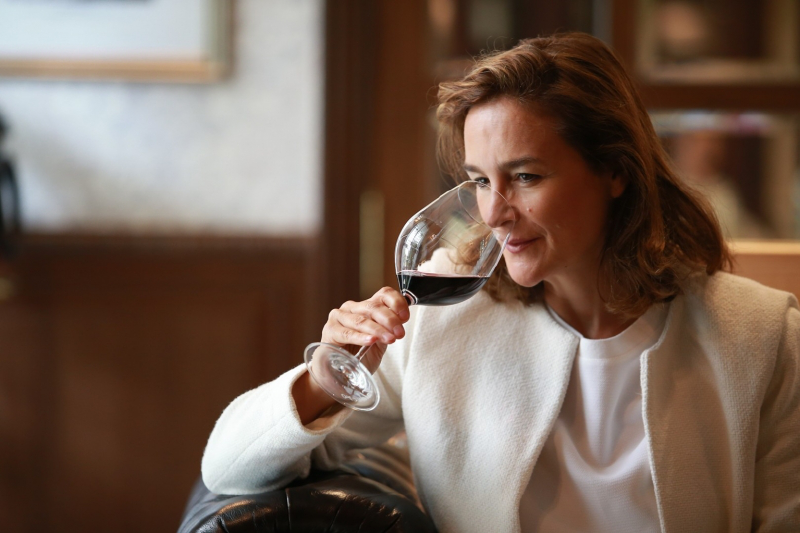


Bangkok gets better acquainted with Bodegas Valduero, one of Spain's most acclaimed wineries
Spanish socialite Carolina Garcia Viadero was in Bangkok this week, heir to Bodegas Valduero, one of the country’s most prestigious wineries. She was here to share insights into the firm’s unique methodology and also explained how she’s managed to persevere in a malemuscled profession.
“Oh, it was hard,” Viadero said of her first foray into the family business after the retirement of her father, Gregorio Garcia Alvarez.
“It’s quite a maledominant world, the wine industry. And for Valduero to have two females running the winery – myself and my sister Yoland, who is now the chief winemaker – it’s very unusual.
“Luckily it’s always been our family’s business and we both grew up in the vineyards, so it wasn’t that hard to maintain what you already know well. It was especially so for my sister. She’d wanted to be an agronomist since she was 12, and now she’s on the board of directors at the Ribera del Duero Consejo Regulador.”
Carolina entered the wine business when she was only 18, learning on the go at the vineyard from her father and sister. A graduate of Pontificia de Comillas University, she’s a big celebrity in her homeland and even chummy with the royal family, who she said adore Valduero wines.
She was making her first visit to Bangkok this week, here for the Food & Hotel Thailand international trade exhibition for industry insiders, with whom she shared some of the winery’s stellar labels.
“It’s challenging for women to thrive in the wine business, but it’s not entirely impossible,” Viadero said. “After all, male or female, quality is what expected of you and from your work. And throughout 30plus years we’ve proven exactly that with our wines.
Valduero is indeed 30 years old as a formal business entity, but its heritage dates back to the time of Viadero’s greatgrandparents, who made fine wines for family consumption.
“Back in 1984 we had a small wine cellar that was used only for the family,” she said. “However, with my great intentions to inherit the legacy, after I got my MBA we opened for business and public sales, becoming one of the first commercial wineries in Ribera del Duero.”
Stretched along the Duero River, Ribera del Duero is a Denominacion de Origen, one of several industryrecognised wineproducing regions. It relies almost exclusively on red grapes, and chiefly Tempranillo, known locally as tinto fino.
“Bodegas Valduero is what you call a ‘lowyield vineyard,” Viadero said. “We’re allowed to produce up to 8,000 kilograms of grapes per hectare, but we only grow half that, and for some vintages even less, as the conditions dictate.
“The traditional viticulture practice of ‘lowyield, bushtrained vines’ means lower yields but very high quality every year. There is zero use of chemical fertiliser and the grapes are picked by hand, just 14 kilograms at a time. Almost everything is done by hand. We’re one of Spain’s very few handcrafted wines.”
The exquisite wines owe their acclaim to a delicate process that begins with the planting, using only vines that are 30 years old or more and only grape seeds native to the area. The yield is strictly controlled in volume and the grapes have to be handpicked to ensure that only the best are selected.
Fermentation takes place in three tunnels 40 metres underground, together covering 4,200 square metres. Temperature and humidity remain natural throughout the year, but the wine spends time in temperaturecontrolled stainless steel vats in the first tunnel, then barrels of French oak in the second.
“Some of our wines are aged in five or more different types of oak for more than three years,” Viadero said. “The third tunnel is where wine is bottled, also at a constant temperature.”
She’d brought along several remarkable samples, including Valduero 12 Anos, aged in four types of oak for four years and then 10 more years in the bottle. The aromatic Valduero Crianza is pure Tempranillo, and Valduero Reserva and Gran Reserva are famous for taking Spanish wine to new heights.
Valduero Blanco de Albillo, the winery’s sole white – the first white wine ever produced in Rivera de Duero, in fact – comes from pure Albillo grapes and vines planted several decades ago.
“Winemakers in the area were never encouraged to grow white grapes – for reasons beyond my knowledge,” Viadero said. “But we set aside 10 hectares for Albillo grapes and nurtured them, believing we could also make a great white wine, which we did!”
