
The Forest (and a few trees)


Play
Paul Spurrier's film "Paa", now showing at SF cinemas in Bangkok, is a revolution in its own right
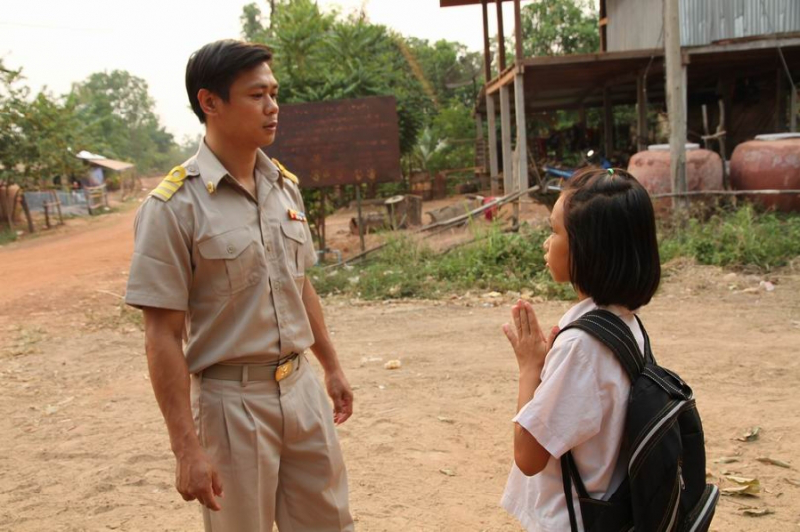
EARLIER THIS WEEK, I went to the premiere of “The Forest”, a film by Paul Spurrier, a Facebook friend with whom I’ve chatted from time to time but never met in person. This film, I was told, was the first Thai film ever directed by a farang. Since I directed the first Hollywood film ever directed by a Thai, I naturally felt a weird sort of connection with the film even before arriving at the theatre. My film, “The Laughing Dead”, was a wildly ambitious work that often missed its mark, whereas Paul Spurrier’s is a quiet, apparently unassuming film that hits every nail on the head. I’ve rarely been so impressed.
Although the plot is your typical “there’s a weird kid in the woods who might be a ghost” story, of which others come to mind, this movie truly epitomises Alexander Pope’s adage that defines great poetry as “what oft was said, but ne’er so well expressed.
Since Spurrier’s also a cinematographer I guess it’s no surprise that every frame of this picture is stunning to look at, especially in its eloquent use of natural lighting.
But what is surprising is that the film is in fact a quiet revolution in its own right. There are many things that appear almost for the first time in a mainstream Thai film (and this one, despite its low budget, is definitely not a film designed to be consigned to the art-house niche). Among the aspects that make it revolutionary:
lProper acting. Maybe it’s the prevalence of unknowns, who have not been tainted with the manneristic, likay-derived tropes of Thai film acting.
lThe absence of the bizarre pauses between bits of dialogue that would be “pregnant” if they were not obviously simply shots of an actor trying to remember his next line – the fact that actors actually react when they are not talking, instead reverting into Madame Tussaud’s versions of themselves when not speaking – these are things we take for granted in international-standard films, but are often absent even from the highest budget Thai ones. Spurrier has accomplished a miracle by getting this cast to feel absolutely real, so that the outlandish events that |happen later in the plot are believable.
lActual cinematic structure. This is a film that has a classic, organic plot progression – like a sonata form movement, its plot points fall in the appropriate places. Thus, you feel satisfied at the end.
lGenuine attention to sound. I panicked a bit when the film began with an over-enthusiastic foley walker, but it settled into a well thought out sound world that genuinely enveloped the audience and played a huge role in drawing us into the story. Oh, and the soundtrack actually has something to do with what we see on the screen – music and effects are thoughtfully integrated and subtle.
lA non-prurient approach to nudity. This is a big line in the sand for a Thai film. In their very coyness, Thai films often suggest a higher level of naughtiness than they dare to show. In this film the matter-of-factness of nudity becomes in itself beautiful.
Around 80 per cent of the film is in the Isaan dialect. And it does so without “making fun of the peasants” – while the average Thai film uses Northeastern dialect with all the cultural sensitivity of “Song of the South”, a Disney film that is no longer shown because of its patronizing portrayal of African Americans and absurd parody of Black English.
Does the film have any flaws, one might ask? Yes, of course, the ending is confusing for one. The big moment when the drunk who hasn’t said a word all through the film suddenly decides to “reveal all” does not entirely escape the feeling of a clunkish cliche. And the village headman is such a bad guy that he doesn’t get the three-dimensional treatment other characters do.
But there’s much, much more to this film than you might think from the poster. I didn’t have time to tell Paul just how impressed I was, or even to take a selfie with him. I hope that chance comes soon.
