
A love for letters
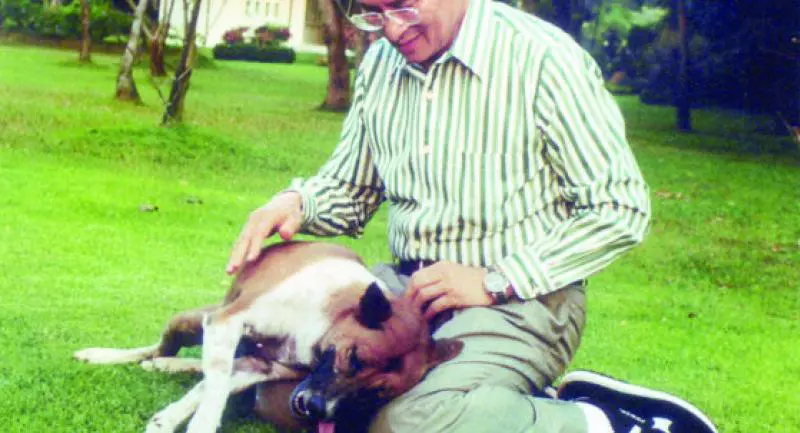


His Majesty the King demonstrated his literary skills through books, journals and translations
HIS MAJESTY the late King Bhumibol Adulyadej penned several works throughout his reign, reflecting not just his literary prowess, but also his interest in the world around him from international politics and British espionage to China and Chile. All his works were bestsellers and some are still available at bookshops. Here we compile a list of His Majesty’s publications, which have stood the test of time, and often remind us, among other things, of his natural flair for languages.

“A Man Called Intrepid” by William Stevenson
His Majesty spent three years from 1977 to 1980 translating this book into Thai. The Thai translation titled “Nai-in Phoo Pid Thong Lang Phra” was published by Amarin Printing in 1994 and the publishing house has borrowed the name Nai-in for its bookstore chain ever since. The proceeds from the book’s sale went to the Chaipattana Foundation, which was founded by the King to provide responses through various development projects to problems affecting Thai people.
“A Man Called Intrepid” is a biography of Sir William S Stephenson, head of British Security Coordination in America during World War II. Written by the similarly named Canadian journalist William Stevenson, the book charts the buccaneering career of Sir William as a spymaster during the war.
During the war, the author came into contact with Sir William through a special intelligence mission and the two became close friends. Years later, Sir William provided his wartime friend with access to his papers, which largely formed the basis for “A Man Called Intrepid”.
Codenamed INTREPID by British Prime Minister Winston S Churchill, Sir William was in charge of coordinating the intelligence work of British and American agencies MI-5, MI-6 and SOE, helping to establish the nerve centre of worldwide British intelligence operations in New York City in June 1940 with the cooperation of President Franklin D Roosevelt. The book details numerous clandestine missions aided by his vast intelligence network to stall the advances of the Nazis’ terrifying forces, from the sinking of the Bismarck to the assassination of Reinhard Heydrich, one of the main architects of the Holocaust and “the butcher of Prague”. The book stresses the important role of intelligence work during WWII, without which the war could probably not have been won.

“Tito” by Phyllis Auty
His Majesty translated the 1976 version of this book, which was published by Amarin Printing in 1994, in the hope of encouraging his subjects to learn more about world affairs and prominent statesmen who have done good for their country.
The book offers a fascinating insight into the life and times of Marshal Tito, the first president of Yugoslavia, who is remembered for his call for unity that held together the people of Yugoslavia. He was widely hailed as the last great World War II leader, the first communist to successfully challenge Stalin, and the founder of “national communism”. Tito was praised as the creator of pot-war Yugoslavia, a leader whose wisdom and statesmanship united Yugoslavia’s historically antagonistic national groups in a stable federation.
Tito is best known for organising the anti-fascist resistance movement Yugoslav Partisans, defying Soviet influence through “Titoism”, and founding and promoting the Non-Aligned Movement worldwide. He broke with the Soviet Union in 1948 and enjoyed good relations with Western powers, who sold him arms to defend Yugoslavia from possible attack from the USSR.
The particular brand of communism that Tito espoused was known as “market socialism”, with workers rather than the state owning the means of production while the market was allowed to determine production and pricing. Yugoslavia was economically better off than most other communist states. Following his death, however, Yugoslavia only survived as a federation for a decade before its republics declared independence, and war around territorial claims especially involving Croatian and Serbian claims on Bosnia quickly followed.


“The Story of Mahajanaka”
“The Story of Mahajanaka” came out as an illustrated book in 1996, the year His Majesty celebrated his 60th anniversary on the throne as the Ninth King of the Chakri Dynasty. The book was later developed into a comic in 1999 and an animation in 2014. The King drew his inspiration from one of the last 10 lives of the Buddha described in the Tripitaka to write his own version of Phra Mahajanaka. It focuses on the virtues of perseverance and self-reliance as personified by King Mahajanaka of Mithila, who, after his ship flounders and sinks, swims across the ocean for seven days and seven nights even though the shore is not in sight. On the way he fights off demons and is helped by giant sea crabs until the Goddess Mani Mekhala saves him from his ordeal. He valiantly survives all the challenges through his remarkable perseverance.


“The Story of Tongdaeng”
“The Story of Tongdaeng” was published in 2002 in 84 pages in a bilingual format (Thai and English) to illustrate the King’s love for his pet dog Khun Tongdaeng. The dog that was to become His Majesty’s favourite was among a litter of puppies of a stray Bangkok dog rescued by a medical centre in Bangkok. On visiting the medical centre, the King adopted one puppy that was later called “Tongdaeng” (copper). Soon after she became his favourite pet and went on have her own litter of puppies. King Bhumibol called her a common dog who was uncommon.
“She is a respectful dog with proper manners; she is humble and knows protocol. She would always sit lower than the King; even when he pulls her up to embrace her, Tongdaeng would lower herself down on the floor, her ears in a respectful drooping position, as if she would say, ‘I don’t dare’,” reads a passage from the book.
Known for her loyalty to its owner, Tongdaeng died peacefully last year at the age of 17 years, one month and 19 days at the Klai Kangwon Palace in Prachuap Khiri Khan’s Hua Hin district. After cremation, the remains of Tongdaeng were placed inside the base of her statue at the Hua Hin Dog Shelter Foundation under Royal Patronage. Some of her ashes were also released into the sea in front of Klai Kangwon Palace in Hua Hin.
The cartoon version of the book came out in 2004.

“Mua Khapachao Chak Siam Ma Soo Switzerland” (“When I Left Siam for Switzerland”)
His Majesty penned this series of diary-style articles detailing his preparations for his trip back to Switzerland for education in August 1946 after ascending the throne in June that year. The first instalment was published in “Wong Wannakadee” (“The Literary Circles”), a now-defunct monthly literary magazine, in August 1947.
The diary began on August 16, 1946, three days before his flight back to Switzerland. On that day, he visited Wat Bavornnivetviharn to pay respect to Phra Buddha Chinnasri and the Supreme Patriarch. On his arrival at the temple, he was glad to see the crowds swelling as they waiting to see him but feared that his royal vehicle might run over the feet of some subjects. And he remembered some of the cheering faces very well.
On August 17, he described packing up. On August 18, he wrote that he’d completed the packing, and drawn up an itinerary for the next few days. In the afternoon, he was scheduled to pay respects to the ashes of the previous kings of the Chakri Dynasty. He also took time to bid farewell to the body of his deceased elder brother, the late King Ananda (Rama VIII), at the Grand Palace. But it was on August 19, the day of his flight, that he uttered one of his famous lines.
Travelling in his royal car on his way to Don Muang Airport, he heard a man on Rajdamnoen Avenue shouting “Don’t leave the people!” The phrase caught his attention, but as his car picked up speed, he could not respond. In his diary, he wrote he’d hoped to respond to that man on the spot, but couldn’t. So he wrote: “If the people didn’t leave me, how could I leave them?” He recalled his subjects cheering |on the ground as his plane circled the capital three times before heading to Ceylon for a stopover.
