
Give an elephant a happier New Year


A modest purchase can make a big difference for Thailand's tuskers
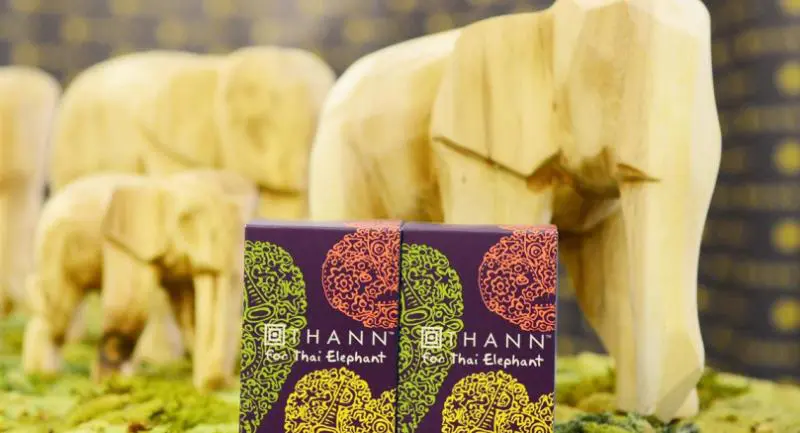
THANN, the body- and hair-care brand, and the Friends of the Asian Elephant Foundation are raising money for the Elephant Hospital in Lampang’s Amphoe Hangchat with a holiday season “Thann for Thai Elephant” campaign.
Hoping to boost public awareness about the need to take better care of the increasingly at-risk indigenous animals, Thann is donating all proceeds from sales of a special product kit to the hospital.
“In the past 40 years the number of Thai elephants has decreased rapidly and now there are only 7,000 to 8,000 left,” says Thann’s Thitipat Suppattranon.
“Of that number, about 3,000 remain in the wild. The main cause for the decreasing numbers is the loss of forest areas, their natural habitat. More elephants are also lost as a result of accidents and abuse by humans.”
Thitipat’s campaign to help the animals is now in its fifth year, with all proceeds from sales of the brand’s Thann for Thai Elephant set going to the hospital. 
“We are strongly determined to be part of the effort to raise awareness about elephant preservation,” he says. “We want to make sure that elephants will always be able to live in Thailand. So far we’ve raised more than Bt1 million.”
The Elephant Hospital established by the foundation in October 1993 is unique in the world. Through the facility, the foundation heals injured elephants while at the same time protesting instances of elephant abuse. The hospital has successfully treated more than 4,000 animals and is currently tending to 14, including a pair of females named Motala, age 55, and Mocha, 11, who are the first elephants in the world to be implanted with artificial legs.
Both lost their limbs after stepping on landmines while working for loggers in Myanmar. Transported to Lampang for treatment, they were fitted with artificial legs from the Prostheses Foundation of Her Royal Highness the Princess Mother.
Soraida Salvala of the foundation points out that the hospital has only 10 full-time staff members – two veterinarians and eight caretakers. Annual expenses average Bt9 million to Bt10 million, and donations invariably fall short with each rise in the number of elephants being treated.
Dr Kreuthong Khayan, a veterinarian who’s been with the hospital for 10 years, has come to understand his patients as individuals with varying personalities.
“We have five elephants staying long-term and each of them has a different character all its own. Motala, for example, is quite well behaved but really pretty possessive about her food, whereas Mocha is quite childish, |very talkative and loves having a caretaker by her side all the |time.
“In the time I’ve work here I’ve come to feel very attached to these animals. I want to save them from every sickness and injury – because their lives are just as worthwhile as anyone else’s.”
