
India in bloom for Holi festival
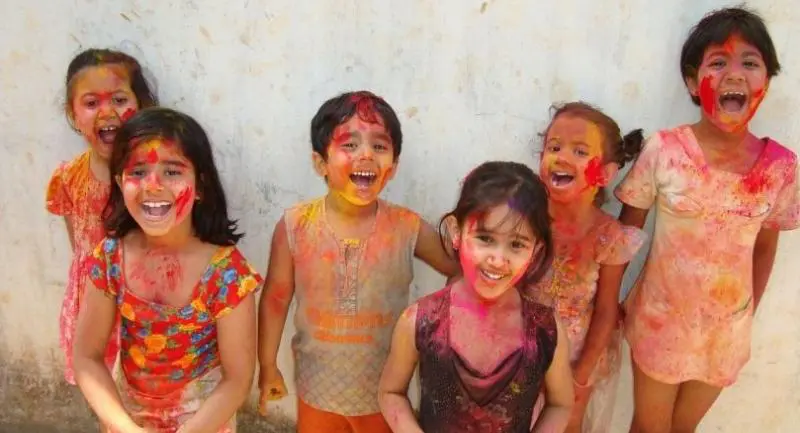


Many Thais are heading to India for one of the world’s most colourful annual festivals, Holi, taking place this year on Sunday (March 12).
A rainbow-hued whirlwind of activities associated with the Hindu religion and South Asian myth and culture, Holi “means many different things to many people”, says Ashwin Jayasankar, general manager of travel agency Wego India.
“But the festival exudes an intense and electric energy that’s uniformly contagious. There are a number of views on how it all began, but Holi is basically a celebration of the colours of spring, of life and love. It’s a time to make new friends, celebrate family and neighbours and also amend broken relationships. It’s a wonderful time to be in India.”
Coloured powders are flung about and faces and limbs decorated with henna ink or paint, and the hues themselves have different meanings. Red symbolises life, festivals and weddings, yellow prosperity and trade, green nature, fertility and happiness, and blue – the colour of Lord Krishna’s skin – stands for peace, love and Heaven.
“Each city celebrates Holi a little differently,” says Jayasankar. “The most popular cities on Wego are Mathura, for the more traditional kind of celebrations, and Vrindavan, for the huge amount of flowers used.
“Lathmar Holi is popular in Barsana, where women re-enact a Hindu folktale by playfully beating men with sticks. Celebrations with children are popular in Shantiniketan, and with royalty in Udaipur. For the real community experience with thousands of people, though, you have to go to Delhi or Mumbai.”
The tossing of powder has become so common among Holi revellers that some cities are associated with specific shade. Nagpur, where orange orchards abound, is known as the Orange City. Cuttack, famed for its silver industry, is of course the Silver City. Kolkata gets its Black City moniker from its historical association with the infamous Black Hole of colonial times.
“India has some of the strongest relationships with colours of any country in the world,” explains Jayasankar. “From richly coloured spices, bright saris, the robes of holy men that represent their beliefs, and wildly artistic delivery trucks, colour is ingrained in Indian culture.”
