
Opening the appetite with a negroni
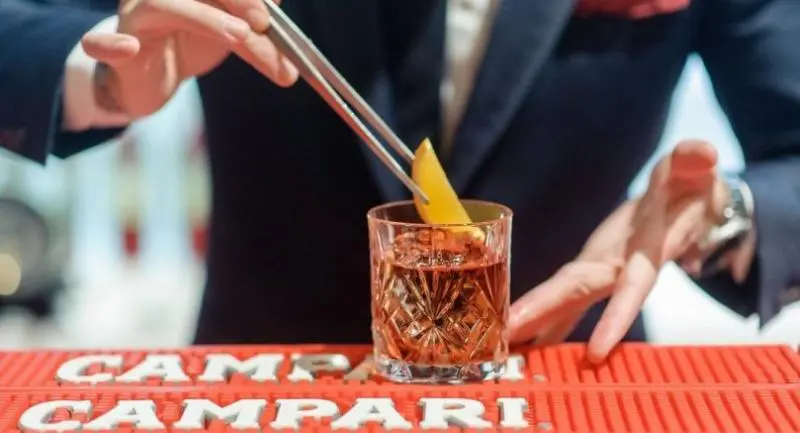


Campari Brand Ambassador Daniele Pirotta was in town recently to lead the Negroni Master Class 2017 where he educated bartenders and cocktail enthusiasts about aperitivo rituals, negroni and the importance of Campari.
The Marriott Bangkok Hotel was transformed into a massive classroom filled with people in the cocktail industry. Italian-born, Australian-raised Pirotta started the all-afternoon session with the Italian’s pre-dinner social hour, known as “aperitivo” that has recently made a comeback in the modern bar scene, but is still largely misconceived.
“Most people think aperitivo is a drink, but it’s not. It’s a specific moment of the day, a ritual that becomes a social moment to share with friends and co-workers at the end of a working day.” Pirotta explained.

“Drinks enjoyed during this social hour before dinner are suppose to ‘open’ your appetite. Indeed, aperitivo comes from Latin word, “aperire” which means to open. Hence, the ritual is closely related to a digestive process, setting the stomach ready for food and allowing you to eat like Italians.”
In the old days, digestive and bitters were among the popular choices during an aperitivo, but the modern day social hour has classic negroni as the number one choice.
“Not only does the negroni have an elegant taste and look and work wonderfully as a digestive, it stands the test of time and has become one of the most popular classic recipe because it is super easy to make. With equal parts gin, vermouth and Campari, a big chunck of ice and a orange garnish, you have a negroni,” Pirotta enthused.
The Negroni, Pirotta added, is actually a slightly twisted version of an Americano, which has Campari, sweet vermouth and club soda. It owes its existence to Florentine count, Camillo Negroni, who had just moved back to Italy to avoid the 1920s Prohibition in the US, when he asked Caffe Casoni bartender Fosco Scarselli to replace the club soda in his Americano with gin and “garnish it with an orange peel”. The rest is history.
Unlike many classic cocktails that can maintain its integrity and unique characters regardless of spirit brands, a negroni’s heart lies in Campari, which gives the drink a unique herbaceous aftertaste and earthy fragrance. “You can use any kind of gin or any kind of vermouth, but if you take out Campari, it’s not a negroni,” Pirotta said.
Campari, made to a secret recipe that remains tightly guarded until today, was invented in 1860 by Gaspare Campari in Novara, Italy. In 1904, Campari’s first production plant was opened in Sesto San Giovanni, near Milan, Italy. The company required bars that bought Campari to display the Campari Bitters sign. Under the direction of Davide Campari, Gaspare’s fourth son, the company began to export the beverage, first to Nice on the French Riviera, then Russia.

For a long time, Campari sat quietly in a negroni enjoyed by millions of people around the world. Then came the modern age of mixology and the “cocktail ageing” revolution. London-based bartender, Tony Conigliaro, is credited as the first to experiment by sealing a manhattan and a negroni in a bottle away from light. He noticed the development of flavours with the controlled slow oxidation of the vermouth. Jeffrey Morgenthaler from Portland, US, then had the idea of introducing an oak barrel into the process, allowing the cocktail to slowly mature and develop aromas and flavours to the next level.
