
Asia out of the spotlight
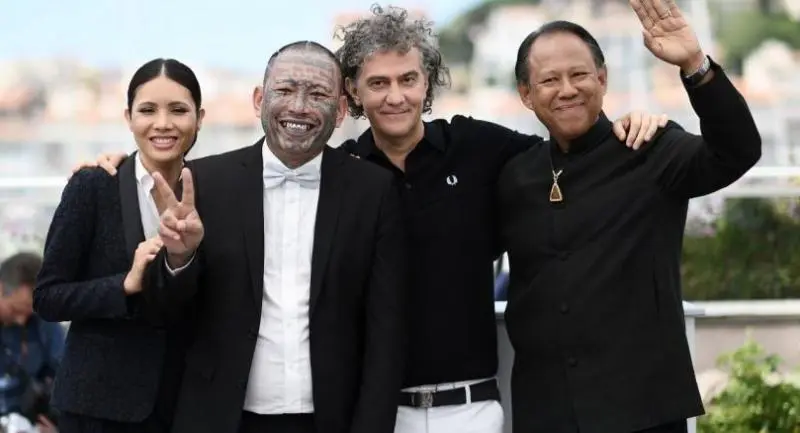


There were very few Asian films at the 2017 edition of the Cannes Film Festival but they were well worth seeing
THE CHAMPAGNE flowed freely on the French Riviera on Sunday night as Swedish filmmaker Ruben Ostlund celebrated winning the Cannes Film Festival’s coveted Palme d’Or for his satirical drama “The Square”. French filmmaker Robin Campillo was feted with bubbly too for bringing home the Grand Jury Prize for his Aids drama “120 Beats Per Minute”. Sofia Coppola looked ecstatic at becoming only the second female in history to win the Best Director award for her interpretation of Thomas P Cullinan’s “The Beguiled”. 
And Australian actress Nicole Kidman, who appeared in four of the pictures screened at this year's event including Yorgos Lanthimos’ “The Killing of a Sacred Deer” and Jane Campion’s “Top of the Lake”, was certainly happy to take home the “70th Anniversary Prize”, an award created especially for her.
Asian filmmakers, however, had little to celebrate. Indeed, their presence was hardly felt at this year’s festival and while there was one South Korean and one Japanese movie in the main competition, neither picked up a prize. Southeast Asia was equally poorly represented, with only one film in the parallel Director’s Fortnight, namely Mouly Surya’s “Marlina the Murderer in Four Acts”. For the first time in the past several years, the absence of films from South Asia like India was notable.
Usually a filmmaking powerhouse, South Korea had four titles spread across all sections two of them directed by Hong Sang-Soo.
His black-and-whiter oeuvre “The Day After”, screened in the main competition, starred his muse Kim Min-hee in the role of Areum, a young woman who becomes involved with her philandering and very married boss.
In “Claire’s Camera”, which was filmed entirely in Cannes and screened out of competition, Kim plays Man-hee, a woman who works for a film sales agent. Fired by her boss for no apparent reason, she meets Claire (Isabelle Huppert), a teacher and poet who has comes to Cannes to watch her friend’s movie.
Naomi Kawase was back at the festival for the sixth time with “Radiance”, which screened in the main competition. Masatoshi Nagase, who previously worked with her in the commercially successful “An”, returned in the role of Nakamori, a photographer who is losing his eyesight. He meets Misako, a young woman who works as a writer of audio description of films for visually impaired people and who is facing problems after her descriptions fail to receive positive feedback.
The picture, which picked up the ecumenical prize, an independent award created by Christian filmmakers, is far from Kawase’s best. The story and shooting style failed to stand out, especially when compared to other titles in the main competition.
Screened in Un Certain Regard, Kiyoshi Kurosawa’s latest science-fiction venture, “Before We Vanish” told an interesting story of alien parasites that take control of human bodies and prepare for an invasion.
Takashi Miike was also back in Cannes’ official selection, with Takuya Kimura starring in his latest bloody swordfighting film “Blade of the Immortal”, one of four movies he has made this year.
Based on the famous manga, Japanese superstar Kimura plays Manji, a cursed samurai who became immortal and suffers because of it. In the cinema version, he encounters Rin (Hana Sugisaka), a young girl who is seeking revenge on her parents’ murderers. Since Rin looks like his long-dead younger sister, Manji becomes her bodyguard and slaughters the whole gang of villains.
The only film from Mainland China this year was “Walking Past the Future” by Li Ruijun, whose previous “Fly with the Crane’”(2012) was screened in Venice. This was the director’s first time in Cannes and “Walking” was shown in the Un Certain Regard section. It’s centred on a family of migrant workers in Shenzhen who lose their jobs in a factory and move back to Gansu province, where they expect to start a new life but face problems instead.
Although no Thai movie was selected for this year’s event, the country did put in an appearance through Jean-Stephane Sauvaire’s prison drama “A Prayer Before Dawn”, which was shown at the festival’s Midnight Screening. Joe Cole plays a character based on Billy Moore, a drug-addicted British muay thai boxer who served time in Bangkok’s Klong Prem Prison.
While there is nothing new about the story of a loser trying to find redemption, the movie was well made and presents a very real image of Thailand’s prisons and prisoners, with authentic dialogue spoken by Thais.
While most Thai media only focused their attention on the Thai celebrities invited by festival sponsors to walk on the red carpet, those who deserved to be under the spotlight were ignored.
They included the Thai cast and crew of “A Prayer Before Dawn”, namely Vithaya Pansringram who plays the warden, Pornchanok Mabklang who plays the role of a transexual prisoner, and net idol Panya Yimumphai aka Keng Laiprang, who plays a prisoner. Keng was criticised on social media as being an inappropriate representative of Thailand but his first acting job proves that he has earned a place not just at the film industry but on the red carpet at Cannes.
