
Explore the details behind the "Heavenly Vehicles" in the royal procession
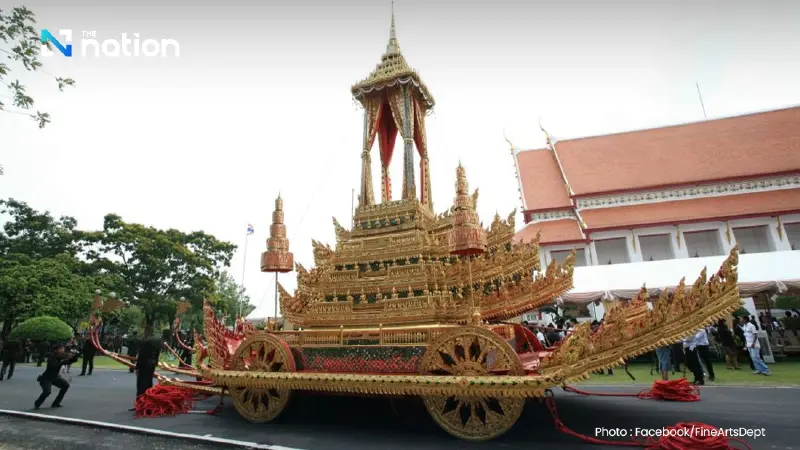


Her Royal Highness Princess Maha Chakri Sirindhorn presided over a sacred ceremony at the Bangkok National Museum to bless the restoration of royal chariots, palanquins and regalia to be used in the royal cremation of Her Majesty Queen Sirikit, the Queen Mother. Explore the details behind the "Heavenly Vehicles" in the royal procession.
Her Royal Highness Princess Maha Chakri Sirindhorn on Thursday (November 6) presided over a sacred ceremony to bless the restoration of the royal chariots, royal palanquins, and ceremonial equipment to be used in the royal cremation of Her Majesty Queen Sirikit, the Queen Mother.
The ceremony took place at the Bangkok National Museum, where Her Royal Highness was received by Thanpuying Sirikitiya Jensen, Prime Minister Anutin Charnvirakul, and other officials.
Upon arrival, the Princess placed a floral garland and lit candles and incense in homage to Phra Phuttha Sihing, the revered Buddha image enshrined in Buddhaisawan Hall.
She then proceeded to the ceremonial grounds in front of the Royal Chariot Garage, where she lit gold and silver candles and incense sticks as part of the ritual blessing for the restoration of the royal carriages and regalia.
As the ceremony commenced, the court astrologer struck the victory gong, Brahmin priests blew conch shells, and royal attendants performed traditional gestures with damaru drums and trumpets. Dancers from the Office of Performing Arts then performed a classical dance of homage to the accompaniment of Phleng Sathu Kan, a song of blessing, in accordance with ancient royal tradition.

During the ceremony, Phra Maharajaguru Phithi Si Wisutthikhun, Chief Brahmin of the Royal Court, read the sacred invocation to the deities and called upon the spirits of past monarchs to bless the restoration work.
Her Royal Highness Princess Maha Chakri Sirindhorn later proceeded to the main altar, where she sprinkled lustral water over artisans’ tools and scattered popped rice and flower petals as a symbolic gesture of blessing.
She then entered the Royal Chariot Garage to place floral garlands on the Phra Maha Phichai Ratcharot Royal Chariot, the Phra Yannamas Sam Lam Khan (The Golden Three-Poled Palanquin), the Vejayantaracharot Royal Chariot, and the three Small Royal Chariot.
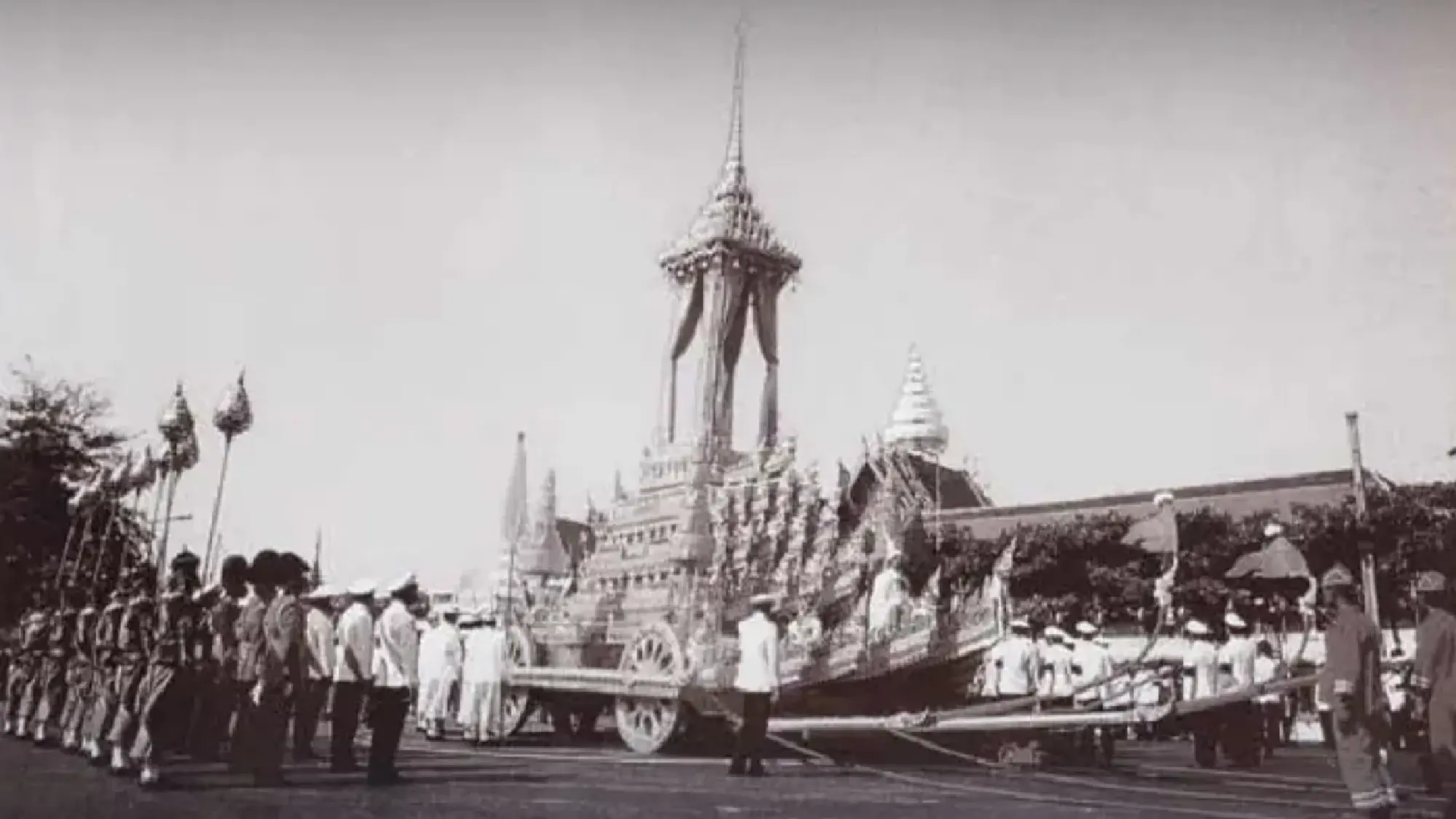
The royal chariots and palanquins, originally built during the reign of King Rama I (1782–1809), have been used in royal funeral processions since the early Rattanakosin period.

To preserve this historic royal heritage and ensure auspiciousness for those involved in the restoration, the government entrusted the Ministry of Culture and the Fine Arts Department to conduct the consecration and restoration ceremony in accordance with long-established royal traditions.
The Fine Arts Department, together with the Army Ordnance Department and the Navy Dockyard Department, will oversee the restoration of these royal carriages and two Naga Stair Platforms, the Ratchenthrayan Royal Palanquin, and the Phra Wor Siwikakanchana Palanquin.
The Fine Arts Department will conduct the scientific restoration, conservation, and decorative craftsmanship, ensuring historical and artistic precision.
Meanwhile, the Army Ordnance and Navy Dockyard departments will focus on structural assessments, mechanical systems, and towing stability to guarantee safety and durability for the royal funeral procession, a tribute of the highest honour to Her Majesty Queen Sirikit, the Queen Mother.

"Royal Carriages and Royal Palanquins" – Vehicles of the Highest Honour in Ancient Royal Tradition
The royal chariots and royal palanquins featured in this sacred ceremony are key components of the royal regalia of the King and high-ranking members of the royal family, used in royal funeral rites dating back to ancient times. They play a crucial role in the procession, such as transporting the royal urn (Phra Borom Kos) in the procession from the Grand Palace to the crematorium.
During the royal funeral ceremonies, several royal chariots and palanquins will undergo restoration. The key items and their respective functions are as follows:

- Phra Maha Phichai Ratcharot
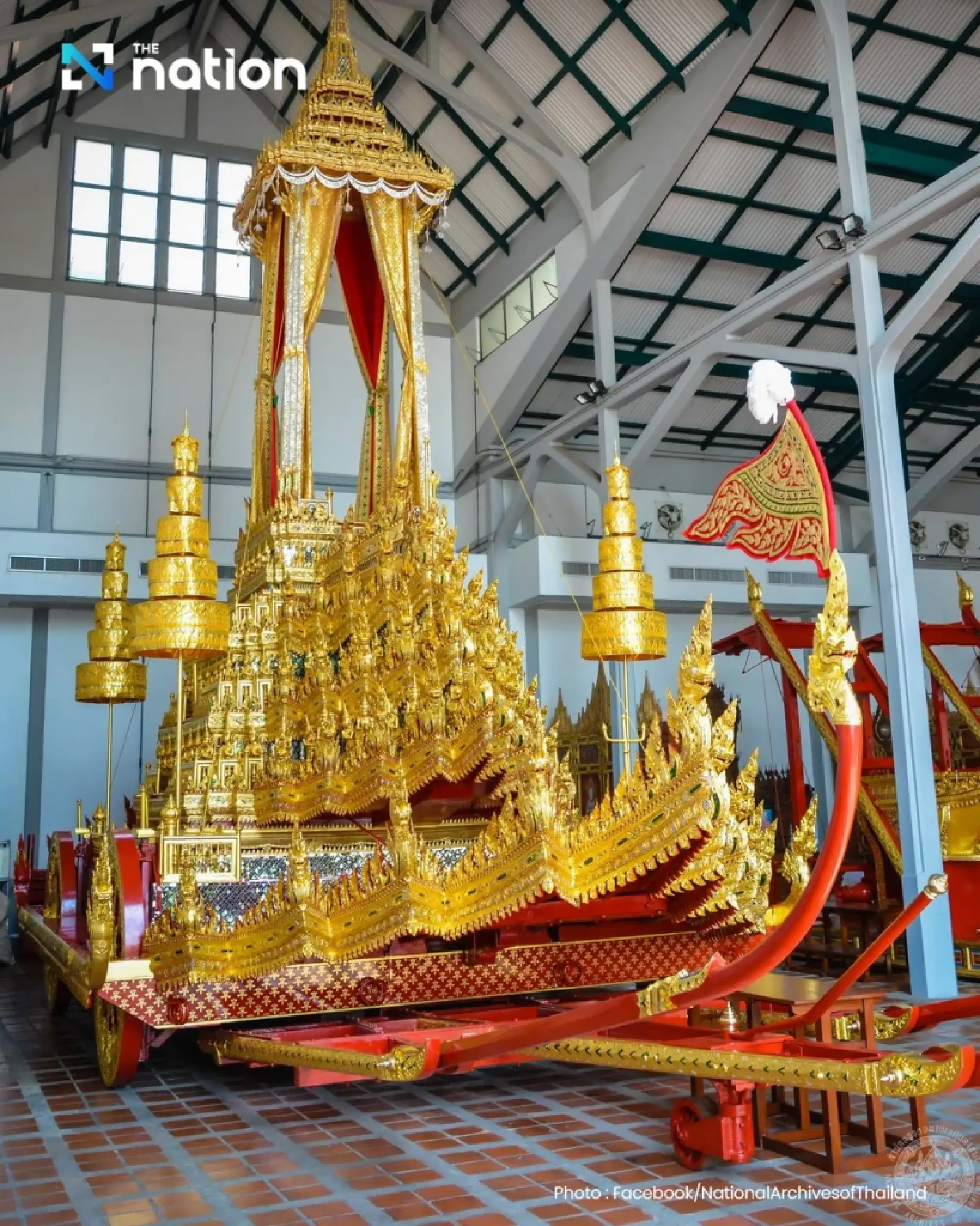
The largest royal chariot, made of intricately carved wood, gilded with gold leaf, and adorned with glass, was created during the reign of King Rama I. It is used to transport the royal urn or the highest royal remains in the second procession, moving from the Grand Palace to the royal crematorium at Sanam Luang. - Vejayantaracharot
This is another royal chariot, similar in design to the Phra Maha Phichai Ratcharot, used to transport the royal remains or for ceremonial processions according to ancient traditions. - Small Royal Chariots
These smaller royal chariots serve different purposes in the royal procession. For example:- Phra Nam (Chanting Chariot): Used to transport royal statues or senior monks in a procession, where the monks chant sacred prayers.
- Phra Ploy (Flower-Throwing Chariot): Used to scatter rice and flower petals.
- Phra Yong (Tethering Chariot): Used to carry ceremonial fabrics attached to the royal urn or casket.
- Royal Palanquins and Additional Components in the Procession
Apart from the royal chariots, the royal palanquins play significant roles in the procession:- Phra Yannamas Sam Lam Khan: A large royal palanquin with three carrying poles, used in the first procession to transport the royal urn from Dusit Maha Prasat Throne Hall to the Phra Maha Phichai Ratcharot, which awaits at the nearby pavilion.
- Phra Ratchenthrayan: A royal palanquin with a translucent canopy, intricately decorated with gilded carvings, used to carry the royal remains or ashes during the procession back to the Grand Palace after the completion of the funeral rites.
- Phra Saliang Klip Bua: A palanquin used for His Holiness the Supreme Patriarch or high-ranking religious figures, who sit and chant sacred prayers while leading the royal urn or casket in the procession.
In addition to the chariots and palanquins, several important items are used in the royal procession, such as the Naga Stair Platforms (2 pieces). These resemble the stern of a ship and are decorated in the form of a mythical serpent, used for assisting the movement of the royal urn or casket from the royal palanquin and royal chariot to the crematorium in a dignified and safe manner.

Major Restoration Mission Towards Perfection
Following the sacred ceremony, the Fine Arts Department announced the closure of the Royal Chariot Garage at the Bangkok National Museum from November 6 to begin the major restoration process. This effort is a collaborative project between the Fine Arts Department, the Army Ordnance Department, and the Navy Dockyard Department. Their work will include structural assessments, reviewing mechanical systems, movement, and towing mechanisms to ensure the chariots’ stability, durability, and highest royal dignity, in keeping with ancient royal traditions.
The Conservation Science Group of the National Museum will be responsible for cleaning the royal chariots before the Office of Traditional Arts begins delicate restoration work on the glass, gilding, and intricate craftsmanship. Scaffolding will be set up to restore the royal chariots, focusing on their beauty and the utmost dignity, in line with ancient royal traditions. This extensive restoration is expected to be completed by September or October 2026, aligning closely with the completion of the royal crematorium.
The restoration ceremony for the royal chariots and palanquins serves as a reaffirmation of the importance of the royal traditions and practices that have been faithfully passed down over centuries. It is a tribute to the highest honour for Her Majesty Queen Sirikit, the Queen Mother, who is dearly beloved by the Thai people. The collaboration in this restoration is a heartfelt offering of respect, ensuring that the Queen Mother will journey to her final resting place with the highest royal dignity, as per ancient royal customs.

