
Loei’s Phi Khon Nam festival draws crowds to Chiang Khan village
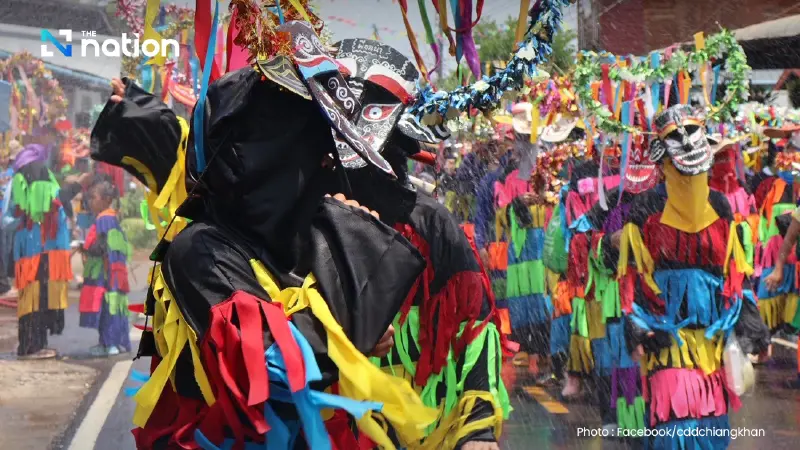


Loei’s Phi Khon Nam 2026 festival in Chiang Khan drew Thai and foreign visitors as Ban Na Sao villagers staged masked dances to honour ancestral spirits and pray for seasonal rain.
Loei’s unique Phi Khon Nam, or “water-carrying spirits”, tradition came alive in grand style at Wat Pho Si in Chiang Khan district as Ban Na Sao villagers gathered to preserve the 2026 edition of the rain-praying festival.
Hundreds of dancers wearing the striking “Maeng Na Ngam” masks joined a colourful procession, moving to the rhythm of local music in a ceremony held to honour Chao Pu, the village’s ancestral guardian spirit, and Phaya Thaen, a deity or spirit in Thai and Lao folklore, while praying for rain to fall in season.

Loei Governor Chaipoj Jaroonpong presided over the official opening of the Phi Khon Nam festival in Ban Na Sao village on Sunday (May 3).
The atmosphere was lively throughout the event, with Phi Khon Nam performers dancing along the streets and creating excitement on both sides of the route. Thai and foreign tourists turned out in large numbers to witness the rare cultural spectacle.

One of the most memorable scenes this year was the sight of local young people dressing as Phi Khon Nam and dancing alongside adults.
Their participation reflected efforts to nurture pride in their hometown and pass on local culture to the next generation, helping keep the Phi Khon Nam tradition sacred, vibrant and alive year after year.

The event is not only a way to preserve local heritage, but also an important form of soft power that supports the government’s tourism and economic policies. It has helped turn Ban Na Sao village into a cultural destination attracting attention during the festival period.

What is Phi Khon Nam and why do people dance?
The tradition is centred on worshipping Chao Pu, the ancestral spirit believed to protect the village, as a way of expressing gratitude for keeping the community peaceful and safe.
Most importantly, the ritual is performed to pray for rain to fall according to the agricultural season.

The term “Khon Nam” carries the symbolic meaning of bringing water from the sky down to the earth, so farmers will have enough water for their fields in line with ancient local beliefs.

A major highlight for visitors and photographers is the Phi Khon Nam mask, also known as “Maeng Na Ngam”, which is highly distinctive and carefully crafted.
The masks are made from natural materials, particularly softwood such as silk cotton trees or blackboard trees. They are decorated with ancient local patterns known as “Bua Khruea” and “Phak Waen”.

Their design resembles cattle or buffalo, with large eyes, a large nose and a friendly smile. The masks are also decorated with long “hair” made from dried banana sheaths woven into braids.
Another special feature of the tradition is that it is open to everyone. People of any gender and age can take part by dressing as Phi Khon Nam.

