
Why Thailand’s pungent flavours are its most beloved
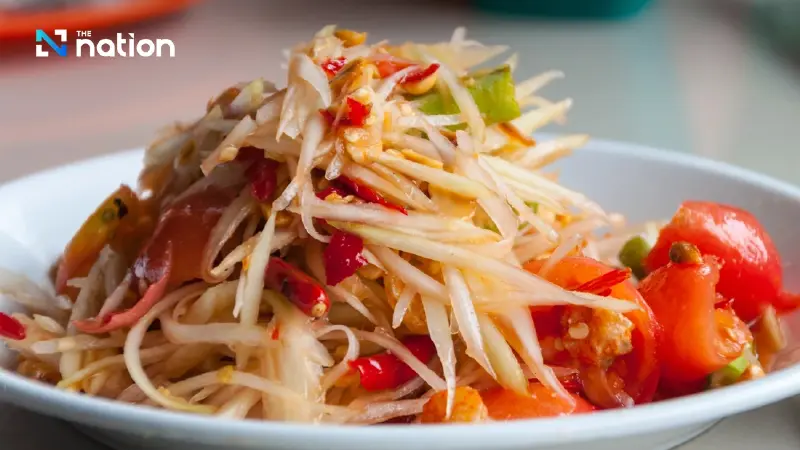


In the world of global gastronomy, Thailand is celebrated for balancing the four pillars of taste: sweet, sour, salty, and spicy. However, a “fifth pillar”, aroma, defines the soul of authentic Thai cooking.
To the uninitiated, these scents can be confrontational, but to a Thai palate, they are a siren song.
There is an informal culinary rule in Thailand: the funkier the ingredient, the tastier the dish.
These pungent notes signal a depth of flavour that “clean-smelling” food simply cannot match. Here are the aromatic powerhouses that define the Thai kitchen.
The “Stink Bean” (Sataw)
Known scientifically as Parkia speciosa, the Sataw bean is famous throughout Southeast Asia, but nowhere is it more celebrated than in Southern Thailand.
These bright green, almond-shaped beans carry a sharp, sulfuric odour that lingers long after the meal is finished.
Despite the smell, they possess a unique, nutty crunch and a subtle bitterness that cuts through rich fats. The classic preparation is Pad Sataw Goong, a fiery stir-fry featuring succulent shrimp, minced pork, and a heavy dose of fermented shrimp paste.
The result is a complex explosion of flavour in which the “stink” transforms into a savoury, earthy backbone.

The Funky Foliage: Cha-om
Cha-om is a climbing shrub with feathery green leaves belonging to the acacia family. While it looks innocent enough, the raw leaves emit a potent, “green” funk that some compare to wet earth or strong sulfur.
However, the magic of Cha-om happens when it meets heat. When chopped and whisked into eggs to create Kai Jeow Cha-om (Cha-om Omelette), the heat mellows the sharp scent into an herbal, savoury aroma.
These thick, spongy omelette squares are traditionally served with Nam Prik Kapi, a pungent chilli lime dip, creating a perfect marriage of funk and freshness.


The Umami Powerhouse: Kapi (Shrimp Paste)
If there is one ingredient that acts as the foundation of Thai cuisine, it is Kapi. Made from tiny krill salted and fermented under the tropical sun, raw Kapi is undeniably pungent.
To the unfamiliar, the smell can be overwhelming, but it is the secret weapon behind almost every Thai curry paste.
When toasted or stir-fried, the sharp fishiness of Kapi evaporates, leaving behind a deep, toasted umami flavour. It provides a savoury “floor” for soups and curries, elevating the other ingredients without ever being explicitly “fishy.”

The King of Pungency: Pla Ra
Finally, we reach the undisputed heavyweight of Thai aromas: Pla Ra. This is fermented fish, usually mudfish or gourami, left to age in jars with salt and rice bran for months, or even years. It is the lifeblood of Northeastern (Isaan) cuisine.
Pla Ra is what gives Som Tam Pla Ra (Papaya Salad with fermented fish) its addictive, salty, and deeply fermented kick. While the scent is powerful enough to clear a room, the flavour is a masterclass in fermentation, providing a rich complexity that makes standard fish sauce seem one-dimensional by comparison.

So, the next time your nose catches a whiff of something “funky” at a Thai street market, don’t turn away. Take a bite, you might just find that the secret to the world’s most delicious food is hidden behind its most challenging scents.
