
Rise of the Mū: Thai Border City Nakhon Phanom Becomes Spiritual Tourism Powerhouse
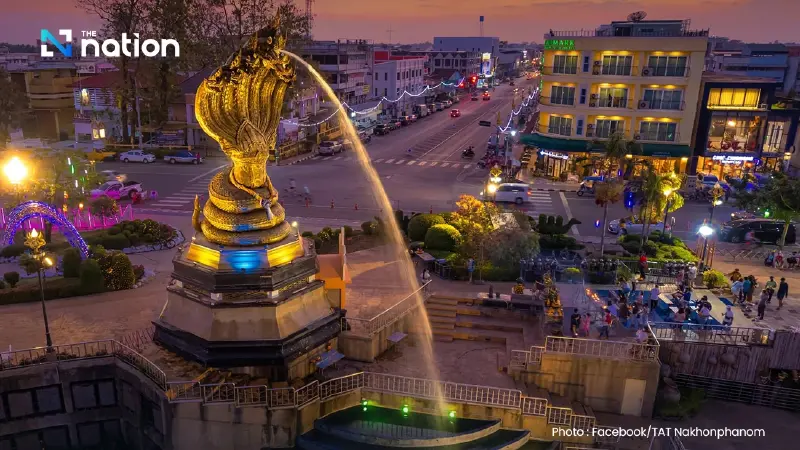


Post-pandemic stress and new spiritual landmarks are driving huge visitor numbers to Nakhon Phanom, transforming it into Thailand's primary 'Mū tourism' hub.
- Nakhon Phanom's transformation into a spiritual ("Mū") tourism hub is driven by post-pandemic demand for solace and the addition of new landmarks like the Phaya Si Sattana Nakarat statue.
- The 2016 completion of the Naga King statue was a crucial turning point that shifted tourist behavior from passing through to staying in
Post-pandemic stress and new spiritual landmarks are driving huge visitor numbers to Nakhon Phanom, transforming it into Thailand's primary 'Mū tourism' hub.
Once considered a quiet, transitional province on Thailand's border, Nakhon Phanom has rapidly emerged as one of the country's most significant destinations for 'Mū Tourism' (spiritual travel and seeking blessings).
A surge in visitors, driven in part by a desire for spiritual solace following the pandemic, is generating a huge economic boom, leading to packed hotels, flourishing restaurants, and an explosion in local commerce.
The transformation was documented by Krungthep Turakij reporter Piraporn Witoorut, who noted that while the province remains officially a "secondary city," its current status effectively makes it a leading spiritual destination.
Tourists, both Thai and international, now frequently mark Nakhon Phanom as a must-visit pilgrimage site, with many returning annually.
Chanon Kultangwattana, president of the Young Entrepreneur Chamber of Commerce (YEC) of Nakhon Phanom, explains that the city’s inherent features—a 100-kilometre scenic stretch along the Mekong River and historically important relics like Phra That Phanom—have been synergised by modern landmarks.
Crucially, the completion of the Phaya Si Sattana Nakarat (Naga King) statue in 2016 has fundamentally changed tourist behaviour.

“A decade ago, before the Naga King statue, tourists would visit Phra That Phanom and then choose to stay in nearby provinces like Mukdahan or Sakon Nakhon,” Chanon stated. “However, after the Phaya Si Sattana Nakarat, tourists increasingly choose to stay here, leading to significant growth in related tourism businesses, including restaurants, hotels, and car rentals.”
This growth is especially evident during major festivals, such as the Phra That Phanom worship in February and the Illuminated Boat Procession during the end of Buddhist Lent.
“Hotels and restaurants are fully booked, sometimes forcing tourists to stay in neighbouring provinces or districts,” he added.
The city is also set to unveil the 'Mekong River Eye', a 50-metre-high Ferris wheel, by the end of the year, further strengthening its appeal.

The Café and Food Delivery Boom
The economic impact is palpable at the local level. Wisarut Sroikham, owner of Chewa Café By SK Sroikham, recalled that when he opened his business, there were only 15-20 coffee shops in the province.
Five years later, the number has ballooned to over 100 cafés, driven by locals returning home during the pandemic and capitalising on the influx of spiritual tourists.
“Every business has to develop more than just ingredients and taste; they need 'Storytelling' to stand out, especially for tourists seeking a local experience,”Wisarut commented.
Data from Isriya Paireepairit, VP of Public Policy and Government Relations at LINE MAN Wongnai, corroborates this rapid expansion.
Order numbers on their platform in Nakhon Phanom grew by an average of 12%, outperforming the 10% average growth rate seen across the rest of the Northeast region.
While Black Coffee, Matcha, and Iced Espresso remain the top beverage orders, the most popular food items reflect local Northeastern cuisine, dominated by various forms of Papaya Salad (Som Tum), including the Lao-style and Jungle variations.
The boom has provided clear financial benefits for local workers; the average daily income for delivery riders in the region is 480 baht, significantly exceeding the Northeastern regional minimum wage of 350 baht per day.
Looking forward, the province aims to build on its success by focusing on developing Health & Wellness tourism, further diversifying its economic base beyond spiritual pilgrimages.
