
Khao Kheow Open Zoo Celebrates Historic Hatching of Rare Greater Adjutant Stork
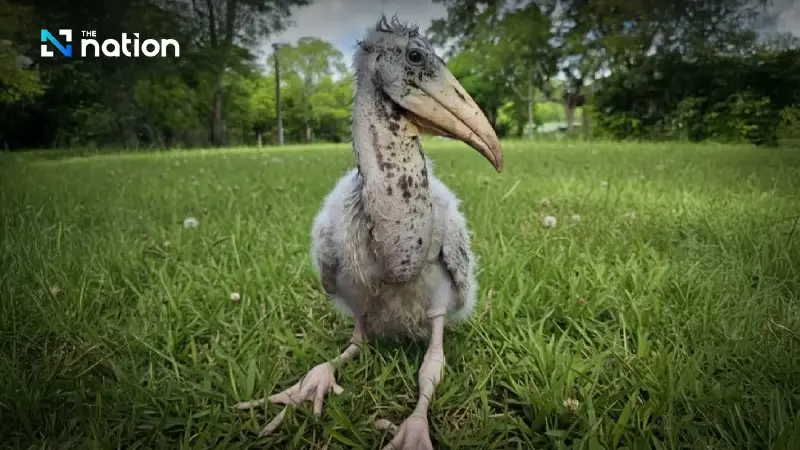


The breakthrough marks the first time the critically endangered bird has been successfully bred in Thailand after a 40-year absence from the wild
- Khao Kheow Open Zoo has successfully hatched a Greater Adjutant stork, marking the first time the critically endangered species has been bred in Thailand.
- The achievement is a major conservation milestone, as the bird has been extinct in the wild in Thailand for over 40 years.
- The chick was hatched from a single egg that was artificially incubated and is being hand-reared by zoo staff to ensure its survival.
- This success makes the zoo only the fourth facility in the world to breed the species and the first among members of the World Association of Zoos and Aquariums (WAZA).
The breakthrough marks the first time the critically endangered bird has been successfully bred in Thailand after a 40-year absence from the wild.
Conservationists at Khao Kheow Open Zoo in Chonburi Province have achieved a historic milestone in wildlife preservation by successfully hatching a Greater Adjutant stork chick.
The monumental breakthrough marks the first time the species has been successfully bred in Thailand, offering fresh hope for a bird that has been extinct in the Thai wild for over four decades.

Suchart Chomklin, the Minister of Natural Resources and Environment, expressed immense pride in the achievement, praising the zoo's veterinary and husbandry teams for orchestrating a precision "life-saving operation" to secure the chick's survival.
Narongwit Chodchoy, director of Khao Kheow Open Zoo in Si Racha District, revealed that the high-stakes breeding attempt relied entirely on a single egg harvested from the facility’s sole remaining captive breeding pair.

The Greater Adjutant stork is notorious for its challenging reproductive habits, typically laying just one or two eggs a year, coupled with exceptionally low natural hatching success rates.
Recognising the fragility of the situation, zoological experts intervened, removing the egg for artificial incubation and committing to round-the-clock hand-rearing once the chick emerged.
The newborn is the first of its species to be successfully bred under the auspices of the Zoological Park Organisation of Thailand.
The achievement also marks a regional and global milestone, representing the first successful hatching of a Greater Adjutant stork by any member institution of both the South East Asian Zoos and Aquariums Association (SEAZA) and the World Association of Zoos and Aquariums (WAZA).


With this success, Khao Kheow Open Zoo becomes only the fourth facility worldwide to officially breed the Greater Adjutant in captivity.
It joins an elite group of conservation centres comprised of the Bang Phra Waterfowl Breeding Centre in Thailand, the Assam State Zoo in India, and the Angkor Centre for Conservation of Biodiversity (ACCB) in Cambodia.
"This success is another major step forward for Thailand in rare wildlife conservation, demonstrating the power of collaboration in restoring endangered populations," said Environment Minister Suchart.
He reaffirmed the ministry's commitment to providing ongoing funding and resources for research and breeding programmes designed to safeguard the nation’s biodiversity.
