
Inside All About Khon: Ayutthaya's Hidden Royal Mask Sanctuary
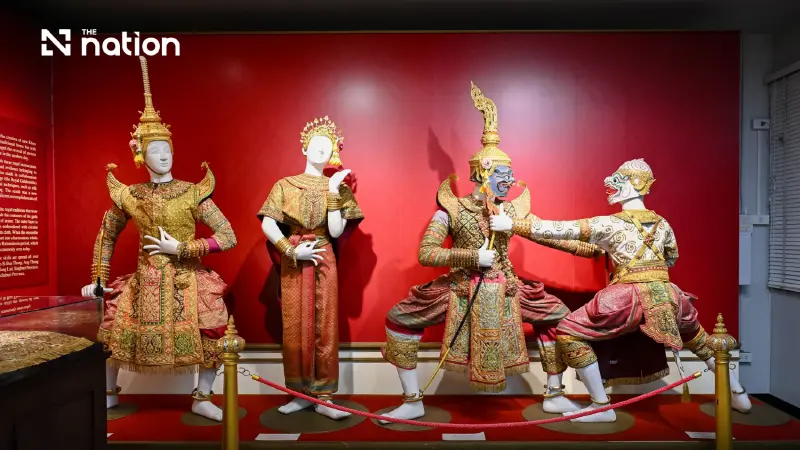


A journey to the All About Khon centre in Ayutthaya reveals the 8,000,000-baht royal revival, 22-layer masks and intricate stagecraft behind Thailand's most treasured dance drama
- The All About Khon center in Ayutthaya is a learning hub and sanctuary dedicated to preserving the artistry of Thailand's royal Khon masked dance drama.
- Its creation stems from a 2005 royal revival initiative by Queen Sirikit The Queen Mother to save the near-extinct art form through the SUPPORT Foundation.
- The sanctuary showcases the intricate craftsmanship behind the drama, including sacred masks made from up to 22 layers of paper and elaborate, heavy costumes.
- Beyond masks and textiles, the center displays the grand stagecraft of Khon and functions as a working academy to pass the UNESCO-recognized heritage to new generations.
A journey to the All About Khon centre in Ayutthaya reveals the 8,000,000-baht royal revival, 22-layer masks and intricate stagecraft behind Thailand's most treasured dance drama.
Behind the heavy velvet curtains of the Thailand Cultural Centre, a single annual performance captivates the nation each year. For the casual spectator, the grandeur of the production leaves a lasting impression, but it also raises a question: how can one theatrical run justify twelve months of anticipation?
The answer is not found in the sprawl of Bangkok but in a quiet, modern sanctuary set among the paddy fields of Koh Kerd, in the Bang Pa-in district of Phra Nakhon Si Ayutthaya.
Here stands the All About Khon learning centre, a multi-storey archive and knowledge hub that reveals the staggering artistry, logistics, and devotion required to keep Thailand's most prestigious performing art alive.

Stepping inside is a transformative experience. Far from a static collection of relics, the centre feels like a living testament to cultural resilience.
Wandering its exhibition floors, one grasps a remarkable truth: a single production is the result of hundreds of artisans, each executing centuries-old disciplines with painstaking precision. From the first thread spun on a handloom to the final brushstroke on a sacred mask, making a Khon costume is an uncompromising feat of endurance.
The royal catalyst of revival
To understand why the centre exists, one must understand the near-collapse and rebirth of Khon itself. Historically, this highly stylised masked dance drama was the artistic jewel of the Siamese court. But by the late twentieth century, changing tastes and the rise of modern media pushed the tradition to the brink of obscurity.

The trade secrets behind its costuming, stagecraft and mask-making were fading fast, along with the elder masters who held them.
The turning point came in 2005, when Her Majesty Queen Sirikit The Queen Mother resolved to revive royal patronage of Khon. Drawing on fond memories of performances she had watched in her youth, Her Majesty recognised that losing Khon would mean losing Thailand's oldest narrative dance form.
Through the SUPPORT Foundation, she commissioned extensive historical research, drawing together court texts, costume fragments and oral histories to shape a new, definitive staging of the drama.
That initiative led to a landmark revival performance in 2007, mounted to mark the late King Bhumibol Adulyadej The Great's 80th birthday and the Queen Mother's own 75th. Public reception was so overwhelming that she asked for it to become an annual fixture.
That single decision breathed new life into rural Thai industries, offering steady work, specialist training and a sustainable livelihood to hundreds of weavers, embroiderers, sculptors and performers.

Ten kilograms of living art
Inside the costume and textile wing, any notion that theatrical dress is merely decorative falls away. A single Khon costume is made from around 20 pieces of hand-woven fabric, not simply put on but wrapped, folded and stitched directly onto the performer's body for a flawless fit that withstands vigorous stage movement.

Paired with an ornate, glittering headdress or mask, a performer can carry close to ten kilograms of costume.
The physical stamina required to dance gracefully under hot stage lights while bearing that weight is considerable — though it pales beside the labour needed to make it:

The Nern Thummung Silk Brocade: the premium fabric uses patterns exclusive to the SUPPORT Foundation. Weaving is so intricate that a master artisan completes just 3 centimetres a day, and a single bolt of the finished silk is valued at roughly 200,000 baht.


The 22-layer mask: traditional masks are built from layers of sacred khoi paper. Artisans apply between 17 and 22 layers over a mould, each one left to dry fully in natural sunlight before the next is added.
Caring for these garments demands equal discipline. Modern dry cleaning, detergents and harsh chemicals are banned outright, as they would damage the organic dyes and gold leaf. Instead, costumes are dipped gently in plain water and hung out by hand to dry in the sun.


Mythic cosmology and stagecraft
The centre's upper floors move from delicate textiles to the grand scale of stagecraft and mythic architecture, housing the hand-painted backdrops and kinetic effects used in the Cultural Centre's annual productions.
One highlight is a striking sculpture of Lord Narai – the King of Gods and an incarnation of Vishnu – rendered in deep purple and riding the mythical Garuda, offering a neat lesson in Thai symbolism.
Guides point out that the Garuda sits directly above Narai in his palace, illustrating the root of Thai royal iconography: because Thai monarchs are traditionally regarded as earthly incarnations of Rama, an avatar of Narai, the Garuda became the enduring emblem of royal seals, government insignia and the national flag.

Nearby halls show how ancient stories are translated into physical space through ingenious stage engineering. Among the most impressive pieces is a fully functional scale-model wooden sailboat, built with Royal Thai Navy assistance, complete with a remotely operated rudder and a folding sail system designed for a moving stage.
Giant sculptures elsewhere demonstrate the forced-perspective techniques developed by the foundation's set designers: painted palace windows are built as asymmetrical trapezoids, taller on the edge facing the audience, to create an illusion of depth on a flat backdrop.
Visitors can stand before towering figures from the Ramakien, Thailand's adaptation of the Ramayana, including Hong Khon, a giant capable of changing his size, and the fearsome sea goddess who once swallowed the monkey general Hanuman whole.


A safeguarded legacy
The global importance of this work was recognised on 29 November 2018, when UNESCO inscribed Khon on the Representative List of the Intangible Cultural Heritage of Humanity — a milestone celebrated throughout the Koh Kerd centre, which functions as a working academy rather than a passive museum, passing techniques on to the next generation.
Crucially, preservation does not mean the art form is frozen in time.

Khon was once a strictly male discipline, with men performing every role, including the graceful parts of Sita and the celestial angels. Today the stage has opened to actresses, adding new realism and vocal range. For travellers decoding the dancers' stylised gestures, curators offer one tip: watch the floral garlands on the headdresses. Female characters wear theirs on the left, male characters on the right.
To help these pieces withstand central Thailand's tropical climate, the centre is converting its storage and display halls into fully air-conditioned spaces, protecting the mineral paints from cracking and the gold leaf from deteriorating.

Practical information
For travellers seeking an authentic detour from Ayutthaya's usual tourist trail, All About Khon offers an unmatched, immersive look into the heart of classical Thai drama.
Location: Arts of the Kingdom Museum precinct, Koh Kerd Sub-district, Bang Pa-in District, Phra Nakhon Si Ayutthaya.
Opening hours: Wednesday to Sunday, 09:30–16:00 (last ticket sales 15:30). Closed Mondays and Tuesdays.
Admission: 150 baht for general admission; 75 baht for students, researchers and those aged 60 and over. Free for children under 120cm tall, monks and visitors with disabilities.

