
Shadows walk the White House


Play
The way current and former US presidents treat one another reaches beyond courtesy to shape history
Having won the presidency by a margin of just 120,000 votes, John Kennedy was short on legitimacy. As demands for a recount raged, he and his opponent, Republican Vice President Richard Nixon, were both recovering in Florida from the brutal campaign. So Kennedy’s father Joe called former Republican president Herbert Hoover, who had once needed his services, and asked him to phone Nixon and arrange a friendly detente – specifically a photo op – for the good of the country.
Nixon was dining out with friends in Key Biscayne. Suspicious as ever, he nevertheless agreed with Hoover’s logic that a disputed election would damage America’s image as the bastion of democracy. Then Nixon phoned Dwight Eisenhower, the outgoing president, who advised him he’d “look like a sorehead” if he refused to shake Kennedy’s hand.
Nixon resumed his meal, and then the waiter came over with the phone again. It was Kennedy in Palm Beach. Acceding to the parlay, Nixon suddenly realised the historic significance of what had just happened. In the last 10 minutes he’d spoken to the former, current and next presidents of the United States. And Nixon, of course, was a future president.
Much more serious deliberations fill “The Presidents Club” as successive occupants of the White House from Hoover to Barack Obama tap their predecessors for wisdom and support – and sometimes engage them in fierce and usually secret battle. But the amusing anecdote of the Florida phone calls illustrates better than most how America’s presidents come to rely on each other regardless of party colours.
Authors Duffy and Gibbs, who are editors at Time magazine, have mined enough remarkable behind-the-scenes gems from the presidential libraries and collective memories to fill 600 pages, and it is by no means all handshakes and let bygones be bygones. Not every president was a willing member of the Presidents Club – common partisan rivalry often disguised outright hatred.
Along the way, readers get to know the humbler human side of these history makers, and will often be surprised. Eisenhower, the great hero of World War II, remains widely admired for his friendly, smiling countenance, but those who knew him personally dealt with a grumpy, and at times vicious, old man.
Kennedy’s true character continues to be portrayed as more devious and devilish than the Camelot myth could ever hope to cover up. Harry Truman seems more deserving than ever of rehabilitation as one of the best presidents, at least in terms of morals and sense. Jimmy Carter, so dedicated to the wellbeing of humanity, could be an outrageous loose cannon. And George W Bush? A nice fella, just as we always suspected but never wanted to admit.
There is, however, a question mark as to the authors’ overall accuracy, given several glaring omissions about peripheral events. Nixon recalls hearing that Lee Oswald originally planned to kill him, not Kennedy – but the authors fail to mention that Oswald’s beleaguered widow probably concocted the claim. And they recount the October 1962 missile crisis without acknowledging outright that it was Kennedy who fomented it, not the Soviets.
There are more such dubious moments in the telling, but this is, after all, history as we’re not used to hearing it, and overall immensely enjoyable.
>>>
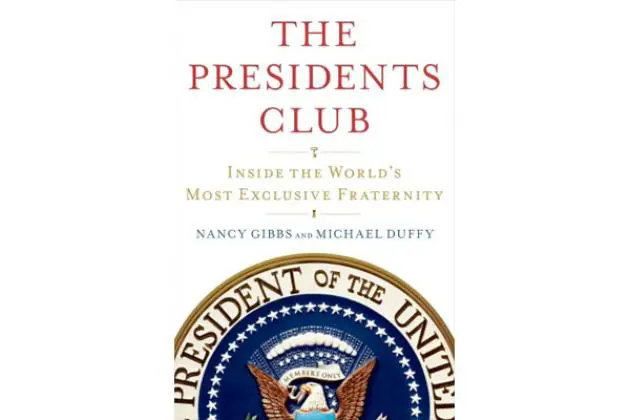
The Presidents Club: Inside the World's Most Exclusive Fraternity
By Nancy Gibbs and Michael Duffy
Published by Simon & Schuster, 2012
Available at Asia Books, Bt495
