
Ballet's Japanese princess
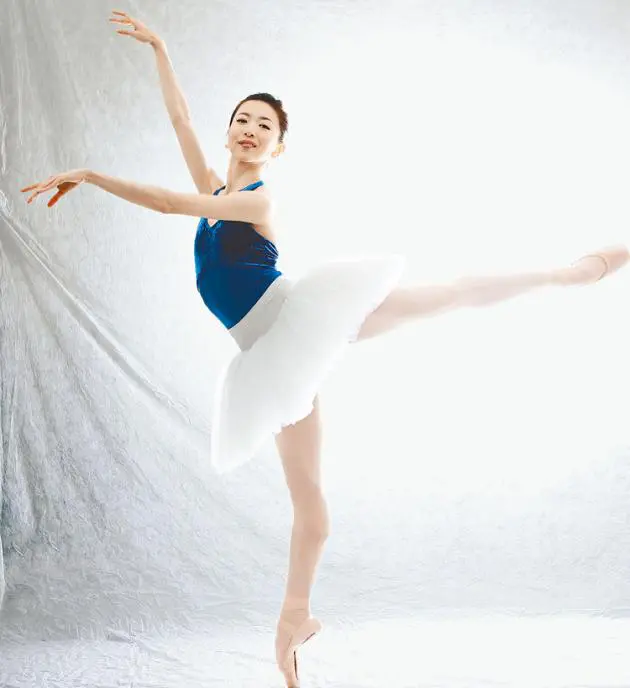


Thin and short, Yuriko Kajiya nonetheless has a powerful impact on audiences
A Japanese ballerina has risen to lead status at the world-famous American Ballet Theatre, the New York troupe that boasts such star dancers as Daniil Simkin and Diana Vishneva.
Yuriko Kajiya, 29, charms audiences around the globe with her dynamic dancing, which is all the more impressive considering her tiny frame. Her talent lies in her ability not only to dance beautifully with technical precision, but also to move the audience with the emotion she pours into her performances.
The American Ballet, founded in 1940, is one of the five largest companies in the world, along with the Royal Ballet of Britain, the Opera National de Paris and Russia’s Bolshoi Ballet and Mariinsky Ballet.
Kajiya performed in Tokyo in mid-August and will return as a member of the US troupe in February and March.
In Japan, most aspiring ballet dancers start attending classes between ages three and five and devote themselves to study at a private school, but Kajiya’s path was a little different.
Born in Aichi Prefecture, Kajiya only began taking lessons when she was eight. In 1994, when she was 10, her father’s work took him to Shanghai and the family relocated. There, she attended the Shanghai Dance School, which she calls a “life experience”. The other students were elite talents selected from throughout China and the government paid their tuition.
“I couldn’t understand the language and I was the worst student,” Kajiya recalls. “My parents seemed to think I would quit the school after one or two months.” However, after a couple of weeks she began to pick up
the language, so she was able to rapidly improve her ballet technique.
Training was strict and the basics of ballet were hammered into the dance students. Sometimes they were made to practise only one movement for an entire lesson. This regime formed the foundation for Kajiya’s current dance style, which has been described as “correct and precise”.
When Kajiya was 13 she was given the opportunity to perform a solo called “Variation”. The experience opened her up to a
different side of dance and she was able to begin enjoying her lessons. “I felt freed from the world of technical basics and entered the dancing world,” she says.
In 2000, when she was 15, Kajiya participated in the Prix de Lausanne, an annual international competition for young dancers, as one of the four representatives of Shanghai school. The event is known as a gateway to success for budding ballet dancers. “I was determined to win a prize in the event, no matter what,” she says.
Surviving in competitions is a big part of becoming a successful dancer. Since that event, Kajiya has been forced to develop the mental strength it takes to endure the tough environment of competitive dancing.
In the end, she did win one of the coveted prizes in the Prix de Lausanne, which allowed her to study at Canada’s National Ballet School on a scholarship.
In her free time she and her fellow dancers watch the American company’s performance videos. “I was overwhelmed,” she says. “I decided I would do whatever it took to join the theatre company one day.”
After becoming a research scholar at the school in New York, Kajiya was hired as an official member of the company in 2002. Since then she’s worked her way up the ranks, finally being promoted to soloist in 2007. She has been cast as the
heroine in both “Don Quixote” and “Giselle”.
Although it might seem that Kajiya’s career has been smooth sailing, she’s had to endure challenges in life like anyone else. The fact that she has dealt with these so gracefully and privately is yet another reflection of her strength of character.
In 2008 she was in a car accident in Houston. She was in the front seat and the car that hit them came to a halt just five centimetres from her back. “I was
told that my life was saved because I’m thin, so there was luckily some space between me and the other car,” she says. She still suffers from pains in her lower back.
Kajiya often considers the longevity of a dancer. “In terms of age and physical strength, one can’t continue dancing forever. How long I will be able to survive as a dancer all depends on me.”
Recently Kajiya has discovered the joy of teaching ballet to children. Every summer she gives lessons in Japan. “I was taught by my seniors. This is how ballet is passed on to future generations,” she says.
Asked about her motivation as a dancer, she replies, “I want to move the audience with my dancing. You can’t pull the heartstrings of the audience just with technique.”
