
The paint that protects the past


Play
But as much as Penang's wall murals enliven the scene, they can detract from heritage
Street art – some pieces as high as 15 metres, are drawing droves of visitors to the old towns of Malaysia. Many have made the buildings on which they’re found famous, while others have drawn the public’s ire.
Last month Ipoh launched a “mural-art trail” amid allegations that a person in one particular painting, by Ernest Zacharevic, resembles ex-Malayan Communist Party leader Chin Peng.
No stranger to controversy, Zacharevic has seen his picture of a knife-wielding Lego mugger in Johor Baru been painted over following complaints that it denigrated the town.
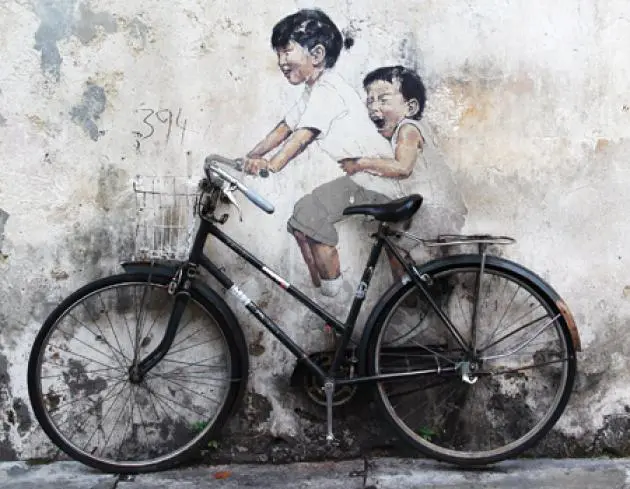
However, in George Town, the Lithuanian’s gigantic murals that have adorned the historical city walls since 2012 continue to attract visitors from around the world.
Urban Xchange – Malaysia’s first street-art festival – recently featured Zacharevic and other artists like batik specialist Tay Mo Leong discussing whether the new murals reflected Penang’s culture.
While the murals in Malacca’s heritage precinct are a hit with tourists, Malaysian Heritage and History Club founder Bert Tan insists they mar the building facades and should be confined to interior surfaces.
Tan, who was born in Malacca, equates street art with tattoos on a beautiful body. “The character, details and history of these old dames should be highlighted, not the add-on murals that don’t belong.”
Another Malacca heritage proponent, Josephine Chua, tells artists not to rob the historic city of its nostalgia because the residents are attached to their childhood memories and family traditions. Be mindful of what you paint, she advises.
Complimenting Zacharevic’s “Little Children on a Bicycle” in George Town, she wants art to reflect local culture. “Even then, it should be limited to the back lanes, not cover the building’s entire facade.”
Chua prefers heritage buildings to be left alone, especially if there are delicate textures on the lime-plaster walls. While admitting that street art draws attention, she compares it to a “heavily dolled up old lady with orange hair”.
“People will take notice, but for the wrong reasons. A well-restored heritage building will tell its own story. We don’t need murals.”
Dr Anwar Fazal, chairman of Think City – a subsidiary of government investment arm Khazanah Nasional that spearheads urban regeneration in Penang – describes art as a powerful tool that communicates beauty and touches the heart.
“Artists capture the past and bring it into the future. Such creativity was recognised by the Unesco, which listed George Town and Malacca as World Heritage Sites in 2008,” he says. But he cautions that graffiti can interfere with heritage if not carefully monitored. “The state’s Public Arts Review Panel must ensure that the paintings add value to our built legacy.”
While happy that more young talents are using art to promote heritage, Penang Heritage Trust president Khoo Salma Nasution warns against treating the walls like blank canvasses. “You must be very careful if you want to paint on a heritage wall with textures. The art work must blend in.”
Citing Koh Shim Luen as an example, she says artists have an important role to play in heritage conservation because they see things most of us miss and immortalise these precious details in their paintings.
Koh concurs. “Art in every form is important in heritage conservation,” she says, pointing to how artists enhance heritage buildings so that the details become easier to appreciate.
Koh, a Perak native, has amassed 200 photographs and sketches of Malaysian buildings over 30 years and is keen to preserve that heritage through art. “Evoking nostalgia and romance was a challenge,” she says.
Revisiting the buildings sometimes leaves her heartbroken. “Less than half of the old buildings in George Town and Malacca resembled what I remembered. Some were beautifully restored, but others looked like a woman who’d had too much plastic surgery done – modern fittings, painted in rainbow colours. The result was garish.”
Architect Alan Teh, who co-organised Koh’s most recent exhibition, believes the skills to construct pre-war buildings are lost. “Using materials like stucco plaster and timber, these craftsmen constructed buildings that reflect a way of life, showing us how the previous generations lived.”
Meanwhile, Dr Anwar says a Think City office will open in Kuala Lumpur this month. “The Klang Valley has seen unprecedented growth. We don’t want to see its rich history obliterated. The stories of the past must come alive again.
“For every ringgit we invest in restoring a building, there’s a return of six ringgit, because the entire street is rejuvenated,” he says, adding that the challenge is to ensure that a building’s legacy continues well into the future.
