
New hope for colorectal cancer patients


One of the most common cancers in the Western world and rapidly increasing in frequency in Asia, colorectal cancer no longer carries the death sentence it did even just a few years ago.
One of the most common cancers in the Western world and rapidly increasing in frequency in Asia, colorectal cancer no longer carries the death sentence it did even just a few years ago. Indeed, the Thai Society of Clinical Oncology says that biomarkers as well as targeted therapy can successfully treat even stage IV colorectal cancer, curing or at least extending the patients’ life by three to five years.
Part of the success, says Associate Professor Virote Sriuranpong, a medical expert from Chulalongkorn Hospital’s Faculty of Medicine, stems from the adoption of personalised therapy. Biomarkers are now used to help doctors find specific genes, which determine which treatment technique is effective for the colon cancer sufferer. In analysing biomarkers, doctors take a small sample of tissue in the area affected by cancer for a test, which takes around one to two weeks. This method allows doctor to choose the right medication for the individual patient and accurately predict how responsive the patient will be to the medication. This diagnosis technique is widely available in public hospitals as well as some private hospitals.
After the biomarker test, doctors are able to choose and plan customised treatment, thus increasing the chances for a successful outcome.
Some of stage III and IV colorectal cancer patients can choose targeted therapy, which does not require chemotherapy.
This medical innovation can also effectively enable colorectal cancer patients, who failed with other medical treatments earlier, to live longer. Studies on final-stage cancer patients provide a large body of evidence that half of the patients who received targeted therapy continued to enjoy a good quality of life in the following years.
During the early stages of colorectal cancer, it is hard to see or observe any symptoms. Precise planning is therefore needed to increase the response rate for patients. Fifty years ago, when medical treatment was not so advanced, all cancer patients received the same treatment, which did not yield effective results in all cases.
For example, chemotherapy kills both good and bad cells at the same time. However, over the past 10 years, doctors have started to learn and understand that different patients need different treatment although they are suffering from the same disease. The biomarker test helps make it easier for doctors to make a sound decision on the right treatment.
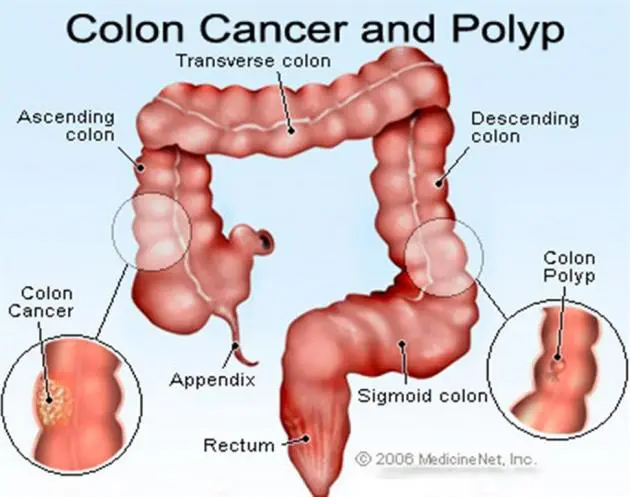
In colon cancer patients, malignant cells generally accumulate on colon tissue. In anal cancer patients, meanwhile, malignant cells pile up on the tissue at the end of colon, close to anus. Cancer is developed from normal cells that are quickly divided and become malignant cells.
Many times, tumours are found in the colon and anus. Although there is no clear cause of the disease, age is considered an important risk because colorectal cancer occurrence usually increases when people are getting older. In general, people aged below 40 have very low risk of colorectal cancer. Then the risk will double when the person turns 50 years old. If there are more risk factors, the chances of developing cancer will be higher.
The development of colon cancer is complicated and there is no clear evidence on what causes colon cancer. However, risk factors can range from age (over 50 years old), those who earlier diagnosed with colon cancer, ovarian cancer, cervical cancer, breast cancer, polyps and inflammatory bowel disease. Obesity and smoking are also considered key risk factors. However, it doesn’t mean that every case with history of such diseases or symptoms will actually develop cancer.
Risk factors that cannot be altered include genetic heredity and family history of colorectal cancer as well as those who are once diagnosed with inflammatory bowel disease and have suffered from such diseases for longer than seven years. Those who suffer from colorectal cancer usually find no symptoms in the early stages. Later, they may find other symptoms, such as blood in stool, bleeding through anus and unusually frequent defaecation. Daily routine may have been changed, such as from daily defaecation to constipation and diarrhoea. Other symptoms are inflammatory bowel syndrome, bloated stomach, chronic stomach pain and lump in the stomach, usually on the lower right of the stomach. If such symptoms continue for at least two weeks, the person should consult a doctor.
