
AirAsia MOVE says Asean travel demand remains strong in 2026
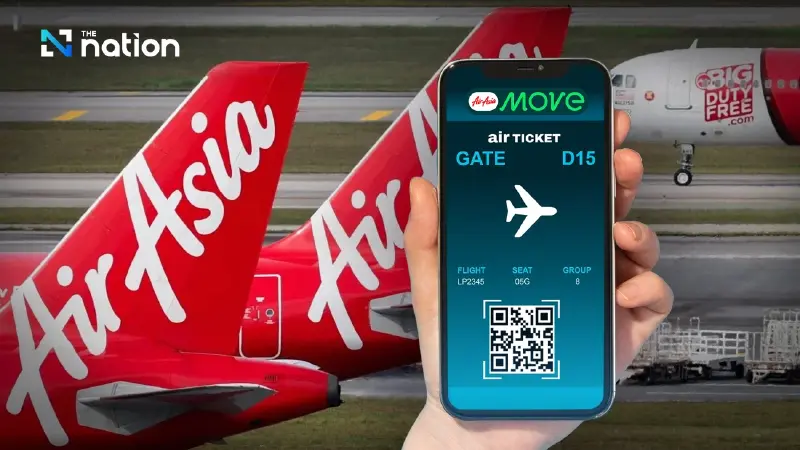


Short-haul trips within Southeast Asia remain the region’s main tourism driver, as AirAsia MOVE says travellers book closer to departure and monitor costs.
- Despite global economic uncertainty and geopolitical tensions, travel demand within the ASEAN region remains high in 2026, with consumers opting for shorter, regional trips perceived as safer and more cost-effective.
- AirAsia MOVE's data from the first quarter of 2026 supports this trend, showing that over 89% of all bookings on its platform were for travel within Southeast Asia.
- The most popular destinations driving this regional demand are Kuala Lumpur (Malaysia), Bangkok (Thailand), and Bali (Indonesia).
- Consumer behavior has shifted towards more short-notice travel decisions, with the average booking window shrinking to 14-30 days as travelers monitor costs and promotions before purchasing.
Chattan Kunjara Na Ayudhya, Head, Country Representative (Thailand) at AirAsia MOVE, said the overall Southeast Asian tourism market in 2026 was continuing to grow despite uncertainty in the global economy and geopolitical situation, particularly Middle East tensions affecting oil prices, aviation costs, and traveller confidence worldwide.
However, consumer travel demand in the region remained high, reflected in AirAsia MOVE’s travel insights for the first quarter of 2026, which found that travel within Asean remained central to the regional tourism market and a key driver of the tourism industry at present.
“Travel within Asean is still very strong. Although the global economy is under pressure on several fronts, people still want to travel. They are simply choosing to travel closer to home because they feel it is safer and easier to control costs.”
ASEAN remains a “core market” for global travel
AirAsia MOVE data showed that more than 89% of all bookings on the platform in the first quarter of this year were for travel within Southeast Asia, reflecting Asean’s position as an important global “travel corridor”, particularly at a time when travellers worldwide remained cautious about long-haul trips.
The markets with the highest booking volumes on the platform included Malaysia and Thailand, while consumer behaviour had begun shifting towards more short-notice travel decisions, with the average booking window at 14-30 days.
Chattan said the key factors were economic uncertainty and volatile travel costs, prompting tourists to wait and monitor the situation before purchasing.
Travellers are now highly flexible: they are no longer booking a year ahead as before, but are watching the situation, promotions, oil prices and safety before deciding.
Bangkok, Kuala Lumpur and Bali dominate the popular city list
Among popular destinations in ASEAN, the top three were Kuala Lumpur, Malaysia; Bangkok, Thailand; and Bali, Indonesia.
Popular destinations outside Asean included Kunming, China; Tokyo, Japan; and New Delhi, India.
Travellers from Europe and the Americas also continued to show interest in travelling to ASEAN, particularly Thailand and Bali, which remained the main destinations for Western tourists.
Chattan said Asean’s strengths were its diversity and value for money compared with other regions. “ASEAN has big cities, nature, food, culture and accessible prices. So even if the global economy slows, people still choose to visit this region.”
Thai travellers “know how to travel”, wait for deals and spend heavily
For Thailand, AirAsia MOVE sees it as one of the strongest digital markets in the region, with millennials accounting for 48% of all users and Gen Z another 25%.
Thai travel behaviour is distinctive in several ways, including solo travel at 35% and travel as couples at 30%.
Thais have an average stay of 3.8 days and an average booking window of only 21 days, the shortest in ASEAN.
However, booking close to travel dates does not mean Thais do not plan; it reflects Thai consumers’ skill at waiting for promotions and their strong price-comparison behaviour.
Thai tourists are among the groups with high overseas spending, particularly on shopping, food, cafes and lifestyle activities.
“Thais do not travel just to stay in hotels. They go out to eat, shop and create content. They are tourists who spend quite frequently.”
Malaysia grows in the family market and digital lifestyle
For Malaysia, AirAsia MOVE said it remained an important hub for travel in the region and a very strong market for family travellers.
The main user group remained millennials, followed by Gen Z, while family travel accounted for as much as 65%.
Malaysian tourists have an average stay of 4.2 days and book 28 days in advance on average, with high spending on food and family activities.
The Malaysian market is also very strong in digital adoption, with consumers accustomed to booking through applications and buying travel packages online.
Indonesia surges on Gen Z and solo travellers
Indonesia is considered one of the fastest-growing markets in ASEAN, particularly among younger travellers.
Survey results showed millennials accounted for 35%, Gen Z for 32%, while, notably, solo travellers made up as much as 58%, up 30% from the previous year.
Indonesian travellers averaged three days of stay and booked 25 days in advance.
Chattan said Indonesian consumers valued experiences more than luxury, tending to spend on food, activities and local experiences rather than expensive accommodation.
Young Indonesians like travelling alone, prefer independence and place more importance on experience than luxury.
The Philippines records the longest stays in the region
Meanwhile, the Philippines is becoming an important market for long-stay travel, with behaviour different from many other ASEAN countries.
Millennials account for 40% and Gen X 35%, while family travel accounts for 55%.
A key feature is that Filipino tourists have an average stay of as much as 6.8 days, the longest in the region, and book 35 days in advance on average.
They also spend heavily on mid-range to upper-tier hotels, reflecting tourism behaviour focused on the quality of the experience.
Rising oil prices pressure aviation businesses
Chattan acknowledged that one major challenge for the tourism industry now was the continued rise in oil prices, which directly affected airline costs.
At some points, fuel costs rose by as much as 300%, leading several airlines to reduce flights on some routes to control costs.
“Some routes have fewer passengers, and fuel costs have risen sharply. Airlines, therefore, have to adapt quickly and be flexible.”
He said the situation in the Middle East would still have to be monitored closely in the second half of the year, as it could affect both energy prices and confidence in global travel.
Hopes for the state to delay airport fee increases
In the case of Airports of Thailand (AOT) appearing likely to raise airport fees, as well as the government’s idea of collecting additional tourism fees, Chattan said this would affect tourist decisions to some extent.
“Travellers are very price-sensitive right now. Higher costs make them think harder about whether Thailand is still worth it.”
However, the company did not oppose fee increases, but believed that delaying them while the economy remained fragile would better help maintain the tourism climate.
Pushing into China and India to expand the new customer base
In terms of business expansion, AirAsia MOVE is pushing ahead with more network expansion into China and India.
It recently added Chinese airlines, including China Southern Airlines and China Eastern Airlines, to the platform.
AirAsia MOVE can now book tickets with more than 700 airlines worldwide after the company shifted its role to become a full online travel agency (OTA) platform.
“We are no longer selling only AirAsia, but every airline, because we want more people to use the platform.”
Partnering with TAT to share data and spur Thai tourism
For its cooperation with the Tourism Authority of Thailand (TAT), the company is preparing to sign a memorandum of understanding (MOU) on Tuesday (June 23, 2026) to conduct marketing, exchange tourist data and jointly promote Thai tourism.
Chattan said AirAsia MOVE’s strength was its large database of travellers in Asean, which could be used to analyse consumer behaviour and help Thai operators plan strategies more accurately.
“We have data and are happy to share it, because the more we share, the more people know us, and it can help local operators.”
Advises operators to adapt quickly to new-era travellers
AirAsia MOVE also advised tourism operators to accelerate strategy adjustments to serve new-era travellers who place more importance on value for money.
The company proposed developing specific packages, such as family packages for the Malaysian and Philippine markets, waiving some fees for solo travellers in Indonesia, or optional add-on activities for Thai tourists.
It also said operators should increase booking flexibility through price-lock services, price guarantees and flexible travel-change policies to build consumer confidence.
At the same time, operators should design more “experience”-focused packages, including local food, workshops, community activities and location-specific activities, to attract younger travellers.
They should also use multi-tier pricing, from budget to premium, to accommodate different levels of purchasing power.
Thai wellness is strongest in ASEAN
Chattan also believed Thailand had high potential in the wellness and longevity tourism market, supported by its long-established strength in medical tourism.
Thai private hospitals are regionally strong and can be further developed into wellness, preventive healthcare and health tourism businesses.
“Thailand is very strong in this area because we already have good medical tourism, and demand for wellness and longevity is now growing very quickly.”
Warns that “safety” is central to Thai tourism
Chattan concluded that the most important factor for Thai tourism now was safety, because every negative news story could immediately affect tourist confidence.
No matter how good the promotions or how strong the marketing, if safety is absent, marketing will not work.
He believed the government, private sector and all sectors needed to work together to build confidence and communicate positively on a continuing basis to preserve Thailand’s competitiveness in the global tourism market.
