
Thailand’s reservoirs 56% full, but usable water at 38%
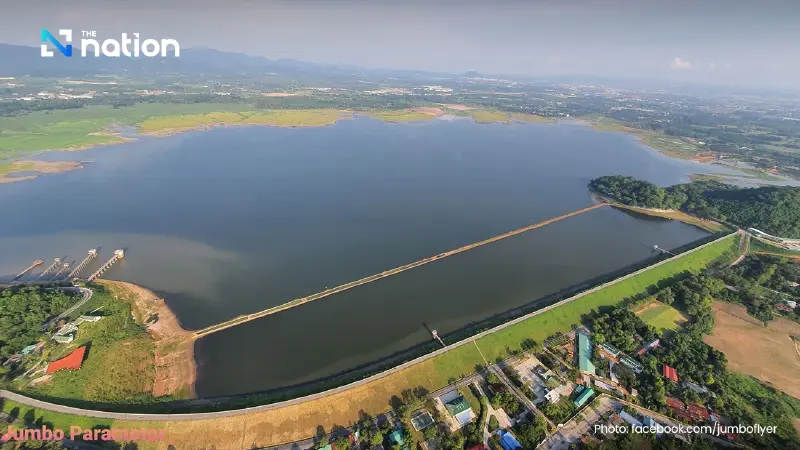


Thailand’s reservoirs hold 45.6 billion cubic metres, with 21.49 billion cubic metres available for use, ONWR’s latest update shows
Thailand’s reservoirs are holding 45.6 billion cubic metres of water nationwide, equivalent to 56% of their combined storage capacity, according to the latest situation update from the Office of the National Water Resources (ONWR).
However, the amount classified as usable water is significantly lower, at 21.49 billion cubic metres, or 38% of capacity, underlining the need for continued water management across the country. The figures were compiled as part of ONWR’s national water situation summary as of 7am on May 27.
A regional breakdown shows that western reservoirs currently hold the largest volume, with 18.42 billion cubic metres, or 65% of capacity. Northern reservoirs follow with 15.27 billion cubic metres, or 55%, while the South has 4.59 billion cubic metres, representing 60% of capacity.
The Northeast has 5.59 billion cubic metres, or 46% of capacity. The lowest levels are in the central and eastern regions, where reservoirs hold 605 million cubic metres, or 31%, and 1.11 billion cubic metres, or 35%, respectively.
In the Eastern Economic Corridor, three key reservoirs remain under close management. Prasae Reservoir is at 56% of capacity, with 165 million cubic metres of water. Nong Pla Lai Reservoir is at 48%, with 79 million cubic metres, while Bang Phra Reservoir is at 43%, with 50 million cubic metres.
The figures point to a mixed national picture: overall storage remains above the halfway mark, but usable water is far more limited, particularly in regions where reservoir levels are below 40%.
Water authorities are expected to continue monitoring supplies closely, especially in economically important and water-sensitive areas.
