
Sixth JBC meeting underway, amid Cambodia-Thailand border tensions
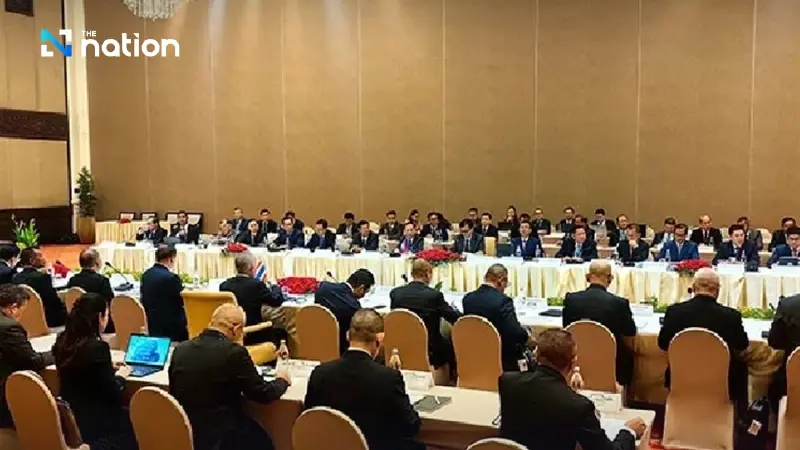


The Phnom Penh Post reports that the sixth meeting of the Cambodia-Thailand Joint Boundary Commission (JBC) commenced at 11.45am on June 14 in Phnom Penh.
Originally scheduled for 10am, the meeting was delayed to allow for a preliminary closed-door discussion between the two parties.
Prior to the meeting, Thai delegation head Prasas Prasasvinitchai, former Thai Ambassador to Cambodia in 2009, now serving as an advisor on border affairs for the Thai Ministry of Foreign Affairs and Cambodian delegation head Lam Chea, Minister in charge of the Secretariat of Border Affairs, held an informal bilateral discussion in an open and candid atmosphere.
Both sides expressed a shared desire for the meeting to produce concrete outcomes.
This marks the first time that the joint chairs of both delegations have met for direct discussions.
The JBC meeting is the first in 12 years. Issues related to the disputed Ta Moan Toch, Ta Moan Thom and Ta Krabei temples, as well as the Mom Bei “emerald triangle” area, are not on the agenda, nor is the issue of Thailand’s unilateral border restrictions.
As of 12.30, no outcomes had been reported. Unless scheduling changes occur, the meeting is expected to continue until 7pm.

The meeting is taking place amid heightened border tensions between the two neighbouring Kingdoms, including Thailand’s unilateral border restrictions and threats to cut off electricity and internet supplies to Cambodia. These developments followed a brief exchange of fire between the two countries’ armed forces on May 28.
Cambodia has responded to threats by cutting off internet and electricity supplies from Thailand and closing the Doung International Border Checkpoint.
Cambodian Prime Minister Hun Manet has announced that Cambodia will file a complaint with the International Court of Justice on June 15, coinciding with the 63rd anniversary of Cambodia’s victory in the Preah Vihear Temple case against Thailand.

Thai Prime Minister Paetongtarn Shinawatra said on June 13 that Thailand’s next steps will depend on the outcome of this meeting.
Analysts warned that with both countries pursuing different approaches to resolving the dispute, tensions along the border could escalate further.
In the Nam Yuen district of Ubon Ratchathani, particularly in the village of Ban Non Sung, located less than 20 kilometres from the disputed Chong Bok area, residents are living in a state of heightened anxiety. Many have been closely following the Thai-Cambodian JBC talks, hoping for an agreement that could lead to a reduction in military presence along the border and prevent a repeat of past clashes,
On the Thai side, the Ban Laem permanent checkpoint in Chanthaburi province remains operational.
However, Cambodia has yet to reopen the route for freight transport, leaving Thai trucks unable to cross.
Meanwhile, a number of Cambodian workers still residing in Thailand have been crossing back into Cambodia at the request of family members concerned about the potential escalation of tensions.
At the Khlong Luek checkpoint in Sa Kaeo province, activity remained high despite heavy rainfall.
Thai nationals working in Poipet arrived early to cross the border, having been delayed the previous day.
Cambodian migrant workers in Aranyaprathet are also anxiously awaiting the outcome of the JBC meeting, hopeful that it could pave the way for a return to normalcy.
Lt Gen Boonsin Padklang, Commander of the 2nd Army Region, said that while the results of the JBC meeting remain uncertain, the Thai military is prepared for all possible scenarios. Any countermeasures on Cambodia’s side, he added, would depend on the stance taken by its government.
The current situation remains tense and under close watch from both political observers and border communities. People on both sides of the frontier continue to call on their leaders to find a peaceful resolution — one that avoids conflict and protects the lives and livelihoods of those living along the border.
