
Vietnam drafts new decree to tighten control on temporary imports and re-exports
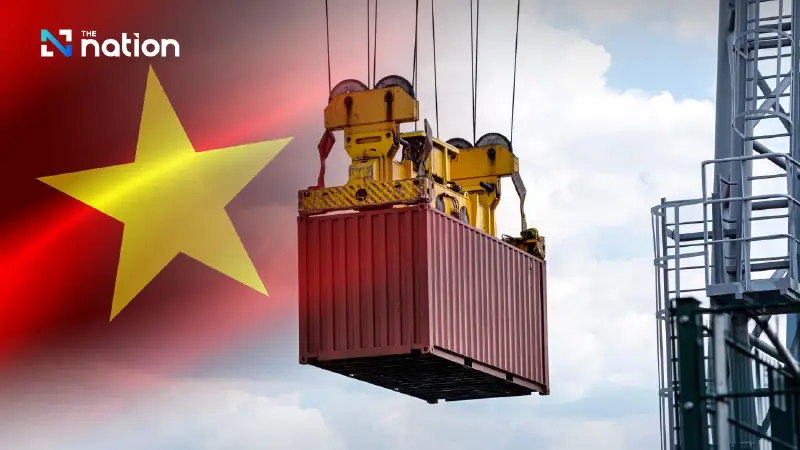


Vietnam plans a new decree limiting temporary import storage to 60 days to curb illicit trade, prevent transhipment, and reduce trade dispute risks.
- Vietnam is drafting a new decree to replace Decree No. 69/2018, aiming to tighten control over temporary importation for re-export activities.
- The proposed regulation introduces a maximum storage period of 60 days for these goods, extendable twice for 30 days each, where no time limit previously existed.
- The decree also mandates that temporarily imported goods must pass exclusively through international and main border checkpoints to reduce illegal trade.
- This policy aims to combat smuggling, enhance trade transparency, and prevent transshipment disputes with key partners like the United States.
According to a report by the Department of International Trade Promotion (DITP) under Thailand’s Ministry of Commerce, via its Office of Commercial Affairs in Ho Chi Minh City, Vietnam’s Ministry of Industry and Trade is drafting a new decree to replace Decree No. 69/2018 on foreign trade management.
The proposed regulation aims to strengthen oversight of temporary importation for re-export activities by setting a maximum storage period of 60 days, extendable only twice for up to 30 days each. The previous law did not specify any time limits. The measure seeks to enhance transparency in Vietnam’s trade system and reduce the risk of illicit trade.
Vietnam has long faced problems with temporary import schemes being exploited for smuggling, particularly along routes from Ho Chi Minh City to Cambodia and through return-import channels from Cambodia. Key border provinces such as Binh Phuoc, Tay Ninh, Long An, Dong Thap, An Giang, and Kien Giang have been under sustained pressure from such activities.
The new draft decree also mandates that goods must pass through only international and main border checkpoints, a move expected to reduce illegal trade risks, improve customs efficiency, and protect state revenue and economic security.
Business implications
While the tighter timeline may pose challenges for businesses that have used Vietnam as a long-term storage base, trade experts say the new framework will promote a fairer and more transparent trading environment, reduce counterfeit competition, and help prevent transshipment disputes with key trading partners, particularly the United States, which recently imposed 20% tariffs on Vietnamese goods and up to 40% tariffs on reclassified or transshipped products.
In the long term, the policy reflects Vietnam’s ambition to become a global logistics and trade hub. By aligning with international standards, the government aims to attract greater investor confidence and accelerate development in the logistics and supporting industries, reinforcing its competitiveness across regional and global supply chains.
Vietnam’s trade policy shift, particularly the draft decree intended to replace Decree No. 69/2018/NĐ-CP, represents a significant development for both the public and private sectors. The new regulation introduces stricter control over temporary importation for re-export activities by imposing a maximum storage period of 60 days, marking a major change in Vietnam’s trade governance framework.
According to the Office of Commercial Affairs in Ho Chi Minh City, the measure is designed to minimise risks of smuggling and customs evasion, while enhancing transparency and accountability in trade facilitation processes. It also seeks to strengthen confidence in Vietnam’s international trade regulatory mechanisms, which are vital for creating a favourable environment for investment and regional commerce.
Opportunity for Thai exporters
The DITP’s Ho Chi Minh office noted that this policy presents a strategic opportunity for Thai exporters to strengthen their brand credibility in Vietnam and surrounding markets. Stricter trade control will reduce the circulation of counterfeit or illegally imported goods that have undermined legitimate Thai exports in the past.
As Vietnam positions itself as a regional logistics hub and a key link in global supply networks, Thai businesses can leverage the country as a distribution base to reach markets in Cambodia, Laos, China and beyond more efficiently.
However, Thai companies must adapt to the new decree by managing temporary storage periods carefully to stay within the 60-day limit, and by ensuring accurate Certificates of Origin (C/O) to avoid being misclassified as transhipment, which could result in punitive tariffs of up to 40% in major markets such as the US and EU.
The DITP recommends that Thai firms invest in logistics systems, quality control, and compliance mechanisms to fully benefit from Vietnam’s new trade framework. Doing so will enhance supply-chain resilience and position Thailand as a reliable partner in sustainable and transparent regional trade.
