
Korean media expose abandoned scam compound in Cambodia — suspected flight to neighbouring countries with victims
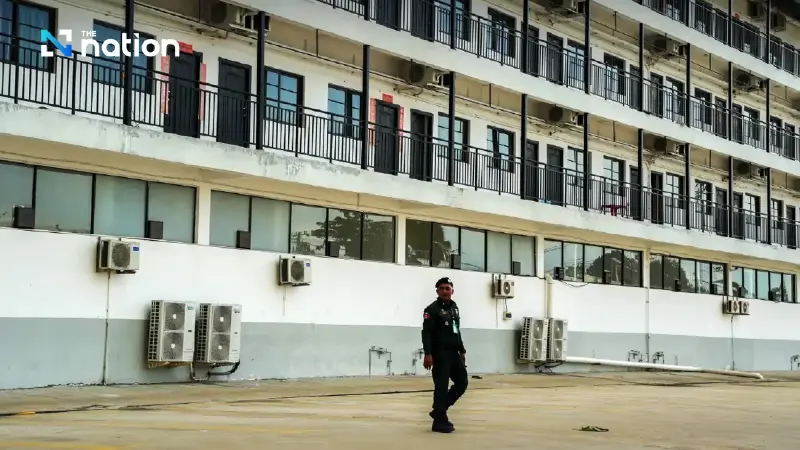


Korean media expose a deserted scam hub in Cambodia; suspects believed to have fled to Thailand, Myanmar and Vietnam with victims as rescue window closes
Korean media have uncovered a large scam operation centre in Cambodia that now lies deserted. It is believed the operators fled to neighbouring countries — Thailand, Myanmar and Vietnam — taking victims with them. Cambodian police claim they could not catch the suspects in time, while experts urge swift action to rescue victims, warning that the “golden window” for intervention may last only this week.

A major scam compound in Cambodia has been found abandoned, sparking suspicions that the operators have fled to neighbouring countries — Thailand, Myanmar and Vietnam — along with the victims. Cambodian police claimed they were unable to capture the suspects in time, while experts have urged the authorities to act swiftly to rescue victims, warning that the “golden window” for intervention may last only this week.

A recent visit to the scam centre revealed an eerily deserted place. Reporters described entering rooms filled with the lingering smell of cigarettes. Each small room contained two or three bunk beds, with clothes and towels scattered across dusty floors — clear signs that those who lived there had fled in haste.
The site, known as the Taizi compound in Takeo Province, around 40 kilometres south of Phnom Penh, had been managed by Prince Group — a company recently sanctioned by the United States and the United Kingdom for large-scale fraud and human trafficking. Once known as “Yuanqu”, one of Cambodia’s largest scam hubs, the centre now stands empty.

The Taizi complex comprises 11 four-storey buildings, each containing around 120 rooms. Each room could accommodate four to six people. A rough estimate suggests the centre may have housed more than 5,000 workers, including Koreans and other foreigners who were either abducted or forced to work in online scams. Today, only dust and rubbish remain. All computers and electronic devices have vanished.
Pang Naren, Deputy Secretary-General of Cambodia’s Anti-Online Scam Committee, said that when police reached the site after receiving reports, the criminals had already escaped. “We had been investigating the area carefully, but unfortunately the suspects managed to flee,” he said. However, a Korean member of the visiting team remarked that such a quick disappearance would have been impossible without insider information from local authorities.
The Longer the Delay, the Harder to Help Victims
A visit to two other known scam sites — Wongu and Mango — showed similar scenes. Both had previously operated as major call-centre bases. At Wongu, there were no guards at the gates, and behind high walls stood buildings reinforced with steel bars, suggesting they had been used for confinement.

Outside the compound, a torn “For Rent” sign hung loosely on the fence. A local vendor nearby said, “In the past three or four months, hardly anyone has gone in or out. Only a few motorbikes come and go. When you look through the small gap, you can see empty buildings.”
Although the facilities appear deserted, signs of a mass exodus have been observed in Sihanoukville, about 200 kilometres southwest of Phnom Penh. Videos taken recently show Chinese and Korean workers packing up equipment and luggage, preparing to move to new sites.
Experts warn that this is not the end of the criminal operations — only a relocation. Increasing reports of kidnappings and illegal detention of foreign nationals suggest that these syndicates are moving their bases to border areas such as Poipet or to other countries, including Myanmar.
There is growing concern that Korean victims previously held in these compounds may have been taken along with the fleeing groups.
An activist said, “The longer the government delays, the deeper these groups will hide, making it much harder to rescue the victims.”
Ok Hae-sil, Vice President of the Korean Association in Cambodia, who has been helping victims for three years, said there are rumours that some groups have already relocated to Myanmar, Thailand or Vietnam, possibly taking Korean captives with them.
She warned, “The longer they stay hidden, the harder they will be to find. In reality, this week is the golden period for the government to take action and rescue the Koreans who have been abducted.”
