
JBC agrees to survey, lay temporary border marks at Ban Nong Chan and Ban Nong Ya Kaeo
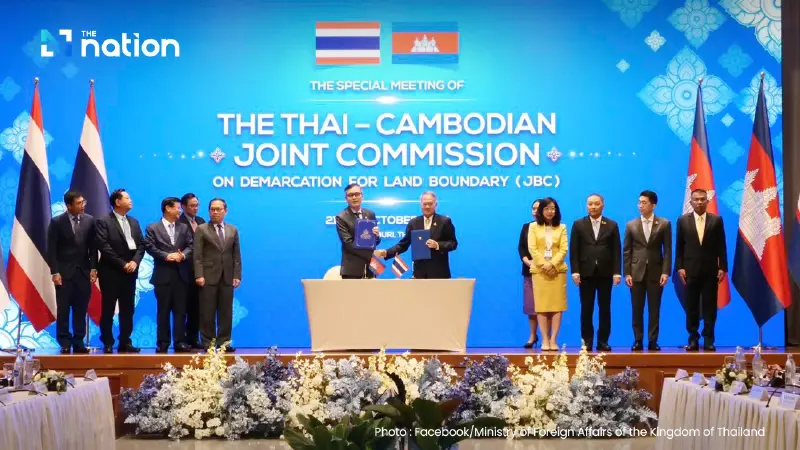


Thailand and Cambodia agreed to lay temporary border markers at Ban Nong Chan and Ban Nong Ya Kaeo, marking a breakthrough in border demarcation talks.
- Thailand and Cambodia's Joint Boundary Committee (JBC) agreed to conduct a joint survey and place temporary border markers in the areas of Ban Nong Chan and Ban Nong Ya Kaeo.
- This survey and marking is a preliminary step that must be completed before addressing issues of land occupation and encroachment in the region.
- The specific area for the survey and temporary markers is located between boundary pillars No. 42 and 45.
- It was clarified that the temporary markers are for survey purposes only and will not affect the official international boundary.
A joint boundary committee between Thailand and Cambodia has agreed to conduct a joint survey and lay temporary border markers along Ban Nong Chan and Ban Nong Ya Kaeo villages in Sa Kaeo province, before addressing issues of land occupation and encroachment.
Two-day Chanthaburi meeting concludes after midnight
The special meeting of the Joint Commission on Demarcation for Land Boundary (JBC) in Chanthaburi, which began on Tuesday, concluded at 12.12am on Thursday — around eight hours later than scheduled.
Following the session, representatives of both countries issued a joint statement in English, Thai, and Cambodian.

The statement confirmed that both sides had agreed to finalise technical instructions for a joint survey and the emplacement of temporary markers from boundary pillars No. 42 to 45, ahead of their respective governments’ decision on an “appropriate mechanism for the adjustment of land occupations on both sides.”
Focus limited to Ban Nong Chan and Ban Nong Ya Kaeo
Before the meeting, Nikorndej Balankura, Director-General of the Department of Information and spokesman for the Ministry of Foreign Affairs, said on Sunday that the JBC meeting would focus solely on the Ban Nong Chan and Ban Nong Ya Kaeo areas.
He said Thailand would urge Cambodia to resolve encroachment issues promptly and take preventive measures against further violations of Thai territory. He added that Thailand would also inform Cambodia of its plan to build a border fence in sections not under dispute.
However, former ambassador to Cambodia Prasat Prasatwinijchai, who led the Thai delegation, said the fence issue was removed from the agenda after Cambodia insisted it had no authority to discuss it.
Prasat said he explained that the fence was intended to prevent clashes, illegal crossings, and drug smuggling, but after half an hour of discussion, the Cambodian side maintained its stance, and the topic was dropped.
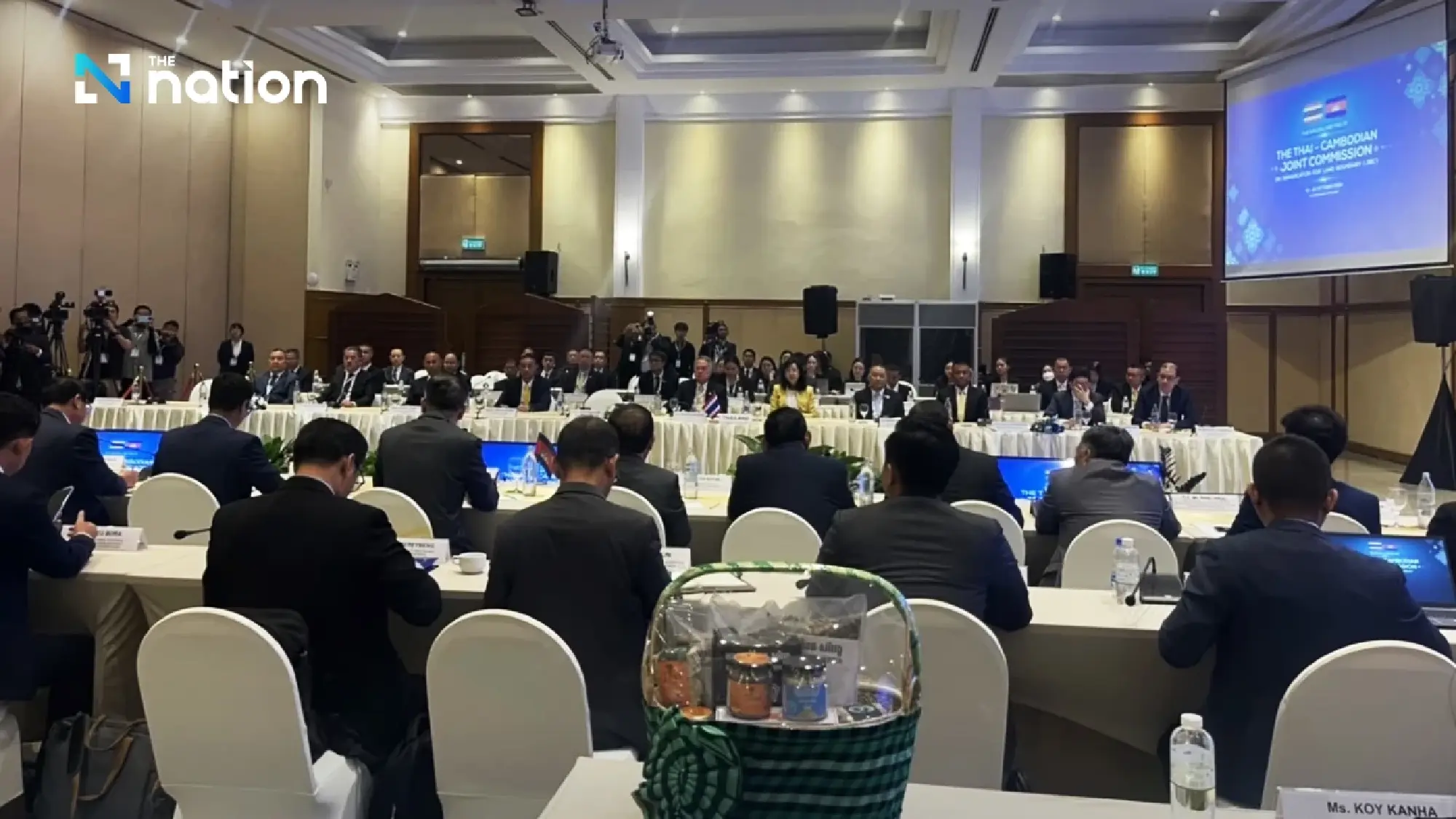

Key points of the joint statement
The joint statement outlined the following key agreements:
1. Meeting details – The Special Meeting of the Cambodian–Thai JBC was held in Chanthaburi on 21–22 October 2025. The Cambodian delegation was led by H.E. Lam Chea, Minister in charge of the State Secretariat of Border Affairs, while the Thai delegation was led by H.E. Prasat Prasatvinitchai, Adviser to the Ministry of Foreign Affairs.
2. Friendly atmosphere – The meeting was held in a spirit of friendship and cordiality.
3. Replacement of boundary pillars – Both sides agreed to replace 15 boundary pillars at their original positions and specifications.
4. Submerged pillars – They also agreed to relocate three submerged boundary pillars to mutually agreed positions.
5. Modern mapping technology – Both sides agreed to revise the 2003 Terms of Reference on the production of orthophoto maps, incorporating LiDAR (Light Detection and Ranging) technology to accelerate the survey and demarcation process.
6. Joint survey between pillars No. 42–47 –
a. Both sides will finalise technical instructions for a joint survey and emplacement of temporary markers along priority terrain segments.
b. Once surveys and markings are complete and approved by both governments, each side will determine an appropriate mechanism for adjusting land occupation.
c. The temporary markers are for survey purposes only and will not affect the official international boundary.
d. Both sides will ensure safety for joint survey teams, avoid provocation, and clear landmines in accordance with Article 3 of the 2000 MOU.
7. Next meeting – The next JBC meeting will be held in Siem Reap, Cambodia, in the first week of January 2026.
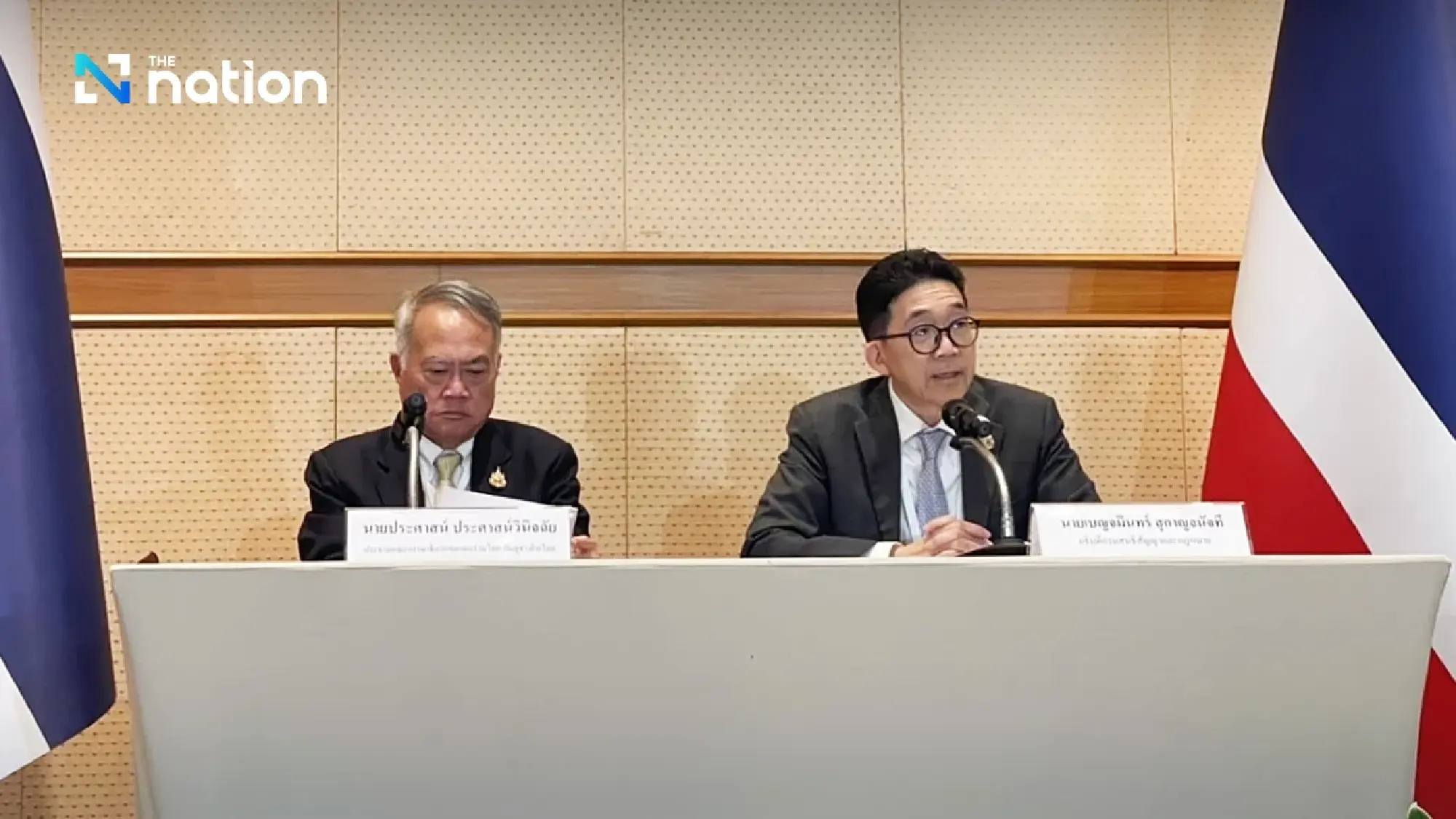

JBC leaders call meeting a positive step
After the joint press conference, Prasat and Benjamin Sukanjanajtee, Director-General of the Department of Treaties and Legal Affairs, briefed reporters on the outcomes.
Benjamin described the talks as “straightforward and constructive”, noting that it was the first time the JBC had issued a joint statement to demonstrate mutual determination to speed up demarcation — a key step in reducing border tensions.
He said the meeting focused exclusively on border demarcation and the JBC’s authority, and that both delegations would now submit the results to their respective governments.
Step-by-step approach to land occupation issue
Asked about the two encroachment-prone villages, Prasat said both sides agreed that it was too early to determine whether either had encroached on Thai territory.
“Before any decision can be made, temporary border pillars must be installed first — standing between the Thai-claimed and Cambodian-claimed lines,” he explained.
He added that both sides agreed to use the term ‘adjustment of land occupation’ rather than ‘resettlement’ or ‘demolition’ to keep the wording neutral.
Long road ahead for border demarcation
When asked about a time frame, Prasat said it was too soon to provide one.
“Once the demarcation is completed, both governments will assign their respective agencies to handle operations and then negotiate detailed plans,” he said.
He noted that the issue had been ongoing for over 26 years, and progress would take time.
Prasat also clarified that Cambodia’s specific demands regarding Ban Nong Chan and Ban Nong Ya Kaeo were not discussed in detail, as both sides needed to seek government approval first.
“At this stage, we still don’t know where the claimed border lines of each side lie,” Prasat said. “We must take it step by step. Once the posts are in place, the governments will appoint negotiators. There’s still a long way to go.”
The next JBC meeting will take place in Cambodia in January 2026, Prasat concluded.
