
EEF Launches THERA to Drive Sustainable, Equitable Education
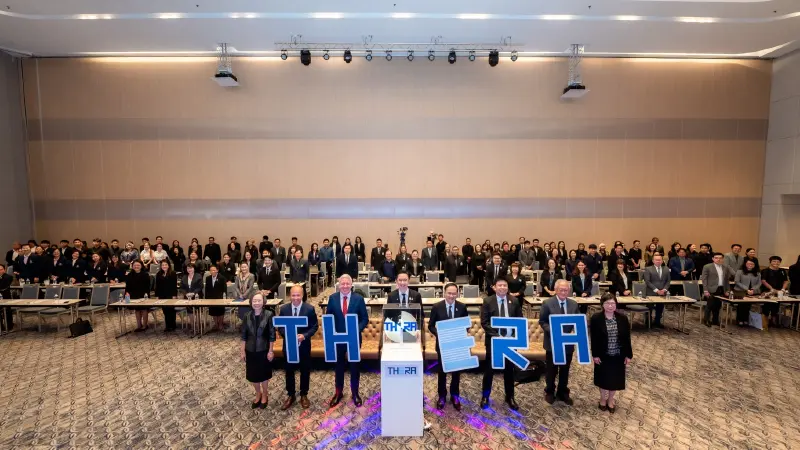


Thailand's EEF and partners launch THERA at ThaiCER 2026 to harness research, foster global networks, and build a sustainable, equitable education system.
- The Equitable Education Fund (EEF) and its partners launched the Thailand Education Research Association (THERA) to serve as a central hub for educational research.
- THERA's primary goal is to use evidence-based research to develop sustainable, equitable educational policies and innovations to address modern challenges in Thailand.
- Through its membership in the World Education Research Association (WERA), THERA will connect Thai researchers with global networks to foster collaboration and create data-driven reforms.
EEF and Partners Launch THERA at ThaiCER 2026 to Drive Sustainable and Equitable Education Transformation in Thailand
In a major effort to build a resilient and equitable future for Thai education, the Equitable Education Fund (EEF) Thailand, in collaboration with the Office of the Education Council (OEC) and key alliance partners, hosted the Thailand International Conference on Education Research (ThaiCER) 2026 from August 6–7 at the Asawin Grand Convention Hotel in Bangkok.

Organized under the theme "Resilient Future: Building Adaptive, Equitable, and Sustainable Education,"
the conference provided an international platform for researchers, educators, and policy experts to exchange insights, build cross-sector partnerships, and convert research findings into sustainable educational policies amid growing global uncertainty.
A central highlight of the conference was the official launch of the Thailand Education Research Association (THERA).
Following its admission into the World Education Research Association (WERA) - the world’s largest global network of educational research bodies - THERA was established to serve as Thailand’s central hub uniting multidisciplinary research networks.
The association will focus on brainstorming and supporting educational innovations to navigate multi-dimensional challenges, including technological disruption and contemporary social shifts.

Leadership Perspectives on Sustainable Reform
Mr. Prasert Jantararuangtong, Minister of Education, highlighted the essential role of research in driving innovation and building global competitiveness, noting that international knowledge exchanges are crucial for establishing future-ready educational strategies.
Assoc. Prof. Dr. Prawit Erawan, Secretary-General of the OEC, emphasized that evidence-based research serves as the foundation for systemic educational reform, ensuring policy decisions deliver long-lasting, positive impacts.

Prof. Dr. Yodchanan Wongsawat, Deputy Prime Minister and Minister of Higher Education, Science, Research and Innovation (MHESI), stressed that THERA enables Thai scholars to collaborate directly with global institutions, benchmark against international standards, and address future challenges effectively.
Dr. Kraiyos Patrawart, Managing Director of EEF (Thailand), underscored that long-term educational sustainability requires strong institutional mechanisms over temporary funding.
He noted that THERA opens direct avenues for teachers, educators, and students nationwide to co-create data-driven policy proposals, ensuring research directly benefits Thai children and youth.
Through the integration of local practice, rigorous data, and international cooperation, THERA and its partner organizations aim to foster a dynamic, sustainable, and inclusive educational ecosystem across Thailand.

