
ASEAN faces critical test of its ability to act with clarity in 2026
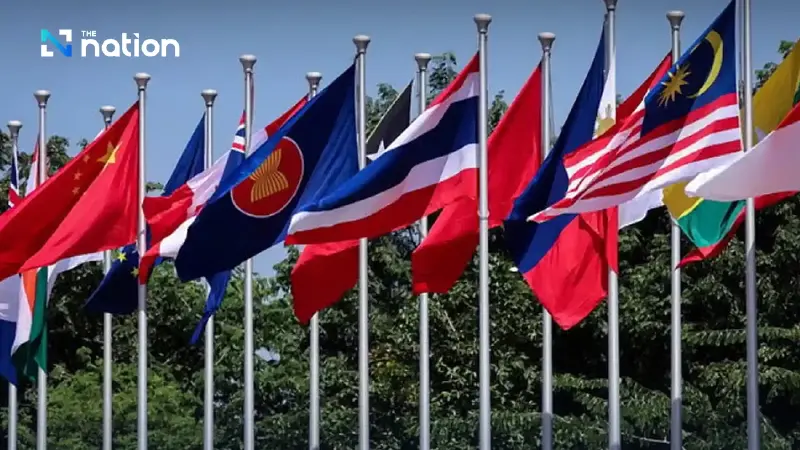


Malaysia's ASEAN chairmanship in 2025 has driven economic growth and strategic partnerships, but with leadership set to change in 2026, ASEAN faces critical challenges ahead.
Malaysia’s chairmanship of ASEAN in 2025 has injected fresh momentum into the bloc’s economic integration and strategic partnerships. However, with leadership set to shift in 2026 and rising tensions in the region, ASEAN faces an urgent question: where does the bloc go next?
Strategic advancements under Malaysia’s leadership
Under Malaysia’s guidance, ASEAN has achieved significant diplomatic and economic milestones. Vietnamese Deputy Foreign Minister Dong Hoang Giang recently highlighted in Free Malaysia Today (FMT) that 2025 has seen breakthroughs in economic growth and innovation across the region.
Over the past year, the bloc has made notable progress, advancing discussions on the ASEAN Digital Economy Framework Agreement (DEFA), launching the ASEAN Geo-Economics Task Force, unveiling the ASEAN Community Vision 2045, and beginning to develop a more coordinated long-term strategy.
“New frameworks are gradually taking shape,” Dong said, referring to DEFA, the ASEAN Power Grid, and the ASEAN Digital Master Plan. “These lay the foundation for a digital community driven by science, technology, and innovation.”
During the Institute of Strategic and International Studies (ISIS) Malaysia ASEAN Moment podcast, Faiz Abdullah, Chairman of ISIS, highlighted that the inclusion of China in the ASEAN-Gulf Cooperation Council (GCC)-China Summit has greatly enhanced the depth of the partnership.
He explained that “China is technologically advanced, and its financial infrastructure complements the GCC’s deep resources,” adding that ASEAN’s ability to bring together diverse actors highlights its central role amid rising geopolitical tensions.
US Ambassador to Malaysia, Edward Kagan, also underscored Southeast Asia’s strategic importance, stating in a recent interview with FMT that the US recognises that the “most important chapters” of the 21st century will be written in the Indo-Pacific.
With major powers increasingly shaping the region’s future, ASEAN has stepped up to maintain its leadership role, gathering partners to pursue collective interests.
Speaking at the ASEAN Outlook on the Indo-Pacific (AOIP) Forum, ASEAN-Malaysia National Secretariat Director General Zanariah Zainal Abidin emphasised that the Indo-Pacific is not a battleground to be won.
“It is a region where inclusivity is power, sustainability is strategy, and centrality is responsibility,” she said. “ASEAN’s strength lies in dialogue, in our ability to bridge divides, and in our commitment to ensuring that the Indo-Pacific remains open, inclusive, and cooperative.”
The challenge of execution
Despite these achievements, ASEAN’s biggest challenge lies in execution. Frameworks such as the ASEAN Geo-Economic Task Force and the Industrial Strategy remain largely conceptual.
ISEAS–Yusof Ishak Institute senior fellow Joanne Lin recently pointed out the need for greater follow-through to operationalise these frameworks, including the development of sectoral roadmaps, funding mechanisms, and private sector engagement.
This challenge is especially urgent given ASEAN’s position between competing global technology ecosystems and the rise of economic nationalism.
At the 9th ASEAN Media Forum on November 6, Liew Chin Tong, Deputy Minister for Investment, Trade, and Industry, proposed that ASEAN could position itself as the "champion of middle technology" – a trusted, neutral technology hub that is accepted by all parties involved.
“As long as ASEAN – particularly Malaysia, Singapore, and Vietnam – builds a reputation as a reliable semiconductor source, we can weather geopolitical tensions,” he said.
However, concerns about internal development gaps persist, particularly after Timor-Leste’s accession as the 11th member.
“If we don’t act, ASEAN could split into three tiers of wealth,” warned veteran diplomat Ilango Karuppannan during a recent interview with FMT. “We don’t want this kind of division to threaten ASEAN’s cohesion.”
The Thai–Cambodian detente remains fragile, and ASEAN’s approach to peacekeeping has yet to mature into a cohesive institutional framework.
In a recent column in FMT, Prof Phar Kim Beng, a specialist in ASEAN studies at the International Islamic University of Malaysia, stated that consultation and consensus are more important than ever for ASEAN.
“What is needed is the political will to activate existing mechanisms and coordinate them effectively in the field,” he said.
The Philippines’s leadership in 2026
The Philippines will assume the ASEAN chairmanship for 2026 under the theme “Navigating Our Future, Together.” Given the ongoing geopolitical tensions and a slower global economy, 2026 could prove even more challenging than 2025.
Faiz Abdullah remarked at the AOIP Forum that Southeast Asia’s interests are increasingly intertwined with a complex and unpredictable external environment.
“The lines between geopolitics and geoeconomics have blurred and now move almost in lockstep,” he said, stressing that international cooperation is crucial to navigating turbulence and change.
The Philippines’ Secretary of Foreign Affairs, Maria-Theresa Lazaro, told FMT that while innovation is welcomed, continuity remains key to ASEAN’s progress. Lazaro emphasised that the Philippines would align its priorities with the three pillars of the ASEAN Community, noting that Manila would “build on what has already been done and achieved.”
Among Manila’s priorities for 2026 are advancing the South China Sea Code of Conduct, addressing climate change, and continuing efforts on Myanmar – a long-standing issue that continues to challenge ASEAN’s consensus-driven model.
A new beginning for ASEAN
ASEAN’s current momentum reflects years of cumulative effort, with Malaysia’s 2025 chairmanship sharpening the region’s focus on the need to address rising strategic pressure and a dimmer global economy.
However, ASEAN’s ability to act with clarity and execute its plans will be tested more than ever in 2026. The challenge now is not only defining ASEAN’s relevance but also delivering on the promise of its frameworks, partnerships, and people-centred vision.
With Malaysia’s leadership having strengthened ASEAN’s foundations, the region must now determine what to build on top of them as it faces an increasingly complex and uncertain future.
