
Peace advocates urge Thai, Cambodian and ASEAN leaders to resolve border dispute through peaceful means
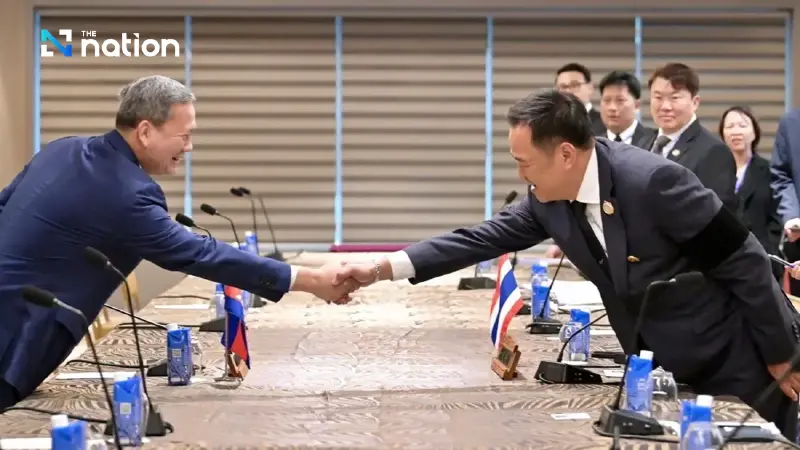


A group of 121 academics, civil society leaders and peace advocates calls on Thailand, Cambodia and ASEAN to address escalating border tensions through peaceful, lawful means
A coalition of academics, intellectuals, civil society representatives and peace-loving groups committed to justice and human dignity across Southeast Asia has issued a statement to the leaders of Thailand, Cambodia and ASEAN, expressing deep concern over the renewed tension along the Thai–Cambodian border.
A total of 121 scholars, intellectuals, civil society representatives and peace advocates from across Southeast Asia signed the statement, warning that the latest border tensions not only threaten regional peace and security but also endanger border communities and undermine ASEAN’s core values of dialogue, mutual respect and the peaceful settlement of disputes.
The statement calls on the governments of Thailand, Cambodia and ASEAN to act urgently, based on international law and human dignity, guided by six key principles, summarised as follows:
1. Strict adherence to the Kuala Lumpur Peace Agreement
The agreement, it says, is not optional, but a politically binding commitment on the highest leaders of both governments. Any deviation risks causing serious harm to border communities, undermining regional confidence and damaging ASEAN’s credibility.
The coalition urges the ASEAN Chair to play an active, neutral and consistent role, and calls on both the Chair and the ASEAN Observer Team (AOT) to carry out their duties with full professionalism, accuracy and transparency.
2. Establish an independent investigation mechanism
The statement calls for a fully independent, transparent fact-finding mechanism to investigate all incidents along the border.
Both governments — as parties to the Ottawa Convention (the Anti-Personnel Mine Ban Convention) — should jointly request the Convention Chair to establish a fact-finding working group to carry out its technical and moral mandate of upholding truth, ensuring accountability and building trust, as stipulated in Article 4 of the Joint Declaration, signed on 26 October 2025 in Kuala Lumpur.
3. Give peace a genuine chance through international and regional norms
The group urges both sides to uphold the spirit and letter of the UN Charter, the ASEAN Charter, and the Treaty of Amity and Cooperation in Southeast Asia (TAC), all of which require that disputes threatening peace and security be resolved through negotiation, inquiry, mediation, conciliation, arbitration, judicial settlement or other peaceful means.
“We emphasise, in particular, the importance of adhering to Article 33 of the UN Charter, Article 22 of the ASEAN Charter, and all objectives of the TAC,” the statement reads.
It further encourages the leaders of both countries to consider establishing a High Council, as provided under Articles 14 and 15 of the TAC, to serve as part of the conflict-resolution mechanism.
While acknowledging that the use of force in self-defence is permitted under Article 51 of the UN Charter, the statement stresses that this must remain a last resort. It reminds all parties that a core objective of the UN Charter is to prevent unilateral military action in international relations.
4. Protect human rights and human dignity of affected communities
The group calls for inclusive participation in all dialogue processes — at the local, national and regional levels.
Needs assessments, consultations and fair compensation processes must guide recovery and rehabilitation, ensuring that no voice is excluded in shaping peace-building pathways.
5. Promote people-to-people diplomacy and counter hate speech
The statement urges the creation of safe spaces for dialogue among scholars, civil society, policymakers, the media, the private sector and affected communities to build trust, reconciliation and long-term peaceful coexistence.
It calls on non-state actors and influential voices in social media and mainstream media, including online influencers, to uphold the highest standards of conduct and responsibility, ensuring that no hate speech, dehumanisation or disinformation is spread — particularly given the region’s already fragile democratic governance.
All such efforts, the group insists, must respect freedom of expression while preventing harm.
6. Transform conflict narratives through education
To break the cycle of conflict rooted in historical grievances, the coalition calls for a comprehensive review of history textbooks and educational materials in both Thailand and Cambodia.
The goal is to promote mutual understanding, reduce prejudice and help younger generations view their neighbours as partners in peace and shared prosperity, rather than adversaries shaped by past trauma.
