
Philippines lifts rice import tariff to 20% on Jan 1
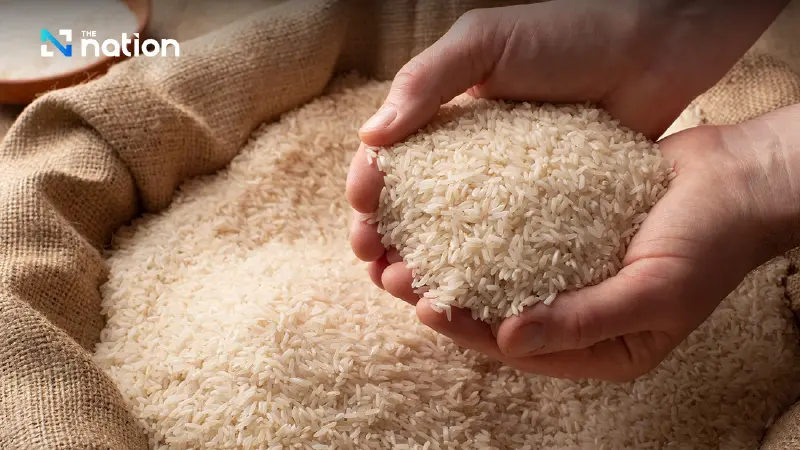


Philippines raises rice import tariff to 20% from Jan 1, 2026, to protect farmers and manage peso weakness as rice imports resume
The Philippines has raised its rice import tariff from 15% to 20%, effective January 1, 2026, as it prepares to resume rice imports in 2026 after a temporary suspension intended to protect local palay farmers during the wet-season harvest.
The Office of Commercial Affairs in Manila reported that the Philippine Department of Agriculture (DA) announced the new tariff rate alongside plans to allow rice imports again in 2026, following the government’s earlier decision to temporarily halt imports of regular milled rice and well-milled rice from September 1, 2025.
Agriculture Secretary Francisco Tiu Laurel Jr. said the tariff increase reflects several key factors, including the recent weakening of the peso and the possibility that global rice prices could rise once the Philippines re-enters the import market.
To ease financial pressure on importers, the DA will waive a requirement for a 10% advance deposit for issuing Sanitary and Phytosanitary Import Clearances (SPSIC). The Bureau of Plant Industry (BPI) will begin processing SPSIC applications to accommodate a total import volume of 500,000 tonnes, including an import quota of 50,000 tonnes.
The agriculture secretary also urged domestic importers to diversify sources and consider exporters beyond Vietnam, citing alternative suppliers such as Cambodia, Myanmar, and other countries. He said all imported rice must arrive by mid-February in order to keep palay prices in producing areas at an appropriate level at the start of the dry-season harvest and to protect farmers’ incomes.
For shipments arriving in January and February, rice imports will be restricted to 17 ports nationwide, including Manila, Batangas, Tacloban, Bacolod, Iligan, Cagayan de Oro, Davao, Zamboanga, Cebu, Iloilo, Capiz, Tagbilaran, Dumaguete, Subic, Calbayog, General Santos and Tabaco.
The Office of Commercial Affairs noted that rice is a key economic crop in the Philippines as a basic staple food, accounting for about 20% of the total value of the country’s agricultural products. While the Philippines can grow rice for domestic consumption, production remains insufficient to meet demand. Successive governments have pursued rice self-sufficiency for food security, but the goal has yet to be achieved.
The current government under President Ferdinand Marcos Jr. has also set a target of meeting 100% of the country’s rice demand, though achieving that is considered difficult due to multiple constraints, including limited lowland areas across an archipelago dominated by mountainous terrain, frequent natural disasters due to the country’s location on the Ring of Fire and its exposure to typhoons, and longstanding challenges such as low yields, high production costs, limited R&D, ageing farmers and labour shortages, climate change, and population growth.
The planned resumption of rice imports alongside the higher tariff is seen as a positive signal and an opportunity for Thai exporters to return to the market, the office said.
In 2024, the Philippines imported 4.77 million tonnes of rice, up 32.10% year on year. Vietnam was the top supplier with 3.55 million tonnes (74.42%), followed by Thailand with 642,000 tonnes (13.46%) and Pakistan with 309,000 tonnes (6.49%).
In 2025 (January to September), the Philippines imported 3.38 million tonnes, up 2.89% from 3.28 million tonnes in the same period a year earlier. Vietnam supplied 2.88 million tonnes (85.39%), followed by Thailand with 198,000 tonnes (5.87%) and Myanmar with 121,000 tonnes (3.58%).
Source: Office of Commercial Affairs, Manila
