
Fractured world order puts Asean and middle powers to the test


Asean faces mounting pressure to strengthen energy security, accelerate the clean energy transition and reform slow decision-making amid a fractured global order
As geopolitical rivalry among major powers continues to paralyse the United Nations and weaken multilateral cooperation, attention is increasingly shifting to middle powers — countries with significant regional influence but not global superpower status — and Asean as potential drivers of action on energy security and sustainability.
At a time when the world is facing both energy shocks from the Middle East and the escalating effects of climate change, pressure is mounting on Asean to reassess its role, its policy direction and the way it responds to crises if it wants to remain relevant in a fractured global order.

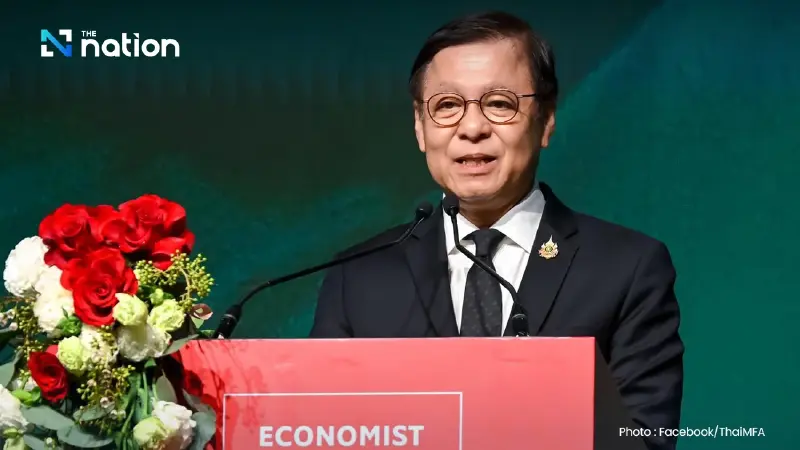
Speaking at the 5th annual Sustainability Week Asia, Foreign Minister Sihasak Phuangketkeow said discussions emerging from a policy dialogue hosted by the Ministry of Foreign Affairs had highlighted major challenges facing both Thailand and Asean amid growing global fragility.
One of the clearest messages was that the crisis in the Middle East should serve as a wake-up call for the region on energy security. He said Asean countries needed to take the issue more seriously and treat it as an urgent priority.
At a recent special meeting of Asean foreign ministers, members discussed the need to pursue a green transition while at the same time safeguarding energy security. Although Asean already has energy security initiatives in place, these have not yet been translated fully into practical implementation.
The region’s position, however, is not without strengths. Oil-producing members such as Brunei, Malaysia and Indonesia could play an important role in strengthening regional resilience if their resources are managed more strategically in cooperation with Asean’s dialogue partners.

Sihasak said the erosion of the UN’s effectiveness had opened up a greater role for middle powers. With major powers appearing trapped in their own confrontations and multilateral mechanisms increasingly sidelined during major crises, middle powers now had an opportunity — and a responsibility — to help bridge divisions and preserve international cooperation.
He said this was especially important on sustainability, which should not be pushed aside simply because geopolitical conflict has taken centre stage. Asean, he added, needed to demonstrate its centrality in real terms by showing that it could respond meaningfully to both energy and environmental challenges, rather than merely invoking the concept as a slogan.
Thailand has taken on a leading role in this agenda as Asean’s coordinating country on sustainability. The country has already set out a clear net zero target and is pushing related legislation to turn that commitment into policy action.
Even so, he acknowledged that a major challenge lies in ensuring that less-prepared countries in the region are able to move forward together. In that context, stronger middle powers would need to extend support so that sustainability becomes not only a national ambition, but a central strategic agenda for the whole region and beyond.
The discussion also turned inward, with one of the sharpest reflections focusing on Asean’s own structural weaknesses. There was frank recognition that the bloc has been too slow in responding to emerging challenges.
A major reason, Sihasak said, lies in Asean’s reliance on consensus, which too often results in the weakest possible compromise — the lowest common denominator. While consensus has long been a defining principle of the grouping, it is increasingly being seen as a constraint when urgent and decisive action is needed.
The long-held principle of non-interference in internal affairs is also coming under greater scrutiny. In today’s interconnected world, domestic problems in one member state can no longer be treated as isolated internal matters, because their effects often spill across borders and affect neighbouring countries.
He warned that unless Asean becomes more flexible and improves the agility of its decision-making structure, it risks gradually losing its significance on the global stage.
The broader crisis now confronting the world, he said, is not simply about short-term peace and conflict management. It is also about long-term energy security and sustainability.
Against that backdrop, Asean and its middle-power partners need to forge stronger alliances that can turn conflict into momentum for cleaner energy and prove that in a divided world, robust regional cooperation remains the only truly sustainable answer.
