
Thailand showcases crackdown on ten-billion-baht border scam bases
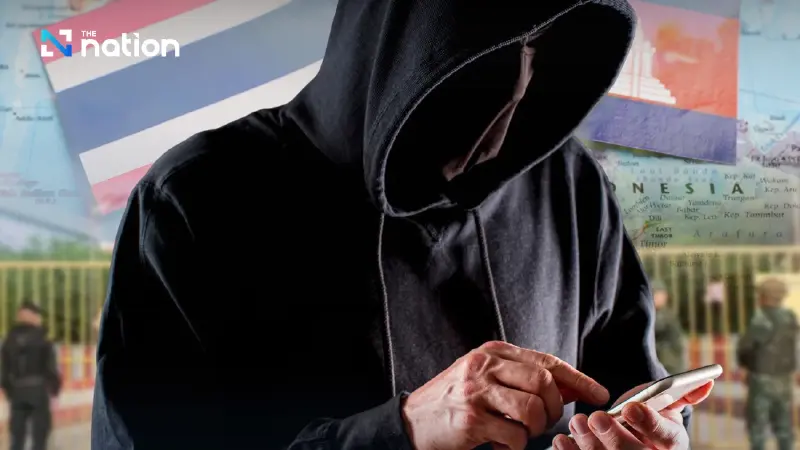


Thai authorities are taking foreign media to O’Smach to underline control of major border scam compounds worth around 10 billion baht amid Cambodia tensions.
- Thai military forces have taken control of several scam operation bases along the Cambodia border, including the O'Smach area, which are collectively valued at up to ten billion baht.
- To showcase the crackdown, Thailand is organizing media visits to the captured O'Smach base to demonstrate its commitment to suppressing transnational crime and provide transparency.
- The broader effort includes dismantling scam centers on the Myanmar border, seizing criminal assets, and cooperating with China to prosecute network leaders.
- Thai officials assert that the captured bases were also used for military attacks against their soldiers and intend to maintain control of the areas to prevent the criminal networks from returning.
The Third Meeting of the Consultation Mechanism between the Ministers of Foreign Affairs of Thailand and China is an important platform for carrying forward the momentum of the strategic partnership between Thailand and China, strengthening bilateral cooperation and exchanging views on regional and international issues.
Sihasak Phuangketkeow, Minister of Foreign Affairs, co-chaired the meeting with Wang Yi, China’s Minister of Foreign Affairs.
Before the meeting, Wang Yi paid a courtesy call on Prime Minister Anutin Charnvirakul at Government House on 24 April 2026.
The Thai side underlined the government’s seriousness in moving ahead with the crackdown on “scammer networks” and supported cooperation with China to bring ringleaders and network members involved into legal proceedings in China.
The agenda was in line with Wang Yi’s tour of Cambodia, Thailand and Myanmar between 22 and 26 April 2026.
Before travelling to Thailand, Wang Yi met Hun Manet, Prime Minister of Cambodia, in Phnom Penh and urged Cambodia to eradicate scammer bases, before continuing to Thailand and Myanmar.
In the domestic sweep, the Anti-Money Laundering Office, or AMLO, has seized and frozen the assets of several individuals believed to be linked to transnational criminal organisations and scammer networks.
Among them are “Chen Zhi” and associates from Prince Holding Group, which has a major base in the Kingdom of Cambodia.
Another case involves Kok An and associates, whose operation centres are in Cambodia, including a 25-storey building, an 18-storey building, the HISO Building and the Crown Casino building.
The network is alleged to have used mule accounts for transactions, received transfers through bank accounts and used proceeds from offences to purchase assets in Thailand.
There is also the case involving Ms Tangthai and associates, which concerns the deception of victims by falsely claiming that they had to be investigated and using tricks to make them transfer money.
The financial trail is linked to Yim Leak, a close associate of an heir to an influential network in Cambodia, and extends to Ben Smith and associates.
They are alleged to have engaged in public fraud, transferred money back and forth between companies both inside and outside Thailand, and used companies to hold assets on their behalf.
Another case is that of U Aungkur and associates, which involves a group of criminals who persuaded people to invest in stock trading.
The financial trail later showed that money from the fraudulent investment scheme had been converted into digital currency coins and transferred onward to digital wallets, linking it to a network of transnational Cambodian criminal groups.
At the same time, the Thai government is continuing to crack down on call-centre gangs hiding along the Myanmar border, using international relations mechanisms at the government, military, Myanmar government and ethnic minority levels.
This has led to the continued dismantling of the structures and bases of such networks, including KK Park in Myawaddy, Myanmar, opposite Mae Sot district in Tak province, as well as the demolition of a 13-storey building in the Yatai New City project, or Shwe Kokko Special Economic Zone, in Kayin State.
On the Thailand-Cambodia border, relations between the two countries remain tense after recent clashes, causing the crackdown on call-centre gangs to proceed in a manner where each side acts separately.
This is despite Point 10 of the Joint Statement under the Thailand-Cambodia ceasefire agreement of 27 December 2025, which states that both sides shall adhere to the Action Plan for Cooperation on the Prevention and Suppression of Transnational Crimes, including cyber scams and human trafficking.
The Thai side also states that scammer networks were involved in attacks on Thai soldiers during the past clashes, both through financial support and the use of buildings as military bases, such as drone launch points, sniper positions and artillery sites.
As a result of military operations, the Thai side has taken control of several areas along the Thailand-Cambodia border identified as scammer bases, including Thmoda Casino in Trat province, Chong An Ma in Ubon Ratchathani province, casino areas in Sa Kaeo province and O’Smach near the Chong Chom Permanent Border Crossing in Surin province.
These areas are assessed to be worth several billion to tens of billions of baht.
In the coming days, ACM Prapas Sornchaidee, Assistant Commander-in-Chief of the Royal Thai Air Force, in his capacity as Director of the Joint Information Centre on the Thailand-Cambodia Situation, is preparing to lead Thai and foreign media to O’Smach to follow the Thailand-Cambodia border situation on the issue of scam centres and transnational online crime in an area now under Thai military control, for the third time.
The visit has four objectives: to create transparency by allowing the media to access facts from the ground, to provide all-round information to reduce public misunderstanding, to reaffirm Thailand’s commitment to suppressing transnational crime, and to strengthen confidence in the security situation in the border area.
The reason the Joint Information Centre on the Thailand-Cambodia Situation is giving importance to O’Smach is that it is a large centre for scam operations and transnational online crime, covering more than 500 rai, and is an area that the Cambodian side wants returned.
The Thai side assesses that during the clashes, scammer networks that fled O’Smach did not cease their roles, but moved into interior areas to await the day they could return to the original area, because the investment there is worth around 10 billion baht and generates massive revenue.
At the beginning of April 2026, tensions rose again after Cambodian soldiers escorted the Cambodian ASEAN Observer Team, or AOT, into the O’Smach area, where Thai forces were deployed for defence.
This prompted the Royal Thai Army to move M113 armoured vehicles close to the border to control the situation.
The Thai side stated that the AOT delegation did not enter the area under Thai control.
The area contains large casino resorts, including O’Smach Resort & Casino and Royal Hill Resort & Casino, which were originally viewed as Cambodian border tourism venues.
However, the inner area, made up of more than 160 buildings divided into Zones A to G, has been identified as containing scam-operation rooms, dormitories, a hospital, karaoke rooms, detention rooms and equipment used to harm victims.
Although the scammer problem has eased after crackdowns and pressure from several countries, the Thai side assesses that transnational crime networks along the Thailand-Cambodia border are still waiting for a chance to return to their former areas.
It therefore stresses the necessity for the four scammer-based areas to remain under Thai control “for as long as it takes”.
