
Thai-Cambodia border trade losses hit THB180 billion in nearly a year
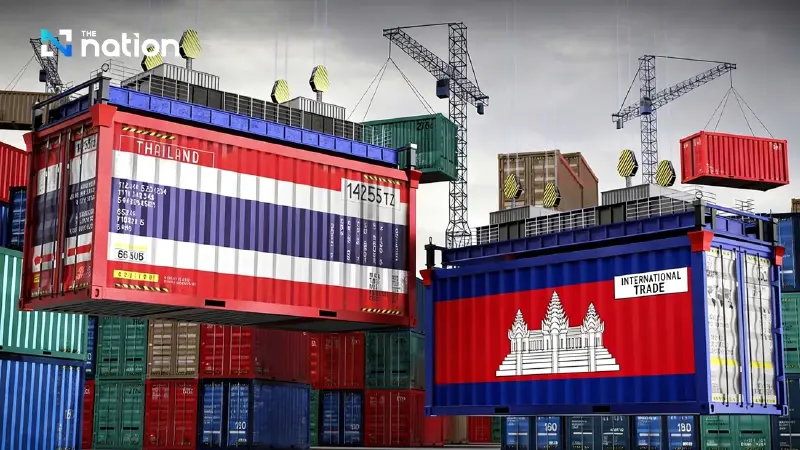


Nearly a year of border closures has cut land trade by about THB180 billion, while Thai businesses in Cambodia face mounting pressure.
- The Thai-Cambodian border conflict and subsequent closures have resulted in an estimated THB 180 billion loss in import-export trade over the past year.
- The economic impact has forced about 30% of border businesses to close and has negatively affected Thai investments in Cambodia worth US$4-5 billion, particularly in retail, hotels, and manufacturing.
- The situation has created an opportunity for competitors, with Vietnam, Malaysia, and Singapore significantly increasing their trade to replace Thai goods in the Cambodian market.
- A decline in orders for Thai products is attributed not only to border issues but also to a rising anti-Thai goods sentiment within Cambodia.
The Thai-Cambodian border conflict and border-closure measures over the past year have had wide-ranging effects on border economies, trade, investment, and businesses in both countries, amid concerns that the prolonged situation has created more room for rival countries to replace Thai goods and businesses in Cambodia.
Voratat Tantimongkolsuk, chairman of the Thailand-Cambodia Business Council, told Thansettakij that it could not be clearly determined which side had been more affected by the border situation, as each country had economic and strategic factors at play.
Both sides, he said, had adopted the tactic of saying they had not been greatly affected because showing weakness would not be beneficial, but in reality, everyone knew both sides had been hit hard.
Looking only at land border trade, Thailand and Cambodia have already lost around THB180 billion in import-export trade over the past year.
However, the overall economic impact cannot be linked solely to border closures, as other factors are also involved, including the global economic slowdown, the Russia-Ukraine war, conflict in the Middle East, tariff issues and scam gangs, which have affected confidence in trade and travel.
In addition, Thai investment in Cambodia, worth around US$4 billion to US$5 billion, has begun to be affected by gradual business downsizing, business sales or temporary suspensions, especially among retail businesses, garment factories, hotels, restaurants and service businesses along the border, which face a severe shortage of customers.
Voratat also said a report by the Trade Policy and Strategy Office under the Ministry of Commerce stated that about 30% of border businesses had already closed because they could no longer bear operating costs, including transport businesses, trading firms, restaurants and hotels.
Many companies, meanwhile, had chosen to pause hiring and cut warehouse and salary costs to keep their businesses afloat for as long as possible.
At the same time, the conflict has become an opportunity for rival countries.
Data from the first two months of this year found that goods from Vietnam, Malaysia and Singapore had increasingly replaced Thai products in the Cambodian market in a significant way, even though transport costs are higher than Thailand’s, which had previously benefited from cross-border trade.
“Singapore’s trade value with Cambodia has risen by more than 200%, Vietnam has grown by more than 20%, and Malaysia by about 30-40%. When we quarrel, others move in to take our place. The key factors that put Thai goods at a disadvantage against competitors are not logistics costs alone, but also anti-Thai goods sentiment in Cambodia, which has caused orders for goods from Thailand to keep falling,” Voratat said.
To resolve the problem, both countries should move quickly to revive negotiations and reduce the conditions underpinning the conflict.
Issues that cannot yet be agreed on could have their negotiation timeframes extended, while matters on which a joint conclusion can be reached should be acted on immediately to restore confidence in trade and investment.
However, the most worrying issue is public sentiment in both countries over perceived unfairness by the other side, which could lead to social and political pressure and make both governments reluctant to take compromise-based decisions.
“In the end, no one wants to see the conflict drag on, because the impact is not only on governments but directly affects business operators, workers and the economies of both countries. The important thing is to find a way back to talks so the damage does not spread further,” Voratat said in closing.
