
Cambodia launches UNCLOS conciliation over Thai maritime dispute
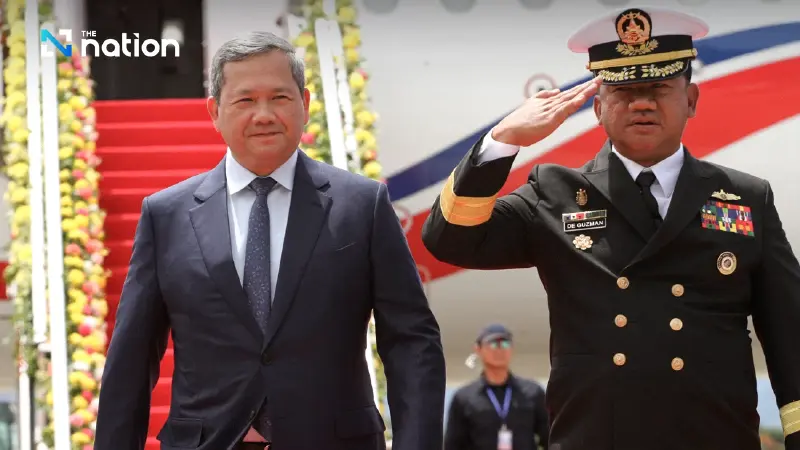


Cambodia says the move aims to protect its sovereignty and maritime rights after Thailand ended a 2001 framework for Gulf of Thailand talks.
- Cambodia has initiated a compulsory conciliation process under the UN Convention on the Law of the Sea (UNCLOS) to resolve its maritime dispute with Thailand.
- The move was prompted by Thailand's unilateral termination of a 2001 cooperation agreement regarding the disputed area.
- The dispute concerns a 26,000 sq km area in the Gulf of Thailand, rich in oil and gas reserves estimated to be worth around US$300 billion.
- While Cambodia is pursuing this international mechanism, which offers non-binding solutions, Thailand has historically insisted on resolving the issue through direct bilateral talks.
Cambodia said on Tuesday (June 2, 2026) it had formally informed the United Nations (UN) and Thailand of the start of a compulsory conciliation process under international law to seek an end to its long-running maritime boundary dispute with Thailand.
The move came after the Thai government unilaterally terminated a 2001 agreement with Cambodia last month.
The agreement had served as a framework for co-operation in talks on a disputed area in the Gulf of Thailand over which the two countries have overlapping claims.
Hun Manet, Cambodia’s prime minister, said the step was aimed at protecting Cambodia’s sovereignty and maritime rights in line with the principles of international law, while the Thai Ministry of Foreign Affairs has not issued an official comment on the matter.
Thailand’s cancellation of the agreement came amid rising nationalist sentiment after Thai Prime Minister Anutin Charnvirakul was elected back to office for another term in February.
One of his key campaign pledges was to review the approach to handling the dispute with Cambodia, following two border clashes between the countries last year that left many dead and injured.
Disputed area rich in energy resources
The disputed area, known as the ‘Overlapping Claims Area’ (OCA), covers about 26,000 square kilometres of sea in the Gulf of Thailand, which both Thailand and Cambodia claim.
Experts estimate that the area contains nearly 12 trillion cubic feet of natural gas reserves as well as substantial oil deposits, with an economic value of about US$300 billion, or more than THB10 trillion.
Cambodia’s energy minister said earlier that volatility in global energy markets from the conflict between Iran and the United States had made unlocking undersea resources in the disputed area more urgent for the entire region.
Conciliation mechanism under the law of the sea
Under the United Nations Convention on the Law of the Sea (UNCLOS), compulsory conciliation allows a panel of independent experts to examine a dispute and propose solutions, although any recommendations made are not legally binding on the parties.
Cambodia has appointed Foreign Minister Prak Sokhonn as its principal representative in the process, and Peter Taksøe-Jensen, a Danish diplomat, and Jean-Marc Thouvenin, a French academic, as conciliators.
Under the procedure, Thailand will have 21 days to appoint two conciliators of its own before all conciliators jointly select the chair of the conciliation commission, with the process overseen by the UN Secretary-General.
Thailand insists on bilateral talks
Thailand has repeatedly opposed taking disputes with Cambodia to international mechanisms, including proposals to bring cases before the International Court of Justice (ICJ), insisting that the issue should be resolved through direct talks between the two countries.
Although both sides remain under a ceasefire agreement that has been in force since late December after two rounds of clashes along their 817-kilometre border last year, mistrust remains.
The clashes left nearly 150 people dead and forced hundreds of thousands of people to evacuate from the area, with both Thailand and Cambodia accusing the other side of starting the fighting.
