
Thailand approved to host Formula One from 2028–2032 with projected THB 41bn budget
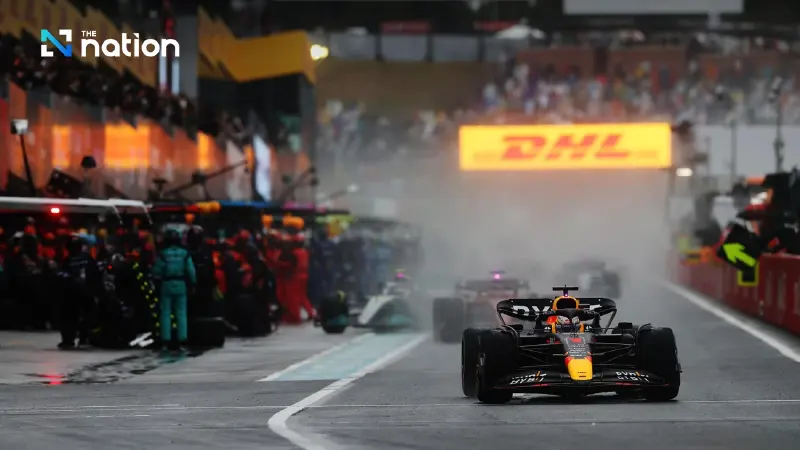


Thailand to host F1 from 2028 to 2032 in Bangkok's Chatuchak area. Govt expects 16 billion baht in annual spending and 8,000 new jobs per year.
Thailand’s Cabinet has approved in principle the country’s bid to host Formula One (F1) and other motorsport events sanctioned by Fédération Internationale de l’Automobile (FIA) between 2028 and 2032, with a total operating budget of 41.4 billion baht.
Jirayu Houngsub, spokesman for the Prime Minister’s Office, announced after Tuesday’s Cabinet meeting that Thailand would host the F1 Grand Prix for five consecutive years, with races held in Bangkok’s Chatuchak area. The proposed street circuit will cover 5.7 kilometres and operate over three days—Friday (practice), Saturday (qualifying), and Sunday (race day).
He noted that while F1 events are typically three days long, the full operation period may exceed that due to team preparations, track inspections, and temperature assessments.
The project was first approved in principle by the Cabinet on 23 April 2024, with the Thailand Convention and Exhibition Bureau (TCEB), the Sports Authority of Thailand, Bangkok Metropolitan Administration, and related agencies tasked with conducting feasibility studies.

The race area will span multiple sites including:
- Krung Thep Aphiwat Central Terminal (800 rai)
- Mo Chit 2 Bus Terminal (100 rai)
- Chatuchak Weekend Market vicinity (240 rai)
- Queen Sirikit Park (163 rai)
- Land behind PTT HQ and State Railway of Thailand (combined 2,000 rai)
“In just two or three years, Thailand will host a world-class event we never imagined would come here. The government fully supports this initiative,” Jirayu said.
He added that the Cabinet approved a total budget of 41.4 billion baht over five years, including an urgent allocation of 218 million baht for circuit design.
Economic and social benefits
The event is projected to draw around 99,875 spectators per day, totalling nearly 300,000 visitors annually, with a tourist ratio of 70% domestic to 30% international.
Forecasted annual benefits include:
- 16 billion baht in local economic circulation
- 14 billion baht in added economic value
- 1.4 billion baht in additional annual tax revenue
- 7 billion baht in new investments
- 8,000 new jobs per year
Additional long-term impacts include the development of smart city infrastructure, improved transport and digital systems, and a boost in engineering, technology, and STEM education. The event will also promote Thai culture, cuisine, and art on the global stage, enhance national pride, and draw tourists and fans of motorsports and related sectors.
It is also expected to help narrow social and economic inequality, create job opportunities across all skill levels, and support the country’s local communities.
