
Thailand–South Sudan relations expected to grow despite limited diplomatic engagement
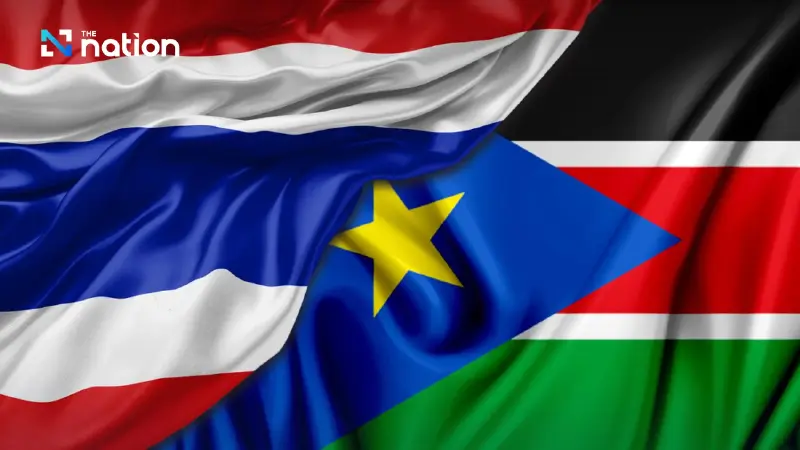


Although diplomatic relations between Thailand and South Sudan remain limited, largely due to South Sudan only gaining independence in 2011, their bilateral ties are expected to deepen in the near future.
On December 5, 2013, then Thai Ambassador to Nairobi, Kenya, Itthiphon Boonprakong, and Majok Guandong Thiep, South Sudanese Ambassador to Kenya, signed a Joint Communiqué on the establishment of diplomatic relations between the two countries. The signing took place at the United Nations Office in Nairobi.
This diplomatic milestone marked the beginning of formal relations between Thailand and South Sudan. It followed a resolution by the Thai Cabinet on September 6, 2011, which endorsed Thailand’s recognition of South Sudan and instructed the Ministry of Foreign Affairs to pursue the establishment of official diplomatic ties.
South Sudan’s independence
South Sudan declared independence from Sudan on July 9, 2011, following decades of conflict rooted in ethnic, cultural, and religious divisions. The civil war claimed nearly 2 million lives and displaced over 4 million people, prompting international intervention to restore peace.
According to MGR Online citing AFP, then Speaker of Parliament James Wani Igga proclaimed:
"We, the democratically elected representatives of the people, acting in accordance with their will as expressed in the referendum on self-determination, hereby declare South Sudan an independent and sovereign nation.”
The independence declaration was read in the presence of several foreign dignitaries and leaders, as well as a large gathering of South Sudanese citizens. The ceremony culminated in the raising of the South Sudanese national flag to the sound of jubilant cheers.
Igga emphasised that the declaration affirmed the new nation's democratic foundation, its multi-ethnic and multi-professional identity, and its commitment to friendly relations with all nations.
Bilateral trade and economic cooperation
According to the Thai Ministry of Foreign Affairs, bilateral trade between Thailand and South Sudan was valued at US$20.75 million in 2018. Thailand exported goods worth $20.74 million while importing goods worth just $0.01 million, resulting in a trade surplus of $20.73 million for Thailand.
Thailand’s exports to South Sudan included automobiles and parts, electrical appliances and components, rubber products, papers, and garments. Imports from South Sudan consisted of electrical machinery and components, printed materials, and metal products.
On December 14, 2018, an advance team of 12 Thai military personnel arrived in Juba, the capital of South Sudan. A further 261 personnel joined them on December 23, 2018, as part of Thailand’s contribution to the United Nations Mission in South Sudan (UNMISS).
Their main mission was to repair and improve rural roads—mostly dirt tracks—and to develop infrastructure within the UN military camps.
Beyond these practical tasks, Thailand’s engineering deployment to UNMISS also played a crucial role in promoting sustainable peace in South Sudan. The approach drew on the principles of sufficiency economy philosophy advocated by His Majesty the late King Bhumibol Adulyadej, which aims to address root causes of conflict and prevent recurrence.
This aligns with the United Nations Sustainable Development Goal 16: Peace, Justice and Strong Institutions, the Foreign Ministry said.
Where to visit in South Sudan
According to Wikipedia, South Sudan is a landlocked country in East Africa. It shares borders with Sudan to the north, Ethiopia to the east, the Democratic Republic of the Congo, Uganda and Kenya to the south, and the Central African Republic to the west.
As of 2024, South Sudan has a population of just over 12.7 million. Its capital and largest city is Juba. The country features a varied landscape, including expansive plains and plateaus, dry and tropical savannahs, inland floodplains, and forested mountain regions.
The Nile River system is South Sudan’s most prominent geographical feature, running from south to north through the centre of the country. Central to this system is the Sudd, one of the world’s largest wetlands.
According to the Silver Back Gorilla Tours website, travellers can enjoy a hike to the summit of Jebel Kujur Mountain for panoramic views of Juba. Although the mountain rises to just 684 metres, it offers the best vantage point over the city.
Formerly known as Korok, its name was changed to Kuruk due to local beliefs, as it was once a site for ritual practices and witchcraft.
Boma National Park, located in Jonglei State near the Ethiopian border, is one of the largest national parks in Africa, spanning 22,800 square kilometres.
Twice a year—between March and April, and again between November and January—the park is the site of one of the world’s largest animal migrations. During this period, approximately 2 million animals, including kobs, gazelles, and other antelope species, move from the Sudd and Bandingilo National Park to Boma National Park and onward into Ethiopia.
These migrations are driven by the seasonal rains. In the dry season, from November to January, the animals return to feed on the fresh grass that follows the flooding of the Nile. The park is also home to more than 7,000 elephants, along with baboons, giraffes, and oryx.
Travellers are also encouraged to visit the John Garang Mausoleum, dedicated to the late Dr John Garang, a revered national leader who died in a helicopter crash after returning from a meeting in Uganda.
Garang was the leader of the Sudan People’s Liberation Movement (SPLM), which led the struggle against the Sudanese government, culminating in South Sudan’s independence.
The mausoleum is located along the Avenue of Nations in Juba, a ceremonial site for national celebrations. It features a large photograph of Garang and the national flags of South Sudan.
