
Thailand partners with Italy to become a regional leader in railway manufacturing by 2030
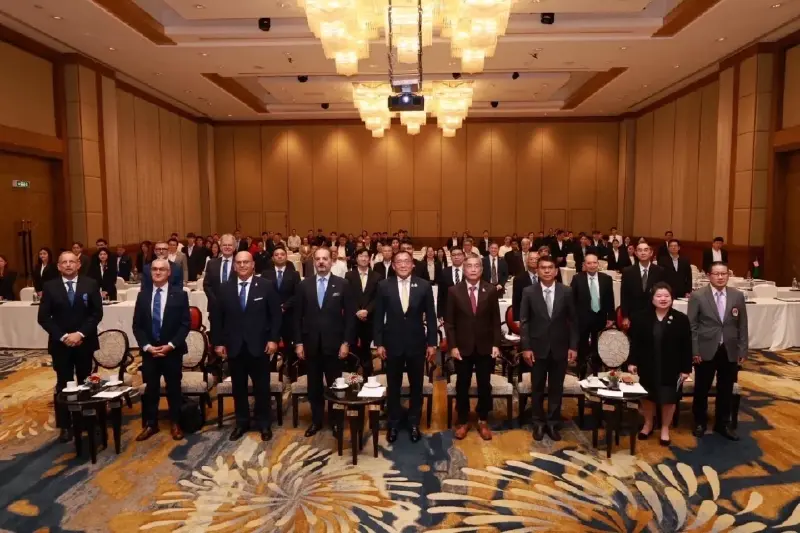


Thailand and BLUE Engineering join forces to develop domestic railway manufacturing, with plans to lead Southeast Asia’s rail industry and reduce imports.
On September 17, the Rail Technology Research and Development Agency (RTRDA), in collaboration with BLUE Engineering S.r.l. from Italy, launched a strategic project to transform Thailand from a railway importer into a producer of its own trains.
Chayatan Phromsorn, Permanent Secretary of the Ministry of Transport, and Paolo Dionisi, Ambassador of Italy to Thailand, joined senior executives from both organisations to announce the joint vision of developing a domestic railway industry.
Chayatan explained, "The Ministry of Transport recognises the clear economic gap. Thailand has spent substantial amounts importing trains for years, but we have never developed our own production capabilities. This results in missed opportunities for value creation, employment, and technological advancement."
Choosing BLUE Engineering was not a random decision. The company, with 30 years of experience in Turin—Italy’s industrial hub for automotive, aerospace, and rail technology—was selected for its expertise.
Mohamed Juma Eid, CEO of BLUE Engineering, expressed confidence in Southeast Asia’s market potential, with Thailand being in an ideal position to become a manufacturing hub for the region.
The project is structured into three clear phases:
- Phase One: Laying the foundation for domestic train manufacturing using European standards, studying feasibility, and designing trains for local production.
- Phase Two: Creating Thailand’s own standards and design guidelines, promoting the use of local technology and components, and reducing reliance on imports.
- Phase Three: Strengthening the supply chain, developing the capacity of Thai operators, and creating clear performance benchmarks.
Impact on the economy
The development of the domestic railway industry is expected to benefit the economy at various levels. At the macro level, it will reduce Thailand’s trade deficit by lowering train imports and boosting export potential. At the industrial level, it will stimulate growth in upstream businesses such as steel, metals, and electronics.
Employment will focus on skilled labour, engineers, and technicians, raising wages above the average and contributing to income distribution and human resource development.
Challenges ahead
Building a new industry is no easy task. The shortage of skilled labour will need to be addressed through training programmes and partnerships with educational institutions. Strict safety and quality standards will also be essential for gaining domestic and international trust. Moreover, Thailand will face competition from global railway manufacturers with more experience and advanced technology.
Regional opportunities
Southeast Asia’s rail market continues to expand, with countries such as Vietnam, Indonesia, the Philippines, and Malaysia planning significant rail development to accommodate economic growth.
Thailand has a strategic advantage in location, infrastructure, and competitive labour costs. If the country can manufacture its own trains, it has a strong chance of dominating the regional market.
This project aligns with Thailand’s strategy to transition from a traditional manufacturing economy to one based on innovation and high-tech industries. The development of the railway industry will elevate Thailand’s global competitiveness.
The technology transfer from BLUE Engineering will provide Thai engineers with the knowledge and experience to apply in other industries, further strengthening Thailand’s technological landscape.
