
Cambodian troop moves disrupt Thai military handover, says 2nd Army Area chief
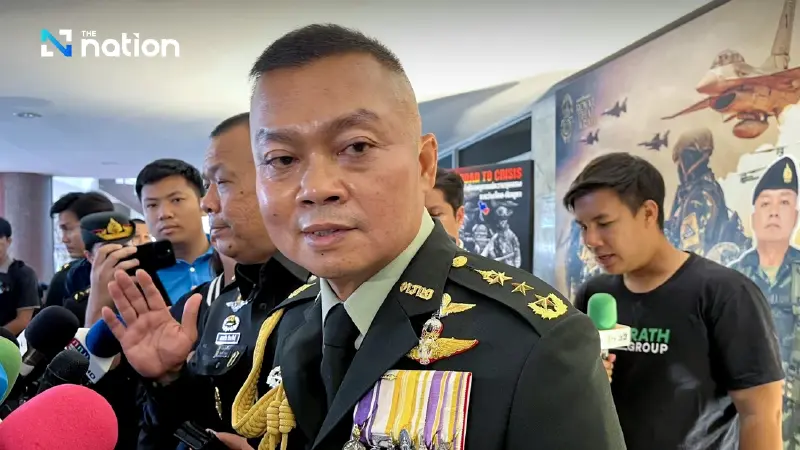


The Second Army Area chief, Lt Gen Boonsin Padklang, acknowledged on Friday that Cambodian military manoeuvres had caused disruption during a leadership handover in the Thai army.
Speaking at the Royal Thai Army headquarters in Bangkok, Boonsin confirmed reports of Cambodian troop and equipment movements near the border, including BM-21 rocket launchers. He said these actions signalled that “anything could happen in the future,” and reaffirmed that Thai forces must remain on alert.
He described Cambodia’s actions as a violation of the ceasefire and admitted they were aimed at stirring tension during the transition of command. However, he stressed the impact would be limited as the incoming Second Army Area chief was well versed in procedures and the government’s continuity ensured stability.
On reports of Cambodian soldiers firing small arms and grenades, Boonsin urged restraint and adherence to the ceasefire, saying any such incidents must be verified by both militaries. He added that decisions on retaliation must be taken jointly by the military and the government, weighing national security and potential consequences.
Boonsin also urged the public not to post or share images of Thai military hardware online, after photos of tanks stationed along the border circulated on social media. He noted that no new movements had taken place, suggesting the images were old.
Regarding unconfirmed reports of explosions in the 498 Hill area of Ubon Ratchathani’s Chong Bok pass, he said investigations were under way and evidence would be compiled for protest submissions to the Interim Observer Team (IOT).
He emphasised that the army must maintain a degree of gentlemanly conduct, but when conditions, circumstances and the environment demand, soldiers must fulfil their duty.
“We are already gentlemen, but we must not simply follow the tide of events. Whatever action we take must be based on reason, necessity, and the nation’s security as a whole,” he said.
Boonsin added that he was not concerned about the Thai-Cambodian border situation, even though he will retire in a few days. He explained that his successor has long experience in the region, having served as deputy commander, while he himself will continue as an adviser to the Army Commander.
“I will remain in the area until my last day, and even after retirement I will stay with the people, continuing tasks assigned by the Army Commander,” he said.
When asked about Prime Minister and Interior Minister Anutin Charnvirakul’s statement that soldiers may act immediately when necessary, Boonsin said this was “a good and proper approach,” though he stressed that any major decision must be reviewed by the National Security Council (NSC), especially those affecting national security as a whole. “Unilateral decisions could risk losses,” he noted.
Asked whether the Army Commander had given him any special instructions as tensions rise, the Second Army Area chief replied that they were working together to resolve problems and maintain order.
“Even if Cambodia uses small arms, they cannot use heavy weapons unless they bring them out first. Otherwise, it would be considered bullying,” he said.
On whether Thailand risked being at a disadvantage if it delayed a response, Boonsin answered that it depended on timing and circumstances.
