
Thai PM Approves THB6.1 Billion Flood Relief as Water Management Crisis Deepens
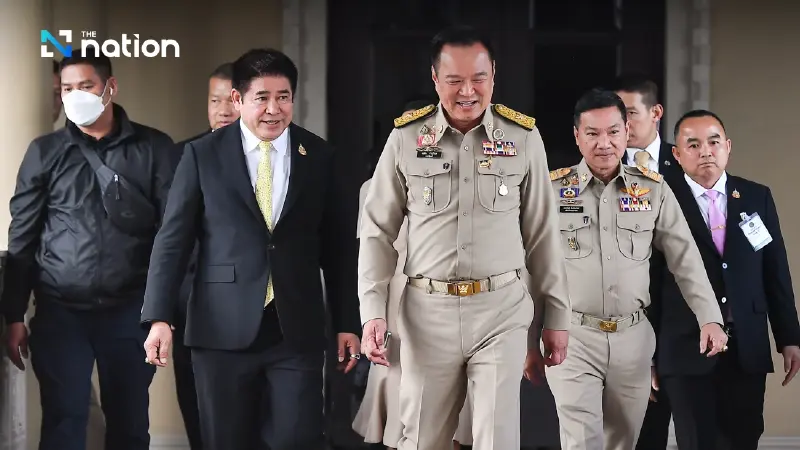


Anutin Charnvirakul orders immediate financial aid of 9,000 baht for nearly 686,000 households and issues urgent technical directives to manage the lower Chao Phraya River
- The Thai government has approved a 6.1 billion baht budget to provide financial aid to 685,554 households affected by recent flooding and landslides.
- Each impacted household will receive a flat payment of 9,000 baht, with the Prime Minister urging for the compensation to be distributed with the "utmost speed."
- To manage the deepening crisis, urgent orders were issued for the Chao Phraya Basin, including controlling dam discharge rates, maximizing drainage through canals, and deploying additional water pumps.
The Thai government has pledged significant financial support and ordered immediate action to combat severe flooding across the country.
Prime Minister and Minister of Interior, Anutin Charnvirakul, chaired the National Disaster Management and Situation Steering Committee meeting at Government House today.
The committee approved a total budget of 6.169 billion baht to assist 685,554 households affected by floods and landslides between 15th May and 6th October 2025.
Siripong Angkasakulkiat, spokesperson for the Prime Minister’s Office, confirmed the adopted relief criteria, which mirror the 2024 scheme:
A flat payment of 9,000 baht per household will be given to permanent residents whose homes were in an area affected by flooding, landslides, or river overflow for either less than seven consecutive days but sustained property damage, or more than seven consecutive days of continuous inundation.
The Prime Minister stressed the need to dispense the compensation with the "utmost speed", while also urging attention to potential public health issues and agricultural losses caused by the water.

Urgent Orders for Chao Phraya Drainage
With the Lower Chao Phraya Basin containing excessive water and many areas still submerged, the Prime Minister issued direct orders to manage the crisis, particularly ahead of a period of high tides and forecast rain between 9th–13th October 2025.
The immediate water management directives include:
Dam Control: The Royal Irrigation Department (RID) must maintain the water discharge rate from the Chao Phraya Dam at no more than 2,500 cubic metres per second (m³/s), while simultaneously reducing discharge from the Pasak Cholasit and Rama VI dams by 100 m³/s.
East Bank Action: Maximum drainage must be utilised on the Chao Phraya's east bank via the Chainat-Pasak Canal, with the Manorom Sluice Gate operating at its full capacity of 210 m³/s.
Pumping Boost: Relevant agencies must deploy additional water-propelling machinery at choke points along the Phra Narai Waterway and its associated canals, alongside accelerating the use of pumping stations to discharge water into the Gulf of Thailand during low tide cycles.

West Bank Management: Drainage must be increased on the west bank via the Tha Chin River, using secondary canals to divert water from upstream areas.
Bangkok Coordination: The Bangkok Metropolitan Administration (BMA) is instructed to increase drainage through parts of the capital where appropriate, but only to help relieve the overall flood accumulation without causing adverse effects on Bangkok itself.
Flood Retention: Water intake into the designated flood retention fields on the left bank of the Chainat-Pasak Canal and the Tha Wung-Lopburi fields must be increased, as they retain over 80% of their potential capacity (92 million m³ combined).
