
Industrial standards office lifts seizure of ‘SKY’ steel, clearing Xin Ke Yuan amid SAO building collapse scandal
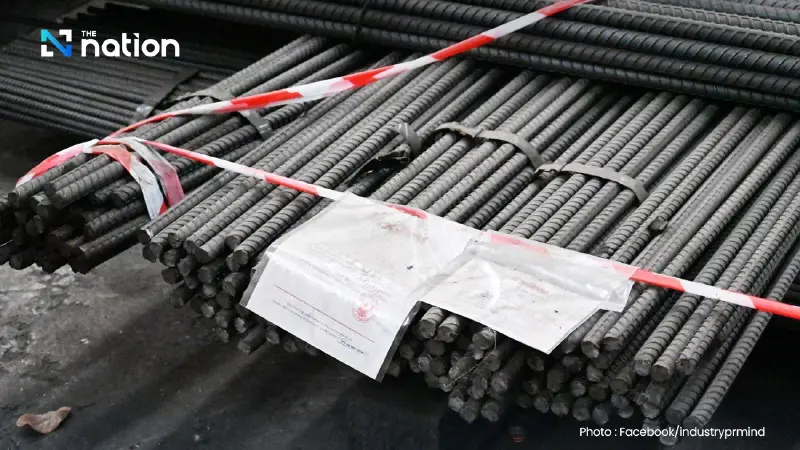


TISI lifts seizure of Xin Ke Yuan’s ‘SKY’ steel, confirming product met standards, but questions remain over cause of SAO building collapse in March 2025

The Thai Industrial Standards Institute (TISI) has officially lifted its seizure order on all batches of rebar bearing the ‘SKY’ trademark produced by Xin Ke Yuan Steel Co., Ltd., returning the steel to the company and concluding one of the most controversial industrial cases of the year. The reversal follows months of scrutiny after the deadly collapse of the new State Audit Office (SAO) building during the March 28 earthquake, which killed nearly 100 people.
From accusation to exoneration: a timeline of the steel controversy
Following the collapse, then–Industry Minister Akanat Promphan stated that the SKY-branded rebar used in the SAO project was “below standard,” ordering the temporary closure of the Xin Ke Yuan factory in December 2024. On April 2 2025, TISI seized more than 41,000 steel rods worth approximately 40 million baht for testing.
However, subsequent laboratory analyses by the Thailand Iron and Steel Institute and TISI found the material fully compliant with TIS 24-2559 standards.
- The first inspection, conducted on April 2, confirmed compliance, and TISI formally released the first lot of 16,950 pieces (DB32 SD50T, 10 metres) on September 15 under letter no. K.T.16-13/68.
- The second inspection, on September 15, also confirmed compliance, leading to a full release of the remaining 24,685 pieces on October 8 under letter no. K.T.16-15/68.
In total, TISI has returned 41,635 steel bars to Xin Ke Yuan.

What caused the collapse? lingering questions remain
The decision to lift the seizure and certify Xin Ke Yuan’s steel as compliant has raised serious questions: if the steel was not at fault, what caused the SAO building — the only structure in Thailand to collapse during the quake — to crumble so catastrophically?
Industry observers have also criticised the four-month delay between the first test result (April 24) and the return of the steel (September 15), questioning TISI’s procedures and governance.
Legal battle and compensation claim exceeding 3.2 billion baht
On September 19 2025, Xin Ke Yuan Steel filed a case with the Rayong Administrative Court, suing former Industry Minister Akanat Promphan and 15 others for 3.21 billion baht in damages. The suit seeks to overturn the Department of Industrial Works’ shutdown and seizure orders, which the company claims were unlawful and caused major financial loss — including 3.14 billion baht in business damages and 77 million baht in employee wages, plus 5% annual interest.
The company has also petitioned the court for an interim injunction to resume factory operations pending final judgement.
In a separate lawsuit, Xin Ke Yuan sued the Board of Investment (BOI) and its secretary-general Narit Therdsteerasukdi, seeking to reverse the temporary suspension of its investment privileges and requesting protection of its BOI rights until the case concludes.
TISI’s clarification: most steel met standards, 2,690 rods still under seizure
Ekniti Romyanon, Inspector-General of the Industry Ministry confirmed that the agency had returned the compliant steel, stating that “it was done in accordance with state regulations.” He noted that 2,690 steel rods from the same producer were found non-compliant and remain under legal action.
“When TISI seizes suspect goods, such as steel possibly linked to the SAO collapse, the goal is to prevent substandard material from entering the market,” Ekniti said. “If tests show compliance, the goods are released; if not, prosecution follows.”
Uthumporn Kaewnampet, Director of Standards Division 1 at TISI, said that only the substandard products — identified as failing TIS 24-2559 — remain impounded, while all compliant lots have been returned.
Industry fallout and broader investigations
The Ministry of Industry previously reported that inspections of Xin Ke Yuan’s facilities uncovered further violations, including possession of nearly 60,000 tonnes of dust waste without notification and unauthorised transport activities. The findings led to 1,016 separate charges filed with the Department of Special Investigation (DSI).
Despite these allegations, the latest test results from TISI and the Iron and Steel Institute effectively clear the SKY-branded rebar of direct responsibility for the SAO collapse. The institute’s withdrawal of the seizure order marks a turning point — closing the “substandard steel” chapter, but opening a new phase of investigation into the true structural and engineering causes behind one of Thailand’s deadliest building failures.
