
Council of State affirms rare earth MOU vetted by Cabinet, legally non-binding and open to review
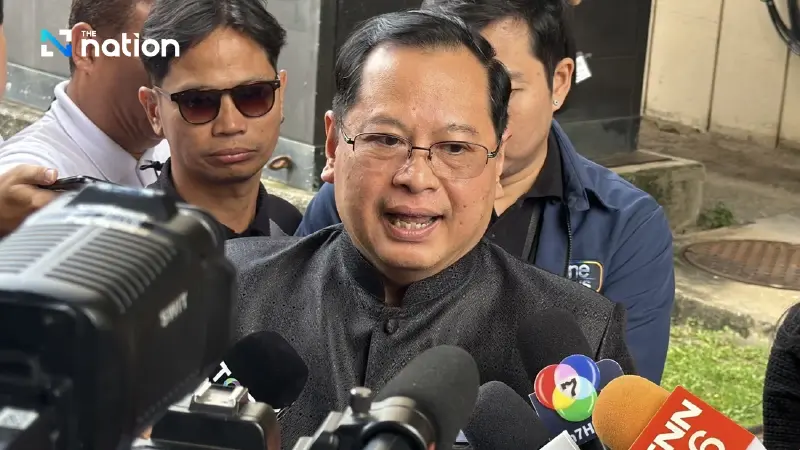


Thailand’s Council of State confirms the rare earth MOU with the US carries no legal obligations, was thoroughly reviewed by Cabinet, and can be revoked.
Pakorn Nilprapunt, Secretary-General of the Council of State, said on Tuesday that the memorandum of understanding (MOU) on cooperation in developing the rare earth supply chain between Thailand and the United States does not constitute a legally binding international agreement.
He explained that the MOU does not qualify as a treaty under Section 178 of the Constitution, and therefore represents only a form of international cooperation, as already stated by Prime Minister Anutin Charnvirakul.
When asked whether the agreement could be seen as a form of pressure from the US, Pakorn said he did not believe so, describing it as a mutual understanding with no binding legal effect.
“Everything complies with Thai law. It’s not just the US investing in Thailand — Thailand could also invest in the US if we have the capability. This is reciprocal cooperation,” he said.
He added that any subsequent activities under the MOU must comply with Thailand’s Mineral Act, which requires open and fair bidding. He assured that Thai law fully covers the issue and that authorities will take public concerns into account to prevent potential problems.
Pakorn noted that the MOU is similar to those Thailand has signed with other countries, including Cambodia and Malaysia, and is not exclusive to the US.
When asked whether the MOU could be terminated, he confirmed that a termination clause is included, allowing cancellation by either party.
He also confirmed that the MOU had already been considered in a special Cabinet meeting, where it underwent detailed review. The Foreign Affairs Ministry examined the diplomatic and linguistic aspects, while the Council of State reviewed legal issues, ensuring that “all dimensions were thoroughly scrutinised.”
Responding to a question about whether both parties must agree to a termination, Pakorn said the details were specified in the MOU and advised against relying on AI-generated summaries, noting they might be inaccurate.
“The MOU does not use the term ‘contracting parties’ but instead refers to ‘cooperation’, reflecting equal standing between both sides. Everything complies with domestic law,” he said.
He further added that the final clauses clearly state that all actions under the MOU must adhere to each country’s internal laws and regulations.
“All existing concerns will be taken into consideration, but there is no need for alarm. This is not a binding treaty,” Pakorn concluded.
