
Scholar warns rare earth MOU not worth risk after arsenic found in Salween River
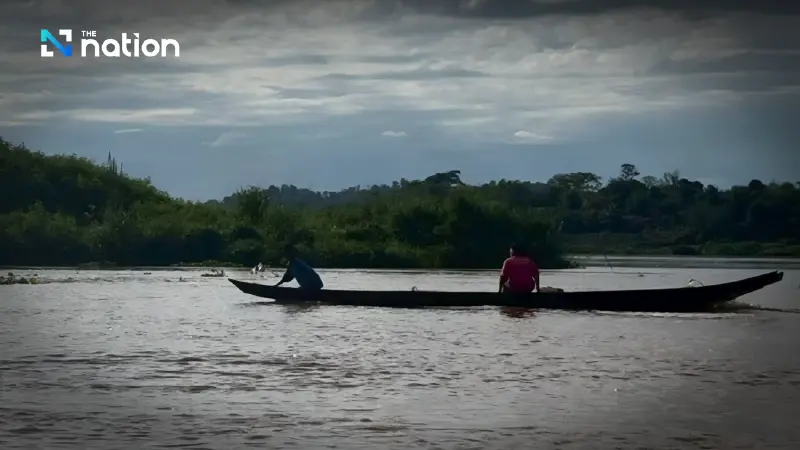


Chiang Mai University researcher urges Thailand to reconsider the US rare earth MOU after arsenic levels in the Salween River exceed safe limits fivefold.
Associate Professor Dr Wan Wiriya, Assistant Head of the Environmental Science Research Centre at Chiang Mai University, voiced opposition to the Thai-US rare earth memorandum of understanding (MOU), calling it unnecessary and risky. He said the agreement appeared to contain hidden agendas and lacked transparency from the outset.
As an environmental scientist, Dr Wan argued that Thailand is unsuitable for mining investments of any kind, including rare earth extraction, due to the high risk of environmental degradation affecting water, soil, and air.
“Thailand’s strengths lie not in mining but in tourism, culture, and soft power. Focusing on mining projects would only harm the environment and go against our sustainable economic potential,” he said.

Dr Wan noted that mining operations in Myanmar have already caused heavy-metal contamination in the Kok, Sai, Ruak, and Mekong rivers, impacting residents in Chiang Mai and Chiang Rai. Despite two successive Thai governments, no effective remediation has been undertaken.
“Instead of addressing cross-border environmental damage, the government is signing an MOU on rare earths with the US — even though the environmental consequences are clear. Last week’s Thai-Myanmar meeting on contamination in the Kok River brought no technical or scientific progress. The government must rethink any mining ambitions,” he added.

Dr Wan’s research team conducted field sampling in September 2025 along the Salween River in Mae Hong Son province using Inductively Coupled Plasma-Optical Emission Spectrometry (ICP-OES), a technique for detecting trace levels of heavy metals.
The team collected three water samples, all showing arsenic levels above the safety standard of 0.01 mg/L:
- Upstream of Ban Tha Tafang, Mae Yuam subdistrict, Mae Sariang district – 0.05 mg/L
- Downstream of Ban Tha Tafang, Mae Yuam subdistrict, Mae Sariang district – 0.05 mg/L
- Upstream of Ban Mae Sam Laep, Mae Sam Laep subdistrict, Sop Moei district – 0.04 mg/L

He said the samples confirmed earlier reports of murky water and sediment in the Salween, matching data from the Stimson Center, which noted extensive mining activity on the Myanmar side opposite Mae Hong Son.
“This shows how mining-related pollution is creeping closer to Thai communities. It’s no longer a distant issue — it’s an immediate environmental threat,” Dr Wan warned.

