
Top 3 Bangkok central business districts lead foreign housing demand
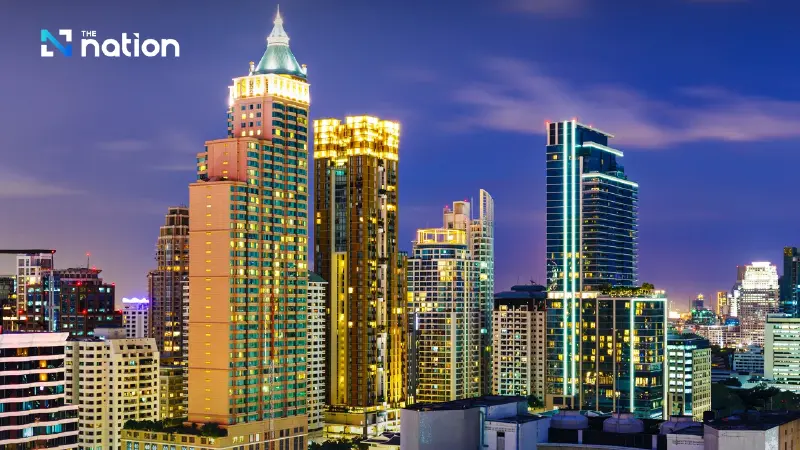


Survey: Foreign housing demand surges. Asok-Phrom Phong, Silom-Sathorn, and Ratchada are top spots in Bangkok, Phuket, Chiang Mai, and Pattaya, leading provincial interest.
- A survey identifies Asok-Phrom Phong, Ratchada-Rama 9, and Silom-Sathorn as the top three Bangkok central business districts (CBDs) leading foreign housing demand.
- These locations are favored by foreign nationals due to their excellent transport links, proximity to multinational offices and embassies, and comprehensive amenities.
- The primary demand comes from foreign business owners and executives, particularly from Japan, Singapore, the UK, China, and the USA.
- Condominiums are the most popular property type, with 54% of foreigners choosing to rent, reflecting short-to-medium term stays for work or business.
Ten years ago, the Thai real estate market was primarily driven by "locals" buying homes for personal use and "investors" purchasing properties for speculation.
However, today the picture is changing. The new players in the Bangkok housing market are none other than "foreigners" who have come to work and expatriates residing in Thailand.
What is even more interesting is that despite having strong purchasing power, they are not "buying", instead, they prefer to "rent."
Prapansak Rakchaiwan, Managing Director of LWS Wisdom & Solutions Co., Ltd., a subsidiary of the LP. N Group, conducted a survey of 446 foreigners in Bangkok between January and April 2025.
The majority of respondents were Japanese, Singaporean, British, Chinese, and American nationals, making up nearly half of the sample, with an average age of 36-45 years. This group represents the working-age demographic with high purchasing power, largely consisting of executives.
"Over 67% of the foreigners who responded to the survey came to Thailand to work or do business, with an average stay of 5-10 years," said Prapansak. This indicates that most foreigners are in Thailand temporarily, which is the first reason why "renting" is a more fitting option than "buying."

The Top 3 Locations Foreigners Prefer
- The LWS survey identified the top three areas in Bangkok preferred by foreigners for living. First is the "Asoke-Phrom Phong" area, known as the "heart of Sukhumvit."
It is filled with international restaurants, cafes, international schools, and famous shopping malls like Emporium and EmQuartier.
Foreigners working in the city's central business district typically look for condos near the BTS Skytrain, within a 10-minute walk to work.
- The second most popular location is the "Ratchada-Rama 9" area, which is the "New CBD" of Bangkok. This area boasts numerous newly developed office buildings and is home to the headquarters of tech and media companies such as Unilever, True, and many startups.
Condo prices here are more affordable than in Asoke-Phrom Phong, with easy access via the MRT.
- Finally, the "Silom-Sathorn" area remains the traditional business centre of Bangkok, hosting banks, major corporate headquarters, and embassies.
The key attraction here is the convenience of amenities and seamless connectivity with both the BTS and MRT.
The LWS survey revealed that 54% of foreigners chose to "rent," while 46% chose to "buy." The group that rents the most are those working in Thailand for 5-10 years, as renting offers more flexibility, easier relocation, and avoids the risk of owning property in a country where they do not hold citizenship.
On the other hand, those who "buy" are typically married to Thai nationals or are planning to retire in Thailand permanently.

Condos dominate foreign preferences
61% of survey respondents prefer living in "condos," while 39% opt for "single houses." The primary reason is that Thai law does not allow foreigners to own land, making condo ownership the only viable and legal option.
Additionally, condos meet the needs of urban lifestyles, offering security systems, comprehensive amenities, and proximity to public transport, particularly the BTS Skytrain.
Regarding price and size preferences, foreigners purchasing condos tend to prefer units ranging from 30 to 100 square metres, with prices ranging from 3 to 10 million baht.
For those who rent, the average monthly rent is between 10,000 and 30,000 baht, with a preference for well-designed spaces that offer clear delineation of areas, including a work corner for those working remotely.
A balcony and full facilities, such as a fitness center, swimming pool, and green spaces, are also highly valued.
Notably, most foreigners are not interested in pet-friendly projects, as they do not wish to take on the responsibility of caring for pets.
Phuket, Chiang Mai, and Pattaya rise in popularity
Although Bangkok still ranks number one, LWS found that Phuket, Chiang Mai, and Pattaya are also attracting significant interest from foreigners looking to buy or rent.
Phuket and Pattaya are popular tourist destinations, while Chiang Mai has emerged as a "second city" for foreigners working remotely from Thailand. 9% of respondents expressed interest in Phuket, 7% in Chiang Mai, and 5% in Pattaya.
Prapansak sees this as an opportunity for Thai real estate developers. The data clearly shows that while domestic purchasing power is slowing, foreign purchasing power continues to grow.
Developers may need to shift their mindset from "build to sell" to "build to rent" or partner with foreign investors to develop long-term joint venture projects.
The condo rental market for foreigners could become a new engine for supporting the Thai real estate market during a time when the domestic economy is not yet fully recovered.
"Foreigners are a group with high purchasing power, compared to domestic consumers, and they have clear demands regarding location and amenities."
In the past, "condos in Bangkok" were primarily assets for Thai people. But today, condos in Bangkok are becoming regional assets that attract workers from across Asia.
In the eyes of foreigners, Bangkok is a city offering a comfortable lifestyle with affordable living costs, great food, an advanced transport system, and high quality of life compared to its expenses.
This is why foreigners choose to "rent" rather than "buy", what they seek is not just a place to live, but the freedom to live their lives on their own terms.
Bussakorn Phuse
