
"Pingxiang Model" China-ASEAN High-Speed Rail Unlocks Freshness
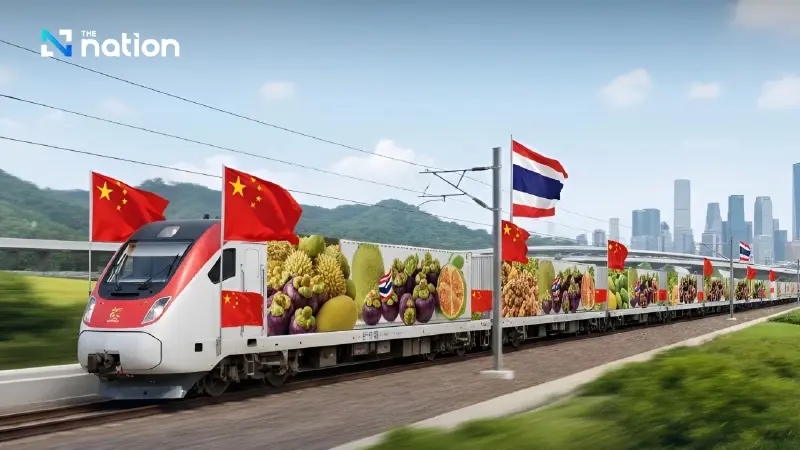


The "Pingxiang Model" high-speed rail enables quick delivery of fresh Thai durian to China in just one day, transforming Thai fruit trade to the Chinese market

The Pingxiang Railway Port in Pingxiang, located in the Guangxi Zhuang Autonomous Region of China, has emerged as a key gateway for Thai fruit trade to China, significantly transforming the logistics of exporting Thai produce.
The Thailand Journalists Association and NATION TV team highlighted that China is using Pingxiang as a strategic hub to advance its One Belt One Road vision, positioning it as a digital bridge linking ASEAN with China. This efficiency is achieved by combining high-speed rail with full digital innovation.
Pingxiang: The Golden Gateway to ASEAN-China Trade
The logistics hub has the status of a national level 1 port and is the first railway port in China authorized to import fruits from foreign countries. With an area of over 345 acres and an annual capacity of 2.8 million tons, Pingxiang plays a vital role in connecting China to ASEAN, serving not only as a border checkpoint but as a central distribution point for goods moving inland to China and Europe.

Freshness of Thai Fruits: A New Alternative
One of the main challenges in fruit exports is maintaining "freshness," and Pingxiang has become a key solution for Thai exporters, particularly during peak fruit seasons. Previously, the train service ran only three times a week, but now the frequency has increased to three times daily to meet the rising demand for Thai fruits such as durian, mangosteen, jackfruit, and dried longan.
Thai fruits are transported in refrigerated trucks through Vietnam to the Dong Dang border, where they are transferred to refrigerated trains at Pingxiang, ensuring that the fruits remain in a temperature-controlled environment throughout the journey. This system guarantees that Thai fruits can reach their destinations in China within one day, preserving their quality and ensuring optimal freshness.

Digital Transformation: Customs Process Takes Just 3 Minutes
The Guangxi government has made significant investments in fully digitalizing the logistics system, particularly the digital port system that links railway, customs, and border checkpoint data seamlessly. This has drastically reduced the time required for customs procedures from hours to just 3 to 4 minutes.
This rapid processing reflects China’s commitment to facilitating smooth trade, including the establishment of a green channel for fruit imports and the use of large container scanners to expedite inspection and quarantine procedures without long delays. These measures have reduced congestion at key land checkpoints, such as Youyi Guan, while also minimizing health risks during previous crises.
The Pingxiang Railway Port Logistics Center is both a strategic trade hub and a logistics solution, offering Thai exporters a golden opportunity to access China’s interior market quickly and efficiently.


