
LiDAR mapping for Thai–Cambodian border ‘comes with gains and losses’
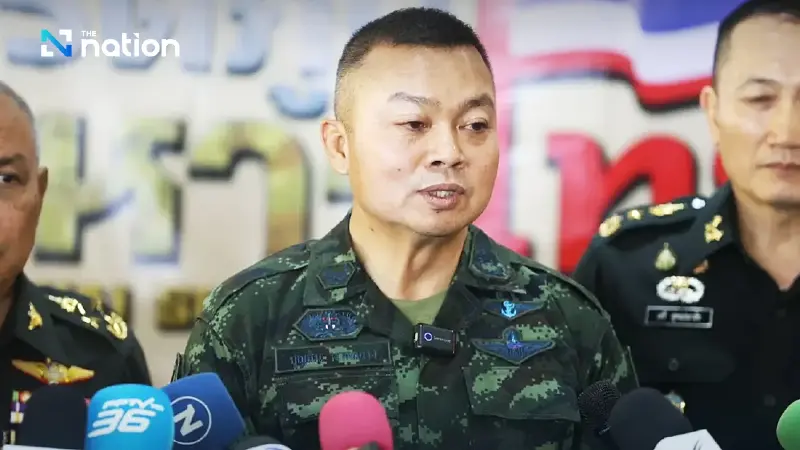


Lt Gen Boonsin Padklang supports LiDAR-based mapping in Thai–Cambodian border talks but stresses fairness, accuracy, and dialogue before force over Prasat Ta Kwai

At the Royal Thai Army Club on Vibhavadi Road on November 6, Lt Gen Boonsin Padklang, adviser to the army chief and former commander of the 2nd Army Region, discussed the Thai–Cambodian border situation, particularly concerning Prasat Ta Kwai in Surin Province.
Boonsin emphasised that diplomatic dialogue should be the first step, beginning with talks before escalating to stronger measures.
When asked about differing opinions — some calling for the use of force to reclaim Prasat Ta Kwai, others urging patience and reliance on Light Detection and Ranging (LiDAR) technology — Boonsin said both approaches could proceed in parallel.
“LiDAR is a technical matter. We must coordinate with the Royal Thai Survey Department to ensure the process is fair and in the nation’s best interests,” he said, adding that the outcome depends on clear communication between technical and political authorities.
Regarding how Prasat Ta Kwai might eventually be reclaimed, Boonsin said the decision rests with those currently in power, who must proceed gradually — from filing formal protests and holding discussions to phone diplomacy — while force should be the last resort due to potential consequences.
Asked whether LiDAR technology could help Thailand regain the site, Boonsin said that question should be addressed by experts. “LiDAR uses satellite-linked mapping to connect watershed ridges and identify boundary lines. The Survey Department must explain how this benefits the nation,” he noted.
When asked how to proceed given both sides rely on their own maps, Boonsin said geography plays a crucial role. “The terrain is mountainous and elevated, and it’s clear that the site lies within Thai territory. But discussions must still take place,” he said.
He clarified that the LiDAR mapping project has not yet begun, as it requires approval from both governments. Technical teams will meet to assess the details and implications for both nations.
In response to concerns that LiDAR mapping might lead to territorial losses, Boonsin said, “That’s possible — depending on how the data is interpreted. There will be both gains and losses. The key is transparency: technical experts must clarify what Thailand stands to gain or lose and compare the land area involved.”
Regarding reports that Cambodian troops are constructing an access road at Phlan Hin Paet Kon near Phu Makua in Si Sa Ket Province, Boonsin said it was up to local commanders to verify whether the activity violates the MOU 43, which prohibits new construction near disputed border areas. “If it breaches the MOU, Thailand must lodge a protest and insist on halting such actions,” he said.
Asked about the effectiveness of previous protests, Boonsin replied, “It depends on the initiative and communication of the commanders in charge at that time.”
On Cambodia’s sincerity in resolving the issue, Boonsin said the current 2nd Army commander is following agreed frameworks under the General Border Committee (GBC) and Regional Border Committee (RBC). The next step, he added, involves withdrawing heavy weapons from contested areas.
“Whether Cambodia is truly sincere depends on its field commanders and leaders. If both sides are serious, they must withdraw troops where agreed and reaffirm this commitment through dialogue,” he said.
Asked about the concerns of families of fallen Thai soldiers, Boonsin expressed confidence that the armed forces and government would not retreat. “The sacrifices made were not in vain. The land gained through that sacrifice will remain with us forever,” he said.
On reports of newly planted Cambodian landmines near Chong An Ma, Boonsin said such actions would breach previous agreements. “If Cambodia has indeed laid new mines, it would violate its commitments to the UN and the US, which funded demining operations. Thailand must gather evidence and raise the issue internationally to ensure compliance,” he stated.
Regarding the plan to establish a foundation, he said it had not yet been finalised or officially approved. “The foundation aims to help Thai citizens and the underprivileged nationwide, but since no official bank account has been established, please don’t send funds yet to avoid potential scams,” he warned.
